
Limited - Limitless
Circular - Linear
Conserve - Progress
Completion - Perfection
Earth - Heaven
Sacredness implies limits - "only at this time", "only by these people."
 Perhaps the question is not, "Can The Matrix ever become a reality?"
Rather, "What will stop The Matrix from becoming a reality?"
In other words, is technology inevitably taking us toward this destination? If so, when do we put the brakes on?
Another way to look at it is to ask, "If we had the appropriate technology now, would it happen?"
It may already be happening, bit by bit, one advance after another.
We look at The Matrix and are horrified, and yet we covet and praise the contemporary 'advances' that may lead us toward it.
The rule in biological evolution is plain: The immediate individual
bodily effects of functioning shall never be allowed to impinge upon the
individual genetic coding.
The gene pool of the population is however subject to change under a natural selection which will recognize differences, especially differences in ability to achieve more adaptive functioning. The barrier which prohibits 'Lamarckian' inheritance precisely protects the gene system from too rapid change under possibly capricious environmental demands.
But in cultures and social system [...] there is no equivalent barrier.
Innovations become irreversibly adopted into the on-going system without being tested for long-time viability; and necessary changes are resisted by the core of conservative individuals without any assurance that these particular changes are the ones to resist.
Individual comfort and discomfort become the only criteria for choice of social change and the basic contrast of logical typing between member and the category is forgotten until new discomforts are (inevitably) created by the new state of affairs.
Fear of individual death and grief propose that it would be 'good' to eliminate epidemic disease and only after 100 years of preventive medicine do we discover that the population is overgrown. And so on.
[Gregory Bateson]
Mind and Nature, p. 238

The machine metaphor, stressing bigger and more efficient operations in wordly society, stands in sharp contrast to Amish thinking about the use of tools.
The logic of expanded technology points toward infinite industrial growth and infinite energy consumption. The energy crisis is for the Amish a crisis not of supply but of use, not of technology but of morality.
By carefully restricting the use of machine-developed energy, the Amish "have become the only true masters of technology."
The Amish have problems, but with respect to energy and the balancing of human life with machines, they have mastered one of the contradictions so puzzling to modern society.
By holding technology at a distance, by exercising restraint and moderations, and by accepting limitations and living within then, the Amish have maintained the integrity of their family and community life.
They have escaped many of the noxious side effects of ambitious technology - haste, aimlessness, distraction, violence, waste, and disintegration.
[John A. Hostetler]
Amish Society, p. 383-4
Bostrom calls this the Technological Completion Conjecture:
“If scientific- and technological-development efforts do not effectively cease, then all important basic capabilities that could be obtained through some possible technology will be obtained.”
In light of this, he suspects that the farther into the future one looks the less likely it seems that life will continue as it is. He favors the far ends of possibility: humanity becomes transcendent or it perishes.
The Doomsday Invention: Will artificial intelligence bring us utopia or destruction?
 The Amish are inutitively aware of the danger of
large-scale enterprises [...] Limitless technology is, for them, greed
and a denial of wisdom.
The Amish are inutitively aware of the danger of
large-scale enterprises [...] Limitless technology is, for them, greed
and a denial of wisdom.
Amish economic thinking is subjected to a traditional wisdom requiring the restraint of selfishness, greed, leisure, and expansionist thinking.
The future of the Amish will be determined not solely by technology, or the means to life, but by the definition they themselves give to life.
[John A. Hostetler]
Amish Society, p. 396
Many argue that posthuman space will be more virtual than real.
Individuals may consist of uploaded minds living as data patterns on supercomputers or users engaged in completely immersive virtual realities.
Postgenderists contend that these types of existences are not gender-specific thus allowing individuals to morph their virtual appearances and sexuality at will.
Postgenderism
The body, that inconvenient reminder of mortality, is plucked, pierced, etched, pummelled, pumped up, shrunk and remoulded [...] What seems a celebration of the body, then, may also cloak a virulent anti-materialism - a desire to gather this raw, perishable stuff into the less corruptible forms of art or discourse.
The resurrection of the body returns as the tattoo parlour and the cosmetic surgeon's consulting-room. To reduce this obstreperous stuff to so much clay in our hands is a fantasy of mastering the unmasterable.
It is a disavowal of death, a refusal of the limit which is ourselves.
For all its love affair with matter, in the shape of Tuscan villas and double brandies, capitalist society harbours a secret hatred of the stuff. It is a culture shot through with fantasy, idealist to its core, powered by a disembodied will which dreams of pounding Nature to pieces. It makes an idol out of matter, but cannot stomach the resistance it offers to its grandiose schemes.
Taming the Mississippi and piercing your navel are just earlier and later versions of the same ideology. Having moulded the landscape to our own image and likeness, we have now begun to recraft ourselves. Civil engineering has been joined by cosmetic surgery.
'Personalizing' the body may be a way of denying its essential impersonality. Its impersonality lies in the fact that it belongs to the species before it belongs to me; and there are some aspects of the species-body - death, vulnerability, sickness and the like - that we may well prefer to thrust into oblivion.
[Terry Eagleton]
After Theory, p.164-6
Religion has invisible purposes beyond what the literal-minded scientistic-scientifiers identify - one of which is to protect us from scientism, that is, them.
We can see in the corpus of inscriptions (on graves) accounts of people erecting fountains or even temples to their favourite gods after these succeeded where doctors failed. Indeed we rarely look at religion’s benefits in limiting the intervention bias and its iatrogenics: in a large set of circumstances (marginal disease), anything that takes you away from the doctor and allows you to do nothing (hence gives nature a chance to do its work) will be beneficial.
I believe in the heuristics of religion and blindly accommodate its rules (as an Orthodox Christian, I can cheat once in a while, as it is part of the game). Among other things the role of religion is to tame the iatrogenics of abundance - fasting makes you lose your sense of entitlement.
[Nassim Nicholas Taleb]
Antifragile, p. 364-5
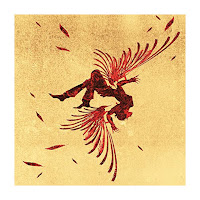
[…] Jaspers, like Heidegger, speaks of man's impulse to embrace being, not as this or that particular being, but as pure and total being.
This impulse is destined to fail in all its positive forms. Pure being may present itself outside us through a “ciphered language,” by means of symbols, but in its essence it is “transcendent” in the negative sense, thus impossible to be attained in any way.

It is clear, even in this particular respect, how important Nietzsche is as a symbolic figure for our entire investigation. His case illustrates in precise terms what can, and indeed must, occur in a human type in which transcendence has awakened, yes, but who is uncentered with regard to it.
Contemporary circumstances have only accelerated the demise of the liberal arts […] While few of today's professors of the humanities are able to articulate grounds for protest, I would think the humanities of old would be able to muster a powerful argument against this tendency. Its warning would be simple, recalling its oldest lessons: at the end of the path of liberation lies enslavement.
Such liberation from all obstacles is finally illusory, for two simple reasons: human appetite is insatiable and the world is limited. For both of these reasons, we cannot be truly free in the modern sense. We can never attain satiation, and will be eternally driven by our desires rather than satisfied by their attainment. And in our pursuit of the satisfaction of our limitless desires, we will very quickly exhaust the planet.
Our destiny, should we enter fully down this path toward our complete liberation, is one in which we will be more governed by necessity than ever before. We will be governed not by our own capacity for self-rule but rather by circumstance, particularly the circumstances resulting from scarcity, devastation, and chaos.
[Patrick Deneen]
Why Liberalism Failed, p.125-6
Even if we ignore the unattractive features of “critical discourse” and consider it in the most genial light, we cannot escape the mounting evidence that calls its underlying premise - the limitless possibilities generated by modern science and modern production - into question. The promise of universal abundance has always contained egalitarian implications without which it would have carried very little moral authority.
Those implications were open to conflicting interpretations. Some people argued that it was enough to increase the general pool of goods and services, in the expectation that everyone's standard of living would rise as a result. Others demanded more radical measures designed not merely to increase the total wealth but to distribute it more equitably.
But no one who believed in progress conceived of a limit on productive capacity as a whole. No one envisioned a return to a more frugal existence; such views fell outside the progressive consensus.
The belated discovery that the earth's ecology will no longer sustain an indefinite expansion of productive forces deals the final blow to the belief in progress. A more equitable distribution of wealth, it is now clear, requires at the same time a drastic reduction in the standard of living enjoyed by the rich nations and the privileged classes.
Western nations can no longer hold up their standard of living and the enlightened, critical, and progressive culture that is entangled with it as an example for the rest of the world. Nor can the privileged classes within the West - and these include the professional class as well as the very rich - except to solve the problem of poverty by taking everyone into their own ranks. Even if this were a morally desirable solution, it is no longer feasible, since the resources required to sustain a new-class style of life, hitherto imagined to be inexhaustible, are already approaching their outer limit.
Under these conditions, the universalistic pretensions of the new class cannot be taken seriously. Indeed they are deeply offensive, not only because they embody a very narrow ideal of the good life but because the material prerequisites for this particular form of the good life cannot be made universally available.
The need for a more equitable distribution of wealth ought to be obvious, both on moral and economic grounds, and it ought to be equally obvious that economic equality cannot be achieved under an advanced system of capitalist production.
What is not so obvious is that equality now implies a more modest standard of living for all, not an extension of the lavish standards enjoyed by the favoured classes in the industrial nations to the rest of the world.
Completion - Perfection
Earth - Heaven
Sacred - Profane
Wisdom - Cleverness
Religion is a sophisticated system of limitations. It gives us reasons to draw boundaries and designate no-go-zones. Without an encompassing and binding narrative like religion, we are at the mercy of our expansive urges.
Religion is a sophisticated system of limitations. It gives us reasons to draw boundaries and designate no-go-zones. Without an encompassing and binding narrative like religion, we are at the mercy of our expansive urges.
Sacredness implies limits - "only at this time", "only by these people."
Nietzsche suggests that the development of a culture must happen at a certain pace, a careful pace.
This, then, is the job of the conservative - to slow the pace to an andante and to prevent it from progressing too quickly.
It is the prudent imposition of boundaries - of knowing how and where to stop - that is the keynote of traditional wisdom.
But Spengler suggests that modern man - Faustian man - is driven by a 'deep necessity' to transcend all limits, including the limits that our bodies present us with.
The traditional home of infinitude is the transcendent realm, the realm of Being, but because it is shut off from us we end up looking for mundane solutions. Instead of the transcendent realm we turn to its surrogate, the virtual realm - a world without limits, which offers the possibility of being, and having, everything, and which promises a sort of heaven on earth.
Rather, "What will stop The Matrix from becoming a reality?"
In other words, is technology inevitably taking us toward this destination? If so, when do we put the brakes on?
Another way to look at it is to ask, "If we had the appropriate technology now, would it happen?"
It may already be happening, bit by bit, one advance after another.
We look at The Matrix and are horrified, and yet we covet and praise the contemporary 'advances' that may lead us toward it.
[…] the technological imperative: ‘If an experiment can be done, it will be done; if the knowledge is available, it will be applied.’
[James Goldsmith]
The Trap, p.179
The trouble about valuing means above ends – which as confirmed by Keynes, is the attitude of modern economics - is that it destroys man's freedom and power to choose the ends he really favours; the development of means, as it were, dictates the choice of ends.
Obvious examples are the pursuit of supersonic transport speeds and the immense efforts made to land men on the moon. The conception of these aims was not the result of insight into real human needs and aspirations, which technology is meant to serve, but solely of the fact that the necessary technical means appeared to be available.
[E.F. Schumacher]
Small is Beautiful, p.42-3
The gene pool of the population is however subject to change under a natural selection which will recognize differences, especially differences in ability to achieve more adaptive functioning. The barrier which prohibits 'Lamarckian' inheritance precisely protects the gene system from too rapid change under possibly capricious environmental demands.
But in cultures and social system [...] there is no equivalent barrier.
Innovations become irreversibly adopted into the on-going system without being tested for long-time viability; and necessary changes are resisted by the core of conservative individuals without any assurance that these particular changes are the ones to resist.
Individual comfort and discomfort become the only criteria for choice of social change and the basic contrast of logical typing between member and the category is forgotten until new discomforts are (inevitably) created by the new state of affairs.
Fear of individual death and grief propose that it would be 'good' to eliminate epidemic disease and only after 100 years of preventive medicine do we discover that the population is overgrown. And so on.
[Gregory Bateson]
Mind and Nature, p. 238

The machine metaphor, stressing bigger and more efficient operations in wordly society, stands in sharp contrast to Amish thinking about the use of tools.
The logic of expanded technology points toward infinite industrial growth and infinite energy consumption. The energy crisis is for the Amish a crisis not of supply but of use, not of technology but of morality.
By carefully restricting the use of machine-developed energy, the Amish "have become the only true masters of technology."
The Amish have problems, but with respect to energy and the balancing of human life with machines, they have mastered one of the contradictions so puzzling to modern society.
By holding technology at a distance, by exercising restraint and moderations, and by accepting limitations and living within then, the Amish have maintained the integrity of their family and community life.
They have escaped many of the noxious side effects of ambitious technology - haste, aimlessness, distraction, violence, waste, and disintegration.
[John A. Hostetler]
Amish Society, p. 383-4
Bostrom calls this the Technological Completion Conjecture:
“If scientific- and technological-development efforts do not effectively cease, then all important basic capabilities that could be obtained through some possible technology will be obtained.”
In light of this, he suspects that the farther into the future one looks the less likely it seems that life will continue as it is. He favors the far ends of possibility: humanity becomes transcendent or it perishes.
The Doomsday Invention: Will artificial intelligence bring us utopia or destruction?
Amish economic thinking is subjected to a traditional wisdom requiring the restraint of selfishness, greed, leisure, and expansionist thinking.
The future of the Amish will be determined not solely by technology, or the means to life, but by the definition they themselves give to life.
[John A. Hostetler]
Amish Society, p. 396
Many argue that posthuman space will be more virtual than real.
Individuals may consist of uploaded minds living as data patterns on supercomputers or users engaged in completely immersive virtual realities.
Postgenderists contend that these types of existences are not gender-specific thus allowing individuals to morph their virtual appearances and sexuality at will.
Postgenderism
The body, that inconvenient reminder of mortality, is plucked, pierced, etched, pummelled, pumped up, shrunk and remoulded [...] What seems a celebration of the body, then, may also cloak a virulent anti-materialism - a desire to gather this raw, perishable stuff into the less corruptible forms of art or discourse.
The resurrection of the body returns as the tattoo parlour and the cosmetic surgeon's consulting-room. To reduce this obstreperous stuff to so much clay in our hands is a fantasy of mastering the unmasterable.
It is a disavowal of death, a refusal of the limit which is ourselves.
For all its love affair with matter, in the shape of Tuscan villas and double brandies, capitalist society harbours a secret hatred of the stuff. It is a culture shot through with fantasy, idealist to its core, powered by a disembodied will which dreams of pounding Nature to pieces. It makes an idol out of matter, but cannot stomach the resistance it offers to its grandiose schemes.
Taming the Mississippi and piercing your navel are just earlier and later versions of the same ideology. Having moulded the landscape to our own image and likeness, we have now begun to recraft ourselves. Civil engineering has been joined by cosmetic surgery.
'Personalizing' the body may be a way of denying its essential impersonality. Its impersonality lies in the fact that it belongs to the species before it belongs to me; and there are some aspects of the species-body - death, vulnerability, sickness and the like - that we may well prefer to thrust into oblivion.
[Terry Eagleton]
After Theory, p.164-6
Religion has invisible purposes beyond what the literal-minded scientistic-scientifiers identify - one of which is to protect us from scientism, that is, them.
We can see in the corpus of inscriptions (on graves) accounts of people erecting fountains or even temples to their favourite gods after these succeeded where doctors failed. Indeed we rarely look at religion’s benefits in limiting the intervention bias and its iatrogenics: in a large set of circumstances (marginal disease), anything that takes you away from the doctor and allows you to do nothing (hence gives nature a chance to do its work) will be beneficial.
I believe in the heuristics of religion and blindly accommodate its rules (as an Orthodox Christian, I can cheat once in a while, as it is part of the game). Among other things the role of religion is to tame the iatrogenics of abundance - fasting makes you lose your sense of entitlement.
[Nassim Nicholas Taleb]
Antifragile, p. 364-5
Much has been gained when the feeling has at last been instilled into the masses (into the shallow-pates and greedyguts of every sort) that there are things they must not touch; that there are holy experiences before which they have to take off their shoes and keep their unclean hands away - it is almost their highest advance towards humanity.
Conversely, there is perhaps nothing about the so-called cultured, the believers in 'modern ideas', that arouses so much disgust as their lack of shame, the self-satisfied insolence of eye and hand with which they touch, lick and fumble with everything; and it is possible that more relative nobility of taste and reverential tact is to be discovered today among the people, among the lower orders and especially among peasants, than among the newspaper-reading demi-monde of the spirit, the cultured.
[Friedrich Nietzsche]
Beyond Good and Evil, 263
The historical sense […] to which we Europeans lay claim as our speciality, has come to us in the wake of the mad and fascinating semi-barbarism into which Europe has been plunged through the democratic mingling of classes and races […]
The past of every form and mode of life, of cultures that formerly lay close beside or on top of one another, streams into us 'modern souls' thanks to this mingling, our instincts now run back in all directions, we ourselves are a kind of chaos [...]
Through our semi-barbarism in body and desires we have secret access everywhere such as a noble age never had, above all the access to the labyrinth of unfinished cultures and to every semi-barbarism which has ever existed on earth; and, in so far as the most considerable part of human culture hitherto has been semi-barbarism, "historical sense' means virtually the sense and instinct for everything, the taste and tongue for everything: which at once proves it to be an ignoble sense.
We enjoy Homer again, for instance: perhaps it is our happiest advance that we know how to appreciate Homer, whom the men of a noble culture […] cannot and could not assimilate so easily - whom they hardly permitted themselves to enjoy. The very definite Yes and No of their palate, their easily aroused disgust, their hesitant reserve with regard to everything strange, their horror of the tastelessness even of a lively curiosity, and in general that unwillingness of a noble and self-sufficient culture to admit to a new desire, a dissatisfaction with one's own culture, an admiration for what is foreign: all this disposes them unfavourably towards even the best things in the world which are not their property and could not become their prey - and no sense is so unintelligible to such men as the historical sense and its obsequious plebeian curiosity.
That as men of the 'historical sense’ we have our virtues is not to be denied - we are unpretentious, selfless, modest, brave, full of self-restraint, full of devotion, very grateful, very patient, very accommodating - with all that, we are perhaps not very 'tasteful'.
Let us finally confess it to ourselves: that which we men of the "historical sense' find hardest to grasp, to feel, taste, love, that which at bottom finds us prejudiced and almost hostile, is just what is complete and wholly mature in every art and culture, that which constitutes actual nobility in works and in men, their moment of smooth sea and halcyon self-sufficiency, the goldness and coldness displayed by all things which have become perfect.
Perhaps our great virtue of the historical sense necessarily stands opposed to good taste, or to the very best taste at any rate [...]
Measure is alien to us, let us admit it to ourselves; what we itch for is the infinite, the unmeasured. Like a rider on a charging steed we let fall the reins before the infinite, we modern men, like semi-barbarians - and attain our state of bliss only when we are most – in danger.
[Friedrich Nietzsche]
Beyond Good and Evil, 224
This prime feeling of a loosing, Erlösung, solution, of the Soul in the Infinite, of a liberation from all material heaviness which the highest moments of our music always awaken, sets free also the energy of depth that is in the Faustian soul:
whereas the effect of Classical art-work is to bind and to bound, and the body-feeling secures, brings back the eye from distance to a Near and Still that is saturated with beauty.
[Oswald Spengler]
The Decline of the West, Vol. 1, p. 177-8
It is preeminently in the generations and castes that conserve a people that we encounter such recrudescences of old instincts, while such atavisms are improbable wherever races, habits, and valuations change too rapidly.
For tempo is as significant for the development of peoples as it is in music: in our case, an andante of development is altogether necessary as the andante of a passionate and slow spirit; and that is after all the value of the spirit of conservative generations.
The Jews [...] are beyond all doubt the strongest, toughest and purest race at present living in Europe; they know how to prevail even under the worst conditions (better even than under favourable ones), by means of virtues which one would like to stamp as vices -- thanks above all to a resolute faith which does not need to be ashamed before 'modern ideas';
they change, when they change, only in the way in which the Russian Empire makes its conquests - an empire that has time and is not of yesterday - : namely, according to the principle as slowly as possible’!
[Friedrich Nietzsche]
The Gay Science, 10 and Beyond Good and Evil, 251
If the nature of change is such that nothing is left for the fathers to teach their sons, or for the sons to accept from their fathers, family life collapses.
The life, work, and happiness of all societies depend on certain ‘psychological structures' which are infinitely precious and highly vulnerable. Social cohesion, co-operation, mutual respect, and above all self-respect, courage in the face of adversity, and the ability to bear hardship – all this and much else disintegrates and disappears when these ‘psychological structures' are gravely damaged. A man is destroyed by the inner conviction of uselessness.
No amount of economic growth can compensate for such losses - though this may be an idle reflection, since economic growth is normally inhibited by them. None of these awesome problems figure noticeably in the cosy theories of most of our development economists.
[E.F. Schumacher]
Small is Beautiful, p.161
Everything happens slowly.
In my indigenous culture, everything takes time, and long consideration, and many sleepings on it. It might even be generations before we go, ‘Yeah, alright, we’ll bring that in.’
[Tyson Yunkaporta]
'Talking Indigenous Thinking | Tyson Yunkaporta' (YouTube)
Should the pursuit of science be constrained?
Obviously, scientific experimentation must be carried out in accordance with society's view of ethical behaviour. Science must not travel independently from the social needs of communities.
Science does not have great wisdom. Rather it accumulates and cleverly analyzes particular information which supplies it with skills. It does not have an overall view based on general understanding. Science is massively powerful, potentially useful and, of course, can be beneficial. But as it solves problems, so it creates others.
Scientific achievement produces both expected and unexpected results and the latter, quite often, can do more damage in the long term than the former do good.
[...] technology, industry, the economy and science must all serve the true needs of society. Stability and contentment should not be sacrificed so as to further the development of our tools.
Modernists do not accept that each generation has a duty to commit to a contract between the past, the present and the future. They do not see themselves as guardians of continuity but rather as agents of constantly accelerating change. And they think only fleetingly of its potential consequences.
[James Goldsmith]
The Trap, p. 180, 183-4
In short, we can say today that man is far too clever to be able to survive without wisdom.
The exclusion of wisdom from economics, science, and technology was something which we could perhaps get away with for a little while, as long as we were relatively unsuccessful; but now that we have become very successful, the problem of spiritual and moral truth moves into the central position.
From an economic point of view, the central concept of wisdom is permanence.
We must study the economics of permanence. Nothing makes economic sense unless its continuance for a long time can be projected without running into absurdities. There can be 'growth' towards a limited objective, but there cannot be unlimited, generalised growth. It is more than likely, as Gandhi said, that 'Earth provides enough to satisfy every man's need, but not for every man's greed'. Permanence is incompatible with a predatory attitude which rejoices in the fact that 'what were luxuries for our fathers have become necessities for us'.
The cultivation and expansion of needs is the antithesis of wisdom.
The economics of permanence implies a profound reorientation of science and technology, which have to open their doors to wisdom and, in fact, have to incorporate wisdom into their very structure. Scientific or technological 'solutions’ which poison the environment or degrade the social structure and man himself are of no benefit, no matter how brilliantly conceived or how great their superficial attraction.
Ever bigger machines, entailing ever bigger concentrations of economic power and exerting ever greater violence against the environment, do not represent progress: they are a denial of wisdom. Wisdom demands a new orientation of science and technology towards the organic, the gentle, the non-violent, the elegant and beautiful.
The neglect, indeed the rejection, of wisdom has gone so far that most of our intellectuals have not even the faintest idea what the term could mean. As a result, they always tend to try and cure a disease by intensifying its causes. The disease having been caused by allowing cleverness to displace wisdom, no amount of clever research is likely to produce a cure.
[The insights of wisdom] enable us to see the hollowness and fundamental unsatisfactoriness of a life devoted primarily to the pursuit of material ends, to the neglect of the spiritual. Such a life necessarily sets man against man and nation against nation, because man's needs are infinite and infinitude can be achieved only in the spiritual realm, never in the material.
Man assuredly needs to rise above this humdrum 'world'; wisdom shows him the way to do it; without wisdom, he is driven to build up a monster economy, which destroys the world, and to seek fantastic satisfactions, like landing a man on the moon. Instead of overcoming the 'world' by moving towards saintliness, he tries to overcome it by gaining preeminence in wealth, power, science, or indeed any imaginable 'sport'.
How could we even begin to disarm greed and envy? Perhaps by being much less greedy and envious ourselves; perhaps by resisting the temptation of letting our luxuries become needs; and perhaps by even scrutinising our needs to see if they cannot be simplified and reduced.
[E.F. Schumacher]
Small is Beautiful, p. 26, 30-1
We are less interested in breaking through certain limits, with or without cause, than in putting in doubt the right to posit such limits in the first place. In a word, we do not believe that there exists, in all rigor, a ... text, closed upon itself, complete with its inside and outside.
[Jacques Derrida]
Dissemination, p. 130
And yet, to live we must impose limits, arbitrary as they may be.
For primitive societies the natural world (which usually changes only slowly) provided a stable framework and therefore a sense of security.
In the modern world it is human society that dominates nature rather than the other way around, and modern society changes very rapidly owing to technological change. Thus there is no stable framework.
The conservatives are fools: They whine about the decay of traditional values, yet they enthusiastically support technological progress and economic growth. Apparently it never occurs to them that you can’t make rapid, drastic changes in the technology and the economy of a society without causing rapid changes in all other aspects of the society as well, and that such rapid changes inevitably break down traditional values.
[Ted Kaczynski]
Industrial Society and its Future, 49, 50
Whereas formerly the limits of human endurance have imposed limits on the development of societies, industrial-technological society will be able to pass those limits by modifying human beings, whether by psychological methods or biological methods or both.
In the future, social systems will not be adjusted to suit the needs of human beings. Instead, human being will be adjusted to suit the needs of the system.
The Industrial Revolution has radically altered man’s environment and way of life, and it is only to be expected that as technology is increasingly applied to the human body and mind, man himself will be altered as radically as his environment and way of life have been.
[Ted Kaczynski]
Industrial Society and its Future, 151, 160
I have come to see that all of the questions raised in these essays - the questions raised in my lifetime of non-fiction writing, and maybe my fiction too - could be said to come back to one word: limits.
Modernity is a machine for destroying limits.
The ideology of the Machine - the liberation of individual desire - sees our world as a blank slate to be written on afresh when the old limits of nature and culture are washed away.
This is our faith: that breaking boundaries leads to happiness, that boundaries are barriers rather than opportunities. We strain against all limits. It is who we are.
[Paul Kingsnorth]
'Want is the Acid'
Both socialism and capitalism are products of the European Enlightenment and are thus modernizing and anti-traditional forces. In contrast, distributism seeks to subordinate economic activity to human life as a whole, to our spiritual life, our intellectual life, our family life.
[Thomas Storck]
'Capitalism and Distributism: two systems at war', Beyond Capitalism & Socialism, p. 75
So long as that moral tradition is alive, so long as stealing other people’s wives is reprobated or being faithful to a spouse is admired, there are limits to the extent to which the wildest profligate in Balham can disturb the balances of the sexes.
So any land-grabber would very rapidly find that there were limits to the extent to which he could buy up land in an Irish or Spanish or Serbian village […] In an atmosphere of capitalism the man who lays field to field is flattered; but in an atmosphere of property he is promptly jeered at or possible stoned.
The result is that the village has not sunk into plutocracy or the suburb into polygamy.
[G. K. Chesterton]
The Outline of Sanity, p. 35
[…] a people who had really found out what fun it is to make things would never want to make most of them with a machine. Sculptors do not want to turn a statue out with a lathe or painters to print off a picture as a pattern, and a craftsman who was really capable of making pots or pans would be no readier to condescend to what is called manufacturing them.
But, anyhow, a world in which there were many independent men would probably be a world in which there were more individual craftsmen. When we have created anything like such a world, we may trust it to feel more than the modern world does the danger of machinery deadening creation, and the value of what it deadens.
And I suggested that such a world might very well make special provision about machines, as we all do about weapons; admitting them for particular purposes, but keeping watch on them in particular ways.
[G. K. Chesterton]
The Outline of Sanity, p. 179
Any night, the starry heavens give us at the same moment impressions that 3,700 years apart in time, for that is the distance in light-years from the extreme outer limit to the earth […]
This aspect - an image, I repeat, and not a matter of experimental knowledge - is for the Faustian a high and noble aspect, but for the Apollinian it would have been woeful and terrible, an annihilation of the most profound conditions of his being. And he would have felt it as sheer salvation when after all a limit, however remote, had been found.
But we, driven by the deep necessity that is in us, must simply ask ourselves the new question: Is there anything outside this system? Are there aggregates of such systems, at such distances that even the dimensions established by our astronomy are small by comparison?
As far as sense-observations are concerned, it seems that an absolute limit has been reached; neither light nor gravitation can give a sign of existence through this outer space, void of mass. But for us it is a simple necessity of thought.
Our spiritual passion, our unresting need to actualize our existence-idea in symbols, suffers under this limitation of our sense-perceptions.
[Oswald Spengler]
The Decline of the West, p.332
[…] Jaspers, like Heidegger, speaks of man's impulse to embrace being, not as this or that particular being, but as pure and total being.
This impulse is destined to fail in all its positive forms. Pure being may present itself outside us through a “ciphered language,” by means of symbols, but in its essence it is “transcendent” in the negative sense, thus impossible to be attained in any way.
The cutting of all bonds, the intolerance of all limits, the pure and incoercible impulse to overcome without any determined goal, to always move on beyond any given state, experience, or idea, and naturally and even more beyond any human attachment to a given person, fearing neither contradictions nor destructions, thus pure movement, with all that that implies of dissolution—“advancing with a devouring fire that leaves nothing behind itself,” to use an expression from an ancient wisdom tradition, though it applies to a very different context—these essential characteristics that some have already recognized in Nietzsche can be explained precisely as so many forms in which the transcendent acts and manifests.
But the fact that this is not recognized and admitted as such, the fact, therefore, that this energy remains in the closed circle of immanence and of “life," generates a higher voltage than the circuit can sustain. This fact, moreover, may be the true and deeper cause of the final / collapse of Nietzsche the man.
It is clear, even in this particular respect, how important Nietzsche is as a symbolic figure for our entire investigation. His case illustrates in precise terms what can, and indeed must, occur in a human type in which transcendence has awakened, yes, but who is uncentered with regard to it.
“It is decisive how man lives defeat (or failure or foundering - Scheitern): whether it remains hidden in order to crush him in the end, or whether it appears unveiled, placing itself in front of the inescapable limits of his own Dasein; either he seeks solutions and palliatives that are inconsistent and fantastic, or else he frankly keeps silence on account of the presence of the inexplicable.”
At that point, nothing is left but faith.
[Julius Evola]
Ride the Tiger, p. 51-2, 98-9
At that point, nothing is left but faith.
[Julius Evola]
Ride the Tiger, p. 51-2, 98-9
Contemporary circumstances have only accelerated the demise of the liberal arts […] While few of today's professors of the humanities are able to articulate grounds for protest, I would think the humanities of old would be able to muster a powerful argument against this tendency. Its warning would be simple, recalling its oldest lessons: at the end of the path of liberation lies enslavement.
Such liberation from all obstacles is finally illusory, for two simple reasons: human appetite is insatiable and the world is limited. For both of these reasons, we cannot be truly free in the modern sense. We can never attain satiation, and will be eternally driven by our desires rather than satisfied by their attainment. And in our pursuit of the satisfaction of our limitless desires, we will very quickly exhaust the planet.
Our destiny, should we enter fully down this path toward our complete liberation, is one in which we will be more governed by necessity than ever before. We will be governed not by our own capacity for self-rule but rather by circumstance, particularly the circumstances resulting from scarcity, devastation, and chaos.
[Patrick Deneen]
Why Liberalism Failed, p.125-6
Even if we ignore the unattractive features of “critical discourse” and consider it in the most genial light, we cannot escape the mounting evidence that calls its underlying premise - the limitless possibilities generated by modern science and modern production - into question. The promise of universal abundance has always contained egalitarian implications without which it would have carried very little moral authority.
Those implications were open to conflicting interpretations. Some people argued that it was enough to increase the general pool of goods and services, in the expectation that everyone's standard of living would rise as a result. Others demanded more radical measures designed not merely to increase the total wealth but to distribute it more equitably.
But no one who believed in progress conceived of a limit on productive capacity as a whole. No one envisioned a return to a more frugal existence; such views fell outside the progressive consensus.
The belated discovery that the earth's ecology will no longer sustain an indefinite expansion of productive forces deals the final blow to the belief in progress. A more equitable distribution of wealth, it is now clear, requires at the same time a drastic reduction in the standard of living enjoyed by the rich nations and the privileged classes.
Western nations can no longer hold up their standard of living and the enlightened, critical, and progressive culture that is entangled with it as an example for the rest of the world. Nor can the privileged classes within the West - and these include the professional class as well as the very rich - except to solve the problem of poverty by taking everyone into their own ranks. Even if this were a morally desirable solution, it is no longer feasible, since the resources required to sustain a new-class style of life, hitherto imagined to be inexhaustible, are already approaching their outer limit.
Under these conditions, the universalistic pretensions of the new class cannot be taken seriously. Indeed they are deeply offensive, not only because they embody a very narrow ideal of the good life but because the material prerequisites for this particular form of the good life cannot be made universally available.
The need for a more equitable distribution of wealth ought to be obvious, both on moral and economic grounds, and it ought to be equally obvious that economic equality cannot be achieved under an advanced system of capitalist production.
What is not so obvious is that equality now implies a more modest standard of living for all, not an extension of the lavish standards enjoyed by the favoured classes in the industrial nations to the rest of the world.
In the twenty-first century, equality implies a recognition of limits, both moral and material, that finds little support in the progressive tradition.
[Christopher Lasch]
The True and Only Heaven, p.529, 532
William Rees: […] here I was encountering economic thought for the first time and being told that everything I had learned in ecology was irrelevant.
“Why should we be limited in this region to [a] population estimate?” he said, “[…] The population is 10 times greater than you said the carrying capacity was. That's because we can import from other places. And if we did run up against any constraints, technology will take care of it."
He said, “[…] economists have long shown that there are no limits to growth and carrying capacity is an irrelevant idea."
Nate Hagens: The way that I have presented it in public talks is to show an image of the tortoise and the hare - the hare is the economist and the tortoise is the ecologist. Because if that person who was a tenured economics professor in 1970 or whenever - he's probably no longer alive or retired or something - but during his lifetime it appeared that he was correct.
Meanwhile, our actual carrying capacity has been declining at a pace that entire time, and the carrying capacity for other organisms and creatures we share this blue Earth with. So it's almost one of those things that the truth will be back loaded and not really recognized until it's too late to really do something about.
William Rees: Economists believe in something called the substitution factor: We do use natural resources, but it doesn't matter because through technology, any product of nature is infinitely substitutable by something that humans can come up with.
There was a management science professor at the University of Maryland called Julian Simon, and he’s famous for this kind of statement: “We have now in our hands the technology to feed, clothe and provide energy for an ever-growing population for the next seven billion years."
Now, when you again disconnect humans from biophysical reality and you believe in ingenuity […] then everything we've been talking about becomes irrelevant. And so you have that mindset, that social construct - which is a very attractive one, keep in mind, because it does show no limits - that's what the world has bought into.
[William Rees & Nate Hagens]
‘William E. Rees: "The Fundamental Issue - Overshoot" | The Great Simplification #53’, Nate Hagens, YouTube
The western idea of history as a propulsive movement into the future, a progressive or Providential design climaxing in the revelation of a Second Coming, is a male formulation. No woman, I submit, could have coined such an idea, since it is a strategy of evasion of woman’s own cyclic nature, in which man dreads being caught. Evolutionary or apocalyptic history is a male wish list with a happy ending, a phallic peak.
The Greek pattern of free will to hybris to tragedy is a male drama, since woman has never been deluded (until recently) by the mirage of free will. She knows there is no free will, since she is not free. She has no choice but acceptance. Whether she desires motherhood or not, nature yokes her into the brute inflexible rhythm of procreative law.
[Camille Paglia]
Sexual Personae, p.9-10
Related posts:-
[Christopher Lasch]
The True and Only Heaven, p.529, 532
William Rees: […] here I was encountering economic thought for the first time and being told that everything I had learned in ecology was irrelevant.
“Why should we be limited in this region to [a] population estimate?” he said, “[…] The population is 10 times greater than you said the carrying capacity was. That's because we can import from other places. And if we did run up against any constraints, technology will take care of it."
He said, “[…] economists have long shown that there are no limits to growth and carrying capacity is an irrelevant idea."
Nate Hagens: The way that I have presented it in public talks is to show an image of the tortoise and the hare - the hare is the economist and the tortoise is the ecologist. Because if that person who was a tenured economics professor in 1970 or whenever - he's probably no longer alive or retired or something - but during his lifetime it appeared that he was correct.
Meanwhile, our actual carrying capacity has been declining at a pace that entire time, and the carrying capacity for other organisms and creatures we share this blue Earth with. So it's almost one of those things that the truth will be back loaded and not really recognized until it's too late to really do something about.
William Rees: Economists believe in something called the substitution factor: We do use natural resources, but it doesn't matter because through technology, any product of nature is infinitely substitutable by something that humans can come up with.
There was a management science professor at the University of Maryland called Julian Simon, and he’s famous for this kind of statement: “We have now in our hands the technology to feed, clothe and provide energy for an ever-growing population for the next seven billion years."
Now, when you again disconnect humans from biophysical reality and you believe in ingenuity […] then everything we've been talking about becomes irrelevant. And so you have that mindset, that social construct - which is a very attractive one, keep in mind, because it does show no limits - that's what the world has bought into.
[William Rees & Nate Hagens]
‘William E. Rees: "The Fundamental Issue - Overshoot" | The Great Simplification #53’, Nate Hagens, YouTube
The western idea of history as a propulsive movement into the future, a progressive or Providential design climaxing in the revelation of a Second Coming, is a male formulation. No woman, I submit, could have coined such an idea, since it is a strategy of evasion of woman’s own cyclic nature, in which man dreads being caught. Evolutionary or apocalyptic history is a male wish list with a happy ending, a phallic peak.
The Greek pattern of free will to hybris to tragedy is a male drama, since woman has never been deluded (until recently) by the mirage of free will. She knows there is no free will, since she is not free. She has no choice but acceptance. Whether she desires motherhood or not, nature yokes her into the brute inflexible rhythm of procreative law.
[Camille Paglia]
Sexual Personae, p.9-10
Related posts:-


