Showing posts with label Weinstein. Show all posts

Efficient / Redundant


Efficient               -          Redundant
Engineer              -          Artist
Specialist             -          Generalist
Work                   -           Play
Truth                   -           Myth
Narrow base        -          Wide base
Closed                 -          Open
Unconscious        -          Self-aware
Order                   -          Chaos


Complex situations/interactions cannot be standardised. Standardisation implies known territory. In complex circumstances, an abstracted/wide view is more advantageous than a concrete/narrow view.

Modern football bought efficiency at the price of character. When pundits say that the modern game is "better" what they really mean is that it is more efficient. 


A strong mechanical metaphor characterizes [process engineering] approaches. The focus is on efficiency, stripping away all superfluous functions in order to ensure repeatability and consistency.

The engineering process takes place in a specific context and once achieved, shifts in that context require the engineering design process to be repeated to some degree before efficiency can be achieved again. Radical shifts in context may make the entire approach redundant or lead to catastrophic failure.

Manufacturing plant, payment systems in a bank and the like are all closed systems that can be structured and standardized without any major issue. We can in effect define best practice. However when we apply the same techniques to systems with higher levels of ambiguity, for example customer interactions, sales processes and the like we encounter more difficulties.

[Some of these] arise from the impossibility of anticipating all possible situations and shifting context. In these cases we need a different focus, one of effectiveness in which we leave in place a degree of inefficiency to ensure that the system has adaptive capacity and can therefore rapidly evolve to meet the new circumstances. 

Examples would include apprentice schemes of knowledge transfer, maintaining mavericks or misfits, allowing people to take training in subjects with no apparent relevance to their current jobs and providing more delegated authority.

There is nothing wrong with an engineering approach; there are many things that need high degrees of order and control. However taken to excess, and it has nearly always been so taken, it sacrifices human effectiveness, innovation and curiosity on the altar of mechanical efficiency .

[Dave Snowden]
'Multi-ontology sense making: a new simplicity in decision making'


The exact opposite of redundancy is naive optimisation.

I tell everyone to avoid attending (orthodox) economics classes and say that economics will fail us and blow us up […] The reason is the following: It is largely based on notions of naive optimisation, mathematised (poorly) […] and this mathematics contributed massively to the construction of an error-prone society.

An economist would find it inefficient to maintain two lungs and two kidneys: consider the costs involved in transporting these heavy items across the savannah. Such optimisation would, eventually, kill you, after the first accident, the first “outlier.”

Also consider that if we gave Mother Nature to economists, it would dispense with individual kidneys: since we do not need them all the time, it would be more “efficient” if we sold ours and used a central kidney on a time-share basis.

Almost every major idea in conventional economics […] fails under the modification of some assumption, or what is called ‘perturbation,” when you change one parameter, or take a parameter heretofore assumed by the theory to be fixed and stable, and make it random.

For instance, if a model used for risk assumes that the type of randomness under consideration is from Mediocristan, it will ignore large deviations and encourage the building of a lot of risk that ignores large deviations; accordingly, risk management will be faulty.

For another example of egregious model error, take the notion of comparative advantage […] behind the wheels of globalisation. The idea is that countries should focus, as a consultant would say, on “what they do best” (more exactly, on where they are missing the smallest number of opportunities); so one country should specialise in wine and the other in clothes, although one of them might be better at both. But do some perturbations and alternative scenarios: consider what would happen to the country specialising in wine if the price of wine fluctuated

Mother Nature does not like overspecialisation, as it limits evolution and weakens the animals.

Globalisation might give the appearance e of efficiency, but the operating leverage and the degrees of interaction between parts will cause small cracks in one spot to percolate through the entire system. The result would be like a brain experiencing an epileptic seizure from too many cells firing at the same time. Consider that our brain, a well-functioning complex system, is not “globalised,” or, at least, not naively “globalised.”

[Nassim Nicholas Taleb]
The Black Swan, p. 312-3


A typical strategy of companies and corporations is to eliminate redundancies and degeneracies in the name of minimizing costs.

This is the major reason why almost all companies have great difficulty adapting to change, and eventually disappear. Just as biological systems pay a cost for robustness and evolvability foregoing efficiency for long-term persistence, so too should we demand this of our institutions.

[David Krakauer & Geoffrey West]
'The Damage We’re Not Attending To'


This is hint to a central problem of the world today, that of the misunderstanding of nonlinear response by those involved in creating “efficiencies” and “optimisation” of systems.

For instance, European airports and railroads are stretched, seeming overly efficient. They operate at close to maximal capacity, with minimal redundancies and idle capacity, hence acceptable costs; but a small increase in congestion, say 5 percent more planes in the sky owing to a tiny backlog, can give rise to chaos […]

[Nassim Nicholas Taleb]
Antifragile, p. 274


[Economics] appeals to a very rigid mind. If you build everything around homoeconomicus, which is this model that clearly doesn’t represent how human beings actually are in the world, you tend to select for very rigid thinkers who have a particular penchant for finding […] lies that people tell themselves and each other. 

So famously a professor of economics suggested that no-one should give gifts because its much more efficient to give cash. 

And that’s what economists have historically liked to do […] relentlessly and unflinchingly they apply tools of utility-maximisation […] and try to turn humans into robots and make the robots maximally efficient. 

[Eric Weinstein]
‘Eric Weinstein: WTF Happened in 1971: An INTO THE IMPOSSIBLE Birthday Extravaganza 🎉 !’


The most typical example is that of Protestantism, in which simplification takes the form both of an almost complete suppression of rites, together with an attribution of predominance to morality over doctrine; and the doctrine itself becomes more and more simplified and diminished so that it is reduced to almost nothing, or at most to a few rudimentary formulas that anyone can interpret in any way that suits him. 

Moreover, Protestantism in its many forms is the only religious production of the modern spirit, and it arose at a time when that spirit had not yet come to the point of rejecting all religion, but was on the way toward doing so by virtue of the anti-traditional tendencies which are inherent in it and which really make it what it is. 

At the endpoint of this 'evolution' (as it would be called today), religion is replaced by 'religiosity', that is to say by a vague sentimentality having no real significance; it is this that is acclaimed as 'progress', and it shows clearly how all normal relations are reversed in the modern mentality, for people try to see in it a 'spiritualization' of religion, as if the ‘spirit' were a mere empty frame or an 'ideal' as nebulous as it is insignificant. 

This is what some of our contemporaries call a ‘purified religion', but it is so only insofar as it is emptied of all positive content and has no longer any connection with any reality whatsoever.

[René Guénon]
The Reign of Quantity and the Signs of the Times, p. 77-8


“I knew a man who used to lecture frequently, on subjects requiring much thought […] He told me that he would become aware of himself perhaps once or twice during the lecture, and at the end of it, as he sat down, he would find himself surprised that it was he who had given the lecture. Yet he fully remembered everything.”

This is a very good description of a man acting like a programmed machine, implementing a programme devised some time ago.

He, the programmer, is no longer needed; he can mentally absent himself. If the machine is implementing a good programme it gives a good lecture; if the programme is bad, the lecture is bad. We are all very familiar with the possibility of implementing ‘programmes', e.g. when driving a car and engaging in an interesting conversation at the same time.

[E. F. Schumacher]
A Guide for the Perplexed, p.81


Unlike Bellamy, for whom military discipline implied an intricate division of labor and the efficiency provided by complete regimentation, Sorel believed that war nourished a "passionate individualism."

In the wars of the French revolution - his favorite example, next to Homeric Greece, of military life at its best - "each soldier considered himself as an individual having something of importance to do in the battle, instead of looking upon himself as simply one part of the military mechanism committed to the supreme direction of the leader."

[Christopher Lasch]
The True and Only Heaven, p.310


Today, thanks to the spectroscope and other tools of the analytical laboratory, they can analyze these medicinal herbs and isolate their active medical ingredient. In so doing, scientists believe that they have accounted, in a scientific way, for folk remedies - they are biologically active chemicals adulterated by a variety of other substances.

How much better, therefore, to administer a 100 percent pure drug that has been synthesized in the laboratory than an unpleasant concoction of herbs and roots. Scientific knowledge has advanced beyond the superstition of folk medicine.

Again, what is really happening is not the perfection of knowledge or the replacement of myths by objective knowledge, but really an encounter of two worldviews.

To approach medicine herbs only in terms of biologically active molecules is to see them in only one dimension. Within the dimensions of chemical analysis this may be correct, but it leaves out the other dimensions of spirit, energy, and relationship.

The nature of Native medicine lies both in the plant and the ceremony, in the way that plant was picked, the exchanges and relationships that were entered into that would lead to its use, and in the relationship between that plant and other people in the circle and the relationship to the sick person.

[F. David Peat]
Blackfoot Physics, p.120, 132-3


The sacred seriousness of play has entirely given way to the profane seriousness of work and production […]

Without Eros, the steps of thinking degenerate into the steps of a calculation, that is, the steps of work to be performed. Calculation is naked, pornographic. Thinking dresses itself in figures. It is often squiggly. Calculations, by contrast, follow a linear path.

Thinking has the character of play. Under the compulsion of work and production, it becomes alienated from its essence […] Along the way from myth to dataism, thinking loses the element of play altogether. It comes close to calculation.

But the steps in thinking are not the steps of a calculation which simply repeat the same operation over and over again. Rather, they are moves in a game, or dancing steps, which create something totally different, introduce an altogether different order among things […]

Life subordinated to the dictates of health, optimization and performance comes to resemble mere survival. It lacks splendour, sovereignty, intensity.

The Roman satirist Juvenal expressed this well when he spoke of 'losing the reasons to live for the sake of staying alive' (propter vitam vivendi perdere causas).

[Byung-Chul Han]
The Disappearance of Rituals, p.55, 83


The sophists are seen as mere travelling showmen who are occupied solely with the playful. But play has now to give way to the work of uncovering the truth.

Huizinga is probably to be credited with having taught us about the playful character of human action in archaic cultures. But he turns play into something absolute, and he therefore misses the decisive paradigm shift within knowledge transfer in the history of the Occident, namely the transition from myth to truth, which coincides with the transition from play to work.

Along the path towards work, thinking gradually distances itself from its origin in play.

Limits must be set to the imagination's urge to play so that play can serve the purposes of the understanding, namely the production of knowledge. Play is subordinated to work and production.

[Byung-Chul Han]
The Disappearance of Rituals, p.79-80
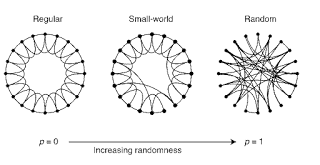


Networks are the way in which things are connected, like sequences - the way an airline is connected, or the way the internet is connected, or the way neurons are connected; functional connectivity. There's three basic kinds of networks.

There's a regular network, where all the connections are just one step away, node to node. And then there's a random network, where you can have long distance connections - very long distance connections. I don't have to fly from Savannah to Atlanta to Toronto - I can just fly directly from Savannah to Toronto.

The regular network is highly inefficient. The way you measure efficiency is called mean path distance. You take all the distance from all possible combinations - how many steps do I have to go from this point to that point? - and you average them together and get the mean path distance - the average path distance between any two points.

In a regular network, it's very, very high because you have to go through a lot of steps. They're all local connections. When you look at it, it looks beautiful. It’s highly ordered because all the lines are the same length, but it's highly inefficient. The random network is highly efficient because you have a lot of these long distance connections that collapse your path.

But the brain doesn't go for either one of those, because there's a trade-off relationship. As I make the network more random to make it more efficient - which sounds like a contradiction in terms - I lose robustness in the system.

When you have a lot of little connections there's lots of redundancy, and so I can lose a lot of stuff - I get graceful degradation - but I only get a small reduction in functionality. In a random network, I can take out one link and entire nodes can become isolated from each other.

That's the danger of efficiency versus redundancy. The brain does what's called a small world network, which is mostly regular and then one or two long distance connections.

If you give somebody a Propofol and take them into unconsciousness, the brain will go from being a global, small world network and it'll break up into small, local regular networks. And then as you bring them back into consciousness, it will go from local regular networks back into a comprehensive small-world networks.

[John Vervaeke]
‘A Conversation So Intense It Might Transcend Time and Space | John Vervaeke | EP 321, Jordan B. Peterson, YouTube


We only see one side of it. We see that we’re being smart and saving effort, but we don’t see that […] there’s a corresponding loss of capability.

Because I don’t programme an assembly any more, I no longer am able to programme an assembly. If I use languages that are too high level […] I don’t know how my variables live in memory or how big they are and I certainly don’t know what the CPU is doing in response to the code I’ve written.

The rhetoric that we have is, “I’m being smart, I shouldn’t have to do the low-level stuff”, but part of the reality is the loss of capability that corresponds to those choices.

[Jonathan Blow]
‘Jonathan Blow - Preventing the Collapse of Civilization (English only)’, YouTube


Related posts:

Global / Local


Universal          -          Particular
Global               -          Local
Tepid                 -          Vivid
Mono                 -          Poly
Many                 -          Few
Disconnected    -          Connected
Definitive          -          Relative
Tourist               -          Pilgrim
Impersonal        -          Personal
Abstract            -          Concrete


In dissolving tradition, Modernity abolished every level in between the individual and the universal/global. First and foremost we are members of the global collective, united by the principles of liberal democracy (“egalitarianism, individualism, rationalism”…), but we can only be members of the global collective by forsaking any intervening identity. ‘Englishness’ detracts from ‘European’, which in turn detracts from ‘Global Citizen.’ Under liberalism each intervening identity becomes backwards and parochial compared to the all-embracing Global Citizen (the 'individual broadly construed' as Haidt puts it).

We need to be able to define levels in between Individual—Universal, but on what basis do we form these groupings? How, for instance, do you define a nation as distinct from other nations? How do you reassert a ‘national identity’ under the dissolutive influence of Globalism?

If the distinction is simply defined by the mere happenstance of location (i.e. anyone within these borders is ‘English’) then 'Englishness' simply becomes a co-ordinate, a segment of the larger whole - meaningless, in other words. There must be a binding element, a set of commonalities, that gives meaning and character to a grouping. Some have proposed ethnicity as this element.

Because liberalism acts against groupings (between Individual—Global) there can be no shared sense-making framework other than reason/science, which is abstract and universal (‘objective’, the same for everyone) rather than particular to a place or people.

Ideas are permitted within the marketplace - a superficial churning of views and interests - as long as they don’t threaten the sanctity of the liberal order (Popper’s ‘Paradox of Tolerance’). There must always be a rotation - no single idea can win. A tradition (in this context, the perseverance of a set of ideas over time) can never take root. If it doesn’t work at the universal level it is no good, hence any parochial sense-making framework is rejected out of hand. Lacking in subsidiary levels, the global scale is inherently anti-tradition.

Liberalism is a fundamentally dissolutive force. It works to dissolve any non-universal programme i.e. any tradition (because tradition is by its nature specific and exclusive).

Any attempt at an alternative sense-making framework at the global level is automatically felt as fascist or totalitarian, which points towards the need for subsidiary levels - national, local - where tradition can take root. Tradition works best at smaller scales - when imposed beyond a certain scale (‘human scale’) it becomes inappropriate. Monoculture is not in itself a bad idea, but monoculture-at-scale is.

When there are no subsidiary levels between Individual—Global then every contagious idea threatens to become a global pandemic (every idea is seen in the context of global, rather than local). Subsidiarity prevents spread, keeps things 'in their place,' and helps define a place for things.


Most of the tension resides between

1) Embedded, complexity-minded, multiscale/fractal localism (politics as an ecology/complex adaptive system), and
2) Abstract one-dimensional universalists and monoculturalism (politics as a top-down engineering project).”

[Nassim Nicholas Taleb]
Twitter


The tide is out, and globalism is exposed. In its place, watch for the rise of localism.

This won’t be some Jeffersonian agrarian world where we’re all threshing our own wheat, but a complex, locally–adapted system that is vibrant and resilient because it’s interconnected but not centrally controlled. 

Our current supply chain and financial system evolved by using standardization to create efficiencies. Finding “synergies” led to geometric growth of certain companies, lowering nominal costs for customers and concentrating decision-making among few. For example, four companies are now responsible for 70% of the pork production in the U.S.

The sticker price might appear lower at the grocery store, but hidden costs exist.

Think of it this way: A $4 Mr. C’s hotdog sounds like a deal, but it comes with the low-probability kicker that if a virus/terrorist/cyber-attack occurs, we might be sheltering in place for an extended period of time and our economy could go down the toilet along with millions of jobs. Now consider a locally–sourced hotdog that costs $5, $6, or even $15. Localism would likely result in higher nominal cost, but if localized decision-making, supply chains and finance prevented being shut-in at home, hoping centralized governments and corporations can avoid being overwhelmed, what is that worth?

Some things are better managed at scale, just not ALL things. By pushing most decision-making to the locally-dispersed, what Nassim Nicholas Taleb calls “fractal localism”, we can maximize customization, adaptation, and responsiveness while still keeping those systems and institutions that are most effective across locales.

[Eric Weatherholtz]
'Localism: Retail’s Coronavirus Hangover Cure'


Things appeared to be getting better and better but our prosperity was built on credit. The things we gained came at the price of an increasingly fragile system, caused by ever-increasing imbalances.


Localism


1. The principle of subsidiarity which holds that the state should undertake only those initiatives which exceed the capacity of individuals or private groups acting independently.

2. If a complex function is carried out at a local level just as effectively as on the national level, the local level should be the one to carry out the specified function.

3. Subsidiarity assumes that people are by their nature social beings, and emphasizes the importance of small and intermediate-sized communities or institutions, like the family, the church, trade unions and other voluntary associations, as mediating structures which empower individual action and link the individual to society as a whole.

4. But the principle of subsidiarity also allows for some decisions to be taken at regional or national (or indeed international) levels, for example in order to protect human rights or for reasons of social or economic justice.

'Localism'


What kind of Europe do you believe in?

It would be built on the strengths, cultures and heritage of its constituent nations. 

The fundamental principle which would guide its institutions would be that everything that can be done at family level would be entrusted to the family, everything that can be done at the local or regional or national level would be decentralized accordingly.

I believe that democracy functions properly when it is local and participatory.

[James Goldsmith]
The Trap, p. 65


What is the meaning of democracy, freedom, human dignity, standard of living, self-realisation, fulfilment? Is it a matter of goods, or of people? Of course it is a matter of people. But people can be themselves only in small comprehensible groups. 

Therefore we must learn to think in terms of an articulated structure that can cope with a multiplicity of small-scale units. 

If economic thinking cannot grasp this it is useless. If it cannot get beyond its vast abstractions, the national income, the rate of growth, capital/output ratio, input-output analysis, labour mobility, capital accumulation; if it cannot get beyond all this and make contact with the human realities of poverty, frustration, alienation, despair, breakdown, crime, escapism, stress, congestion, ugliness, and spiritual death, then let us scrap economics and start afresh.

[E.F. Schumacher]
Small is Beautiful, p. 62


In the United States, both classical and progressive liberals placed liberal nation-building at the core of its mission, particularly the transfer of political devotions from concrete localities to the abstraction of the nation.

One of the key differences between "conservatives” and “progressives” today is over whether liberalism can and should see its primary locus as the nation or the world.

Both sides share the view that liberalism is a universalist philosophy, but they differ over how best to advance that universalism. Mainstream conservatives have sought to advance liberal universalism through the vehicle of the nation, primarily through globalized economic policy and aggressively interventionist and even imperialist militarism.

Liberals believe that the nationstate must eventually be superseded by global governance, best represented today by the European Union.

[Patrick J. Deneen]
Why Liberalism Failed, p.xix


A core ambition of liberalism is the liberation of such appetites from the artificial constraints of culture either to liberate them entirely as a condition of our freedom, or, where they require constraint, to place them under the uniform and homogenized governance of promulgated law rather than the inconstant impositions and vagaries of diverse cultures.

From the outset, proponents of liberalism understood that cultural constraints over expression and pursuit of appetite were obstacles to the realization of a society premised upon unleashing erstwhile vices (such as greed) as engines of economic dynamism, and that state power might be required to overturn cultural institutions responsible for containing such appetites.

Today, with the success of the liberal project in the economic sphere, the powers of the liberal state are increasingly focused on dislocating those remaining cultural institutions that were responsible for governance of consumer and sexual appetite-purportedly in the name of freedom and equality, but above all in a comprehensive effort to displace cultural forms as the ground condition of liberal liberty.

Only constraints approved by the liberal state itself can finally be acceptable. The assumption is that legitimate limits upon liberty can arise only from the authority of the consent-based liberal state.

[Patrick Deneen]
Why Liberalism Failed, p.69


Community begins with the family but extends outward to incorporate an appropriate locus of the common good. For [Wendell] Berry, the common good can be achieved only in small, local settings.

These dimensions cannot be precisely drawn, but Berry seems to endorse the town as the basic locus of commonweal, and the region mainly in the economic and not interpersonal realm. He is not hostile toward a conception of national or even international common good, but he recognizes that the greater scope of these larger units tends toward abstraction, which comes always at the expense of the flourishing of real human lives.

Larger units than the locality or the region can flourish in the proper sense only when their constitutive parts flourish.

Modern liberalism, by contrast, insists on the priority of the largest unit over the smallest, and seeks everywhere to impose a homogenous standard on a world of particularity and diversity. One sees this tendency everywhere in modern liberal society, from education to court decisions that nationalize sexual morality, from economic standardisation to minute and exacting regulatory regimes.

[Patrick Deneen]
Why Liberalism Failed, p.80-1


[Tocqueville] stressed that it was the nearness and immediacy of the township that made its citizens more likely to care and take an active interest not only in their own fates but in the shared fates of their fellow citizens.

By contrast, he noted a striking lack of attentiveness to more distant political centers of power, including both state and an even more distant federal government, where only a few ambitious men might govern but which otherwise was of little concern to the active citizens within the township.

Tocqueville would have regarded a citizenry that was oblivious to local self-governance, but which instead directed all its attention and energy to the machinations of a distant national power, not as the culmination of democracy but as its betrayal.

Tocqueville argued that self-rule was the result of practice and habituation, and the absence of such self-rule would bring not the flourishing of freedom but reduction to servitude to distant rulers. Democracy, in his view, was defined not by rights to voting either exercised or eschewed but by the ongoing discussion and disputation and practices of self-rule in particular places with familiar people over a long period of time.

Today's liberals who call for encouraging democratic participation through more extensive forms of civic education focused on national politics neglect the extent to which their cure is the source of the ills they would redress.

It remains unthinkable that redress of civic indifference would require efforts to severely limit the power of the central state in favor of real opportunities for local self-rule. But those who readily display evidence of civic indifference or ignorance as evidence either for the need to limit or educate the citizenry unavoidably do so in the deeper commitment to strengthening the identification of politics with the actions of the liberal state, and by so doing, ensure the further degradation of citizenship.

[Patrick Deneen]
Why Liberalism Failed, p.176-7


Globalist vs Internationalist


Globalist - no intermediate levels, a free flow of information between states that essentially turns the world into one large market. All cultures are dissolved in favour of the One True Culture (‘Globohomo’). Nothing between Individual—Global; no tariffs, protectionist policies, or local currencies and cultures.

Globalism is imperialist. It wants a single idea to become universal, a global monoculture.

Internationalist - a recognition of the need for coordination at the global level (a need for a global level), combined with subsidiary levels that allow multiple unique identities to emerge and that provide circuit-breakers between Individual—Global.

Internationalism is anti-imperialist - it does not want any single idea to scale up and take over. Local monocultures over global monoculture. No global pandemics.


Although he held out the hope that "the Great Society may become the Great Community," Dewey knew that it could "never possess all the qualities which mark a local community.” “In its deepest and richest sense a community must always remain a matter of face-to-face intercourse.... Vital and thorough attachments are bred only in the intimacy of an intercourse which is of necessity restricted in range."

What Dewey could not explain was just how loyalty and responsibility would thrive in a world dominated by large-scale production and mass communications. 

He took for granted the "disintegration of the family, church and neighborhood." What was to fill the resulting “void”? Dewey did not say. "It is outside the scope of our discussion,” he wrote, "to look into the prospect of the reconstruction of face-to-face communities.” His commitment to the idea of progress prevented him from pursuing the point.

In a 1916 essay on progress, he argued that although the replacement of a "static" social structure by a "dynamic or readily changing social structure" did not guarantee progress, it created the preconditions of progress - of "constructive intelligence" and "constructive social engineering." In any case, there was "no way to 'restrain' or turn back the industrial revolution and its consequences.”

Under these circumstances, it was impossible to defend his belief in the possibility of a "return movement ... into the local homes of mankind.” Since nothing in Dewey's social philosophy justified any such hope, the subjects of work and loyalty had to be relegated to the margins of his work, as, increasingly, they were relegated to the margins of the liberal tradition as a whole.

[Christopher Lasch]
The True and Only Heaven, p.368


Like the romantic sociologists, social democrats insisted that individuals had no being apart from society. They too regretted the decline of "community," but they relied on the state, not on small intermediate groups or voluntary associations, to restore a sense of connection.

When Lynd asked whether it was possible to "build urban people into vital communities," the grammatical structure of his sentence revealed more than he may have intended. People were the objects, not the subjects, of "community," as he understood it.

[Christopher Lasch]
The True and Only Heaven, p.427


Syndicalists and guild socialists, as we have seen, believed that small-scale proprietorship conferred moral independence, self-respect, and responsibility. 

They did not seek to restore proprietorship as such, but they never lost sight of the virtues associated with it. They envisioned a society of small workshops, in which effective control over production remained at the local level.

Syndicalism (like populism) fell outside the broad consensus in favour of progress, centralisation, and distributive democracy. It undercut the Marxist claim to offer a radical alternative to the capitalist regimentation of the workplace. It forced Marxists to justify their program on grounds of superior efficiency, on the increasingly implausible grounds that only a socialist state could assure prosperity for all, or on vague appeals to the progress of the human race.

[Christopher Lasch]
The True and Only Heaven, p.335


Today scientists are beginning to study the remarkable farming methods practiced by Indigenous peoples in the Americas. Their aim is to discover techniques that could be transferred to the Third World and employed by ecologically minded farmers in the West.

But this should be done in a cautious and watchful way, for Indigenous science was developed by people living in a particular landscape.

[F. David Peat]
Blackfoot Physics, p.306-7


In a world of categories and abstractions a game is just a game, and it does not much matter from what materials a pack of cards, or a chess board is made. 

By contrast, Indigenous science deals in direct experience and these things do matter.

[F. David Peat]
Blackfoot Physics, p.172


Unlike Western science, the importance of the landscape, and specific places in it, is a characteristic of all Indigenous science.

A mound, rock, medicine wheel, river, or tree may be of deep significance to a people. Even the language spoken by a people arises out of the land they live in and and of the "map in the head" they all carry.

Within Indigenous science there is an association of spirit or energy with particular places, and it is important to visit these places and carry out ceremonies there. Fasts and vision quests are carried out on particular hilltops. At other locations, medicine wheels can be found whose alignments connect to movements and harmonies within the sky.

This idea of the significance of place and the energies associated with it is common to Indigenous sciences all over the world.

[F. David Peat]
Blackfoot Physics, p.265-6


We should also recognize that raising our own food has many benefits beyond healthy eating. Most importantly, it is a skilled practice rooted firmly in reality.

In the words of Matthew B. Crawford, adopting such practices creates a “situated” man (or woman), one who understands that he is not autonomous or able to escape reality, making him a more rounded individual with far more strength than the desiccated, massified individuals who make up our population today.

[Charles Haywood]
'The Eggs Benedict Option (Raw Egg Nationalist)', The Worthy House


Across Western Europe, ideological battles between the left and right have centered on this tension between universalism and parochialism.

Universalism refers to moral regard directed toward more socially distant and structurally looser targets, relative to socially closer and structurally tighter targets. Parochialism refers to moral regard directed toward socially closer and structurally tighter targets, relative to socially more distant and structurally looser targets.

Liberals care about harm and fairness (individualizing values), whereas conservatives care more about loyalty, authority, and sanctity (binding values). This research again suggests a differing focus such that liberals tend to express compassion toward individuals broadly construed, whereas conservatives emphasize compassion toward their immediate social groups.

Supporting this idea, separate work indeed found that endorsement of individualizing values is positively correlated with moral expansiveness (moral consideration for entities, including plants and animals, beyond one’s immediate in group) whereas endorsement of binding values is negatively correlated with moral expansiveness.

Universalism may reflect favorability toward policies that promote open borders (and encourage immigration) and that promote diplomacy toward ostensibly hostile nations. Such policies represent extending moral regard beyond one’s immediate group (e.g., the nation) and to the world more broadly.

Similarly, parochialism may reflect favorability toward stricter immigration policies and defense spending to protect one’s nation—these policies represent prioritizing the well-being of one’s own nation at the potential expense of others.

[Jonathan Haidt]
‘Ideological differences in the expanse of the moral circle’, p.2


If the cortex consisted only of a homogeneous mass of neurons, it would have been impossible for any structure to develop.

On the other hand, neurons by themselves are incapable of performing complex functions. Neural groups therefore have an optimum size, but unfortunately it is not constant or known a priori.

[Paul Cilliers]
Complexity and Postmodernism, p.103


There may indeed be a crisis of knowledge, but, and this must be underscored, the crisis is not the result of the disruptive activity of 'subversive' theoreticians like Nietzsche, Heidegger and Derrida.

It is a direct result of the complexity of our postmodern society.

This is the point Lyotard also makes when he insists that the conditions for knowledge are locally determined. Reflexivity does lead to paradox, but this is only a problem if all paradox has to be resolved at a meta-level. If one has to remain at the level of the network, one has to cope with the paralogy of the postmodern condition.

The implication is not that it is impossible to interpret information; it merely means that all interpretations are contingent and provisional, pertaining to a certain context and a certain time-frame.

[Paul Cilliers]
Complexity and Postmodernism, p.121-2


Lyotard claims that Habermas’s approach, consisting of what he calls a ‘dialogue of argumentation’, rests on two assumptions: in the first place, it assumes that ‘it is possible for all speakers to come to agreement on which rule or metaprescriptions are universally valid for all language games’; and in the second place, it assumes ‘that the goal of dialogue is consensus.

Lyotard finds neither of these assumptions acceptable, primarily because they deny the complexity of postmodern society—the nature of which he describes in the following way:


It is a monster formed by the interweaving of various networks of heteromorphous classes of utterances (denotative, prescriptive, performative, technical, evaluative, etc.).

There is no reason to think that it could be possible to determine metaprescriptives common to all of these language games or that a revisable consensus like the one in force at a given moment in the scientific community could embrace the totality of metaprescriptions regulating the totality of statements circulating in the social collectivity.

As a matter of fact, the contemporary decline of narratives of legitimation—be they traditional or ‘modern’ (the emancipation of humanity, the realization of the Idea)—is tied to the abandonment of this belief.


The first assumption of the Habermasian approach is directly opposed to Lyotard’s emphasis on the proliferation of heterogeneous discourses and the role of paralogy, while the second is opposed to his insistence on the importance of dissent.

Not that consensus is always impossible; it can be achieved, but only as a local phenomenon limited in both time and space.

Consensus as a goal would attempt to freeze the social system into a particular state. Since it is unlikely that this will be achieved (as well as undesirable), a better (and more just) policy would be to develop a sensitivity for the process of social transformation. This may indicate that ‘consensus has become an outmoded and suspect value’, but, claims Lyotard, ‘justice as a value is neither outmoded nor suspect.’

Given the complexity of postmodern society, the concept of justice is certainly a problematic one, but Lyotard recognises two important, if predictable, strategies: the recognition of the heteromorphous nature of language games; and the recognition of the fact that all agreements on the rules of any discourse, as well as on the ‘moves’ allowed within that discourse, must be local, in other words, ‘agreed on by its present players and subject to eventual cancellation.’

This proposal sketches the outline for a practical theory of justice that can best be understood as follows. It becomes the responsibility of every player in any discursive practice to know the rules of the language game involved. These rules are local, i.e. ‘limited in time and space.’ In following such rules, one has to assume responsibility both for the rules themselves and for the effects of that specific practice. This responsibility cannot be shifted to any universally guiding principles or institutions—whether they be the State, the Church or the Club.

[Paul Cilliers]
Complexity and Postmodernism, p.136-7


Instead of looking for a simple discourse that can unify all forms of knowledge, we have to cope with a multiplicity of discourses, many different language games - all of which are determined locally, not legitimated externally. Different institutions and different contexts produce different narratives which are not reducible to each other.

[The] description of knowledge as the outcome of a multiplicity of local narratives, it must be stressed, is an argument not against scientific knowledge as such, but against a certain understanding of such knowledge. Lyotard rejects an interpretation of science as representing the totality of all true knowledge.

He argues for a narrative understanding of knowledge, portraying it as a plurality of smaller stories that function well within the particular contexts where they apply.

Instead of claiming the impossibility of knowledge, 'it refines our sensitivity to differences and reinforces our ability to tolerate the incommensurable. Its principle is not the expert's homology, but the inventor's paralogy.’

Let me summarise Lyotard's position. Different groups (institutions, disciplines, communities) tell different stories about what they know and what they do. Their knowledge does not take the form of a logically structured and complete whole, but rather takes the form of narratives that are instrumental in allowing them to achieve their goals and to make sense of what they are doing.

Since these narratives are all local, they cannot be linked together to form a grand narrative which unifies all knowledge. The postmodern condition is characterised by the co-existence of a multiplicity of heterogeneous discourses - a state of affairs assessed differently by different parties.

Those who have a nostalgia for a unifying metanarrative - a dream central to the history of Western metaphysics - experience the post-modern condition as fragmented, full of anarchy and therefore ultimately meaningless. It leaves them with a feeling of vertigo. On the other hand, those who embrace postmodernism find it challenging, exciting and full of uncharted spaces. It fills them with a sense of adventure.

Which of these two evaluations apply is often determined by whether one feels comfortable without fixed points of reference. The choice between the two is determined by psychological just as much as theoretical considerations.

[Paul Cilliers]
Complexity and Postmodernism, p.113-4


These positions (which for conciseness, we henceforth refer to as ‘materialist’) have in common a commitment to immanence (Deleuze, 1988: 124); in other words, ‘a philosophy of becoming in which the universe is not dependent upon a higher power’ (Connolly, 2011: 178) – powers that might include God, fate, evolution, life-force, Gaia, mechanisms, systems or structures.

Instead we are to explore events and interactions within a ‘plane of immanence’ that possesses ‘no supplementary dimension’ (Deleuze, 1988: 128).

[Nick J. Fox & Pam Alldred]
‘Social structures, power and resistance in monist sociology: (New) materialist insights’


Humans are an evolved species like the others and one thing that we have evolved to be is shortsighted. There's a number of wonderful papers on the nature of myopia […] economists have recognized this in the concept of discounting.

So we tend to prefer our present. We tend to prefer our close relatives and friends, and we tend to prefer our home places over distant futures, other people who are complete strangers in other places.

In fact, if you think of climate change, most people in our country or the United States or Canada think, well, it's probably important, but it's probably mostly going to hit somebody in India or in other lands far away.

If you're a politician, you would much rather risk future damage to somebody else somewhere else than to impose [constraints] on your own people today.

[William Rees]
‘William E. Rees: "The Fundamental Issue - Overshoot" | The Great Simplification #53’, Nate Hagens, YouTube


By equating capitalism and religion, Agamben puts pilgrims and tourists on the same plane: ‘To the faithful in the Temple - the pilgrims who would travel across the earth from temple to temple, from sanctuary to sanctuary correspond today the tourists who restlessly travel in a world that has been abstracted into a Museum.'

In reality, pilgrims and tourists belong to entirely separate orders. Tourists travel through non-sites emptied of meaning, while pilgrims are bound to sites that assemble and connect human beings. The assembly is the characteristic trait of sites […]

[Byung-Chul Han]
The Disappearance of Rituals, p.44


A haiku is subject to strict rules of play, and thus it cannot really be translated into another language. Forms which are proper to the Japanese language resist any kind of translation.

[Byung-Chul Han]
The Disappearance of Rituals, p.63


The liberal will forever be unable to think outside of a universalist frame and must apply the rules equally to all. It's totally foreign to him that an action can be right for A but not for B simply by virtue that A is A and B is B.

So the simple and obvious morality of "it's good when we win and bad when we lose" will always elude him because he wants to boil justice down to a principle that can be abstracted away from the people involved. It guarantees his perpetual defeat and the rule of psychopaths who want to exploit that he "refuses to take his own side".

[Imperium Press]
Telegram


There is indeed in the vocabulary available to Homer's characters no way for them to view their own culture and society as if from the outside. The evaluative expressions which they employ are mutually interdefined and each has to be explained in terms of the others.

[...] that it is only within their framework of rules and precepts that they are able to frame purposes at all [...] All questions of choice arise within the framework; the framework itself therefore cannot be chosen.

There is thus the sharpest of contrasts between the emotivist self of modernity and the self of the heroic age. The self of the heroic age lacks precisely that characteristic which we have already seen that some modern moral philosophers take to be an essential characteristic of human selfhood: the capacity to detach oneself from any particular standpoint or point of view, to step backwards, as it were, and view and judge that standpoint or point of view from the outside.

In heroic society there is no 'outside' except that of the stranger. A man who tried to withdraw himself from his given position in heroic society would be engaged in the enterprise of trying to make himself disappear.

Identity in heroic society involves particularity and accountability. I am answerable for doing or failing to do what anyone who occupies my role owes to others and this accountability terminates only with death. I have until my death to do what I have to do. Moreover this accountability is particular. It is to, for and with specific individuals that I must do what I ought, and it is to these same and other individuals, members of the same local community, that I am accountable. The heroic self does not itself aspire to universality even although in retrospect we may recognize universal worth in the achievements of that self.

The exercise of the heroic virtues thus requires both a particular kind of human being and a particular kind of social structure [...] If the heroic virtues require for their exercise the presence of a kind of social structure which is now irrevocably lost - as they do - what relevance can they possess for us? Nobody now can be a Hector or a Gisli.

The answer is that perhaps what we have to learn from heroic societies is twofold: first that all morality is always to some degree tied to the socially local and particular and that the aspirations of the morality of modernity to a universality freed from all particularity is an illusion; and secondly that there is no way to possess the virtues except as part of a tradition in which we inherit them and our understanding of them from a series of predecessors in which series heroic societies hold first place.

If this is so, the contrast between the freedom of choice of values of which modernity prides itself and the absence of such choice in heroic cultures would look very different. For freedom of choice of values would from the standpoint of a tradition ultimately rooted in heroic societies appear more like the freedom of ghosts - of those whose human substance approached vanishing point - than of men.

[Alasdair MacIntyre]
After Virtue, p.146-8


Thus the first massive fact that we have to reckon with is the difference that it makes to the conception of the virtues when the primary moral community is no longer the kinship group, but the city-state, and not merely the city-state in general, but the Athenian democracy in particular.

[...] the Homeric values no longer define the moral horizon, just as the household or kinship group are now part of a larger and very different unit. There are no more kings, even though many of the virtues of kingship are still held to be virtues.

A second reason for not seeing the difference in the conception of the virtues simply in terms of changed social contexts is that the conception of a virtue has now become strikingly detached from that of any particular social role.

Neoptolemus confronts Philoctetes in Sophocles' play in a way very different from that in which his father confronted Agamemnon in the Iliad. In Homer the question of honor is the question of what is due to a king; in Sophocles the question of honor has become the question of what is due to a man.

To characterize a good man is in crucial part to characterize the relationship in which such a man stands to others and both poets and philosophers for the most part do not distinguish in their account of these relationships what is universal and human from what is local and Athenian.

The claim is often explicit; Athens is praised because she par excellence exhibits human life as it ought to be. Yet in these very acts of praise Athenian particularity is distinguished from Homeric particularity.

For Homeric man there could be no standard external to those embodied in the structures of his own community to which appeal could be made; for Athenian man, the matter is more complex. His understanding of the virtues does provide him with standards by which he can question the life of his own community and enquire whether this or that practice or policy is just.

Nonetheless he also recognizes that he possesses his understanding of the virtues only because his membership in the community provides him with such understanding. The city is a guardian, a parent, a teacher, even though what is learnt from the city may lead to a questioning of this or that feature of its life. Thus the question of the relationship between being a good citizen and being a good man becomes central and knowledge of the variety of possible human practices, barbarian as well as Greek, provided the factual background to the asking of that question.

To be dikaios in Homer is not to transgress that order; thus in Homer the virtue of the dikaios is to do what the accepted order requires; and in this his virtue is like every other Homeric virtue. But by the latter part of the fifth century it is possible to ask if it is or is not dikaiosune to do what the established order requires; and it is possible to disagree radically as to what it would be to act in accordance with dike, to be dikaios.

[Alasdair MacIntyre]
After Virtue, p.154-7


[...] the fact that the self has to find its moral identity in and through its membership in communities such as those of the family, the neighborhood, the city and the tribe does not entail that the self has to accept the moral limitations of the particularity of those forms of community.

Without those moral particularities to begin from there would never be anywhere to begin; but it is in moving forward from such particularity that the search for the good, for the universal, consists.

Yet particularity can never be simply left behind or obliterated. The notion of escaping from it into a realm of entirely universal maxims which belong to man as such, whether in its eighteenth-century Kantian form or in the presentation of some modem analytical moral philosophies, is an illusion and an illusion with painful consequences.

When men and women identify what are in fact their partial and particular causes too easily and too completely with the cause of some universal principle, they usually behave worse than they would otherwise do.

[Alasdair MacIntyre]
After Virtue, p.256


Information destroys traditional jobs and traditional cultures; it seduces, betrays, yet remains invulnerable. How can you counterattack the information others have turned upon you?

There is no effective option other than competitive performance. For those individuals and cultures that cannot join or compete with our information empire, there is only inevitable failure … The attempt of the Iranian mullahs to secede from modernity has failed, although a turbaned corpse still stumbles about the neighborhood. Information, from the internet to rock videos, will not be contained, and fundamentalism cannot control its children. Our victims volunteer.

It is fashionable among world intellectual elites to decry ‘American culture,’ with our domestic critics among the loudest in complaint. But traditional intellectual elites are of shrinking relevance, replaced by cognitive-practical elites–figures such as Bill Gates, Steven Spielberg, Madonna, or our most successful politicians – human beings who can recognize or create popular appetites, recreating themselves as necessary.

Contemporary American culture is the most powerful in history, and the most destructive of competitor cultures. While some other cultures, such as those of East Asia, appear strong enough to survive the onslaught by adaptive behaviors, most are not.

The genius, the secret weapon, of American culture is the essence that the elites despise: ours is the first genuine people’s culture. It stresses comfort and convenience – ease – and it generates pleasure for the masses.

We are Karl Marx’s dream, and his nightmare.

Yes, foreign cultures are reasserting their threatened identities - usually with marginal, if any, success - and yes, they are attempting to escape our influence. But American culture is infectious, a plague of pleasure, and you don’t have to die of it to be hindered or crippled in your integrity or competitiveness.

[Ralph Peters]
‘Constant Conflict’, Parameters, Summer 1997, 4-14


Peters refers to certain cultures trying to reassert their traditions, and again emphasises that the globalist ‘culture’ that is being imposed primarily via US influence is one of ‘infectious pleasure.’ The historical inevitably is re-emphasised, as the ‘rejectionist’ (sic) regimes will be consigned to what in Trotsky’s term is the ‘dustbin of history.’

[Kerry Bolton]
'Constant Conflict'


The economic system cannot not be a source of human conditioning; as such, it must condition (towards) omni-consideration, and in no ways condition towards psychopathy. It must simultaneously condition agency/uniqueness/self-actualization with communion/cooperation/care.

It must condition consideration beyond the dunbar number (similar to how Buddhism or Jainism achieved reliable abstract empathy deeply enough to determine behavior).

[Daniel Schmachtenberger]
'New Economics Series: Part 1', Explorations on the Future of Civilisation


Although parliamentary regimes, in imitation of Britain and France, had been established throughout the Near East, as in much of the world, they never functioned as democratic or even constitutional systems because of the lack of organized political parties and of any traditions of civil and personal rights.

Political parties remained largely personal followings or blocs, and political power, based on the arbitrary autocracy of Semitic patriarchal family life, was also personal, and never took on the impersonal characteristics associated with Western rule of law and constitutional practices.

The weakness of any conception of rules, and of the material benefits which help rules to survive, made it impossible for the Near East to grasp the conventions associated with cooperation in opposition found in the Western two-party system, parliamentary practices, and sports.

The whole range of human and universal relations of the Arabs was monistic, personal, and extralegal, in contrast to that of the West, which was pluralistic, impersonal, and subject to rules. As a result, constitutional and two-party politics were incomprehensible to the Near East, and the parliamentary system, where it existed, was only a facade for an autocratic system of personal intrigues.

The whole of Iranian life was imprinted with leader-follower characteristics of a very personal character, with loyalty and honor two of the outstanding features of all human relationships. Where these did not operate, human relationships were precarious and filled with suspicion, so that many of the patterns of life which form the modern world, such as political or public relationships and impersonal business relationships, were very weak, and, without stable principles, fell readily into nepotism and corruption.

[Carroll Quigley]
Tragedy and Hope, ‘The Future in Perspective,’ p.668, 674


Behind all these ‘meanings’ of globalisation is a single underlying idea, which can be called de-localisation: the uprooting of activities and relationships from local origins and cultures.

Thus, domestic prices - of consumer goods, financial assets such as stocks and bonds, even labour - are less and less governed by local and national conditions; they all fluctuate along with global market prices. Multinational corporations break up the chain of production of their products and locate the links in different countries around the world, depending on which appears at any time to be the most advantageous to them. The products sold by multinationals are identified less and less with any single country and increasingly with a world brand or with the company itself; the same images are recognised - in advertising and entertainment - in many countries.

Globalisation means lifting social activities out of local knowledge and placing them in networks in which they are conditioned by, and condition, worldwide events.

Globalisation is often equated with a trend towards homogeneity. That, again, is just what globalisation is not. Global markets in which capital and production moves freely across frontiers work precisely because of the differences between localities, nations and regions.

Had wages, skills, infrastructure and political risks been the same throughout the world, the growth of world markets would not have occurred. There would not be profits to be made by investing and manufacturing worldwide if conditions were similar everywhere. Global markets thrive on differences between economies. That is one reason why the trend to globalisation has such an irresistible momentum.

[John Gray]
False Dawn, p.57-8


Related posts:

Eric Weinstein (Notes)

Eric Weinstein: Revolutionary Ideas in Science, Math, and Society | Artificial Intelligence Podcast
Artificial Intelligence Podcast


33:13 - I don’t trust [Steven Pinker’s] optimism […] more and more kinetic energy, like war, has been turned into potential energy, like unused nuclear weapons - [but] if you don’t have a potential energy term, then everything’s just getting better and better.

Controlling the Frame


Dominate          -                    Submit 
Give                  -                    Receive 
Masculine         -                    Feminine
Active               -                    Passive
Assertive           -                   Receptive
Creator              -                    Consumer


Frame is everything. Always be aware of the subconscious balance of whose frame in which you are operating. Always control the Frame, but resist giving the impression that you are.

Also understand that the balance of frame often shifts. Frame is fluid and will find its own level when a deficit or a surplus of will is applied to change it.

It’s kind of hard for most ‘plugged in’ men to grasp that they can and should exert frame control in order to establish a healthy future relationship.

[...] You will enter her reality or she will enter yours.

'Frame'


In the context of politics or mass-media communication, a frame defines the packaging of an element of rhetoric in such a way as to encourage certain interpretations and to discourage others. For political purposes, framing often presents facts in such a way that implicates a problem that is in need of a solution. Members of political parties attempt to frame issues in a way that makes a solution favoring their own political leaning appear as the most appropriate course of action for the situation at hand

Framing is an integral part of conveying and processing data on a daily basis. Successful framing techniques can be used to reduce the ambiguity of intangible topics by contextualizing the information in such a way that recipients can connect to what they already know.

According to Susan T. Fiske and Shelley E. Taylor, human beings are by nature "cognitive misers", meaning they prefer to do as little thinking as possible. Frames provide people a quick and easy way to process information. Hence, people will use the previously mentioned mental filters (a series of which is called a schema) to make sense of incoming messages.


'Framing (social sciences)'


When faced with opponents who don't share our worldview, Rorty explained, we cannot hope to refute them, but we can concretely elucidate our worldview in the hope that it will make their worldview look untenable.

"There is no answer to a redescription," he pronounced, "save a re-redescription."

[James Ryerson]
'The Quest for Uncertainty: Richard Rorty's pragmatic pilgrimage'


The basic principle of Russell Conjugation is that the human mind is constantly looking ahead well beyond what is true or false to ask “What is the social consequence of accepting the facts as they are?”

While this line of thinking is obviously self-serving, we are descended from social creatures who could not safely form opinions around pure facts so much as around how those facts are presented to us by those we ape, trust or fear. 

Thus, as listeners and readers our minds generally mirror the emotional state of the source, while in our roles as authoritative narrators presenting the facts, we maintain an arsenal of language to subliminally instruct our listeners and readers on how we expect them to color their perceptions.

Russell discussed this by putting three such presentations of a common underlying fact in the form in which a verb is typically conjugated:

I am firm. [Positive empathy]
You are obstinate. [Neutral to mildly negative empathy]
He/She/It is pigheaded.  [Very negative empathy]

In all three cases, Russell was describing people who did not readily change their minds. Yet by putting these descriptions so close together and without further factual information to separate the individual cases, we were forced to confront the fact that most of us feel positively towards the steadfast narrator and negatively towards the pigheaded fool, all without any basis in fact.

[...] many if not most people form their opinions based solely on whatever Russell conjugation is presented to them and not on the underlying facts. That is, the very same person will oppose a “death tax” while having supported an “estate tax” seconds earlier even though these taxes are two descriptions of the exact same underlying object.

Further, such is the power of emotive conjugation that we are generally not even aware that we hold such contradictory opinions. Thus “Illegal aliens” and “undocumented immigrants” may be the same people, but the former label leads to calls for deportation while the latter one instantly causes many of us to consider amnesty programs and paths to citizenship.

[Eric R. Weinstein]
'Russell Conjugation'


[…] Fat Tony’s power in life is that he never lets the other person frame the question. 

He taught Nero that an answer is planted in every question; never respond with a straight answer to a question that makes no sense to you.

[Nassim Nicholas Taleb]
Antifragile, p. 252


Progress towards maturity in relationship consists of a gradual differentiation of subject and object.

'Normal development is characterized by a process whereby progressive differentiation of the object is accompanied by a progressive decrease in identification.' In other words, the more an individual becomes a separate individual in his own right, the more is he able to regard others as separate individuals in their own right.

It is clear that the development of the individual and the development of his relationships proceed pari passu; and that the one cannot take place without the other.

One aspect of maturity in relationship seems to be, therefore, the avoidance of either dominating or being dominated by the other person.

[Anthony Storr]
The Integrity of the Personality, p.45-6


Related posts:-
Giving and Receiving
Masculine / Feminine
Guiding Fiction
Re-frame

Centre / Periphery


Centre                               -                      Periphery
Consolidation                   -                      Exploration
Classicism                        -                      Romanticism
Order                                -                      Chaos
Communal                        -                      Individual
Narrow                             -                      Wide
Normative                         -                      Deviant
Monism                             -                      Pluralism
Known                              -                      Unknown
Explicit                              -                      Implicit
Universal                           -                      Relative


If we are to communicate with one another, and to live communally, then there must always be common ground -  a centre around which we orbit.

The centre is a single point.

As we approach it, experience becomes narrowed. Possibilities are shut off in favour of an increasingly limited number of actualities.

At the centre there is a set way of doing things; rules, standards, and conventions.


As long as there's conservatism and invisible consensus, there will be avant garde work to outrage it and make it visible.

[Momus]
'Documenta's over, but it just keeps getting better'


The Overton window, also known as the window of discourse, is the range of ideas the public will accept.

Overton described a spectrum from "more free" to "less free" with regard to government intervention, oriented vertically on an axis. As the spectrum moves or expands, an idea at a given location may become more or less politically acceptable. His degrees of acceptance of public ideas are roughly:
  • Unthinkable
  • Radical
  • Acceptable
  • Sensible
  • Popular
  • Policy
The Overton window is an approach to identifying which ideas define the domain of acceptability within a democracy's possible governmental policies. Proponents of policies outside the window seek to persuade or educate the public in order to move and/or expand the window. Proponents of current policies, or similar ones, within the window seek to convince people that policies outside it should be deemed unacceptable.

After Overton's death, others have examined the concept of adjusting the window by the deliberate promotion of ideas outside of it, or "outer fringe" ideas, with the intention of making less fringe ideas acceptable by comparison. The "door-in-the-face" technique of persuasion is similar.

'Overton window'


There are many ways that we can frame symbolic patterns, but the frame that I will use most prominently is the geometric symbolism of centre and periphery. I’m going to use that structure because its easy to understand - we encounter it in our bodies, our rituals, our societies; and more abstractly in our language and concepts.

[…] identity, refugees, walls, immigration, technology: all of these things can be understood quite well using the basic frame of centre and periphery.

In general the problem of chaos is the problem of the margin, and whether we see the margin as an exciting potential by which we can further ourselves out into the world, or whether we see it as a dangerous threat to the things we care about.

[Jonathan Pageau]
Symbolism in Guardians of the Galaxy v.2


I always go to the rough edges, because that’s where you find things that are much more exciting than the structured aspect of the regular parts of a city.

[Tjalf Sparnaay]
Getting Closer’ (documentary)


[...] the world formed by art is recognised as a reality which is suppressed and distorted in the given reality.

[...] The truth of art lies in its power to break the monopoly of established reality (i.e. of those who established it) to define what is real [...] 

Art is committed to that perception of the world which alienates individuals from their functional existence and performance in society - it is committed to an emancipation of sensibility, imagination, and reason in all spheres of subjectivity and objectivity [...] But this achievement presupposes a degree of autonomy which withdraws art from the mystifying power of the given and frees it for the expression of its own truth.

[Herbert Marcuse]
The Aesthetic Dimension


[Marcuse] values art, as I do, for its power of contradiction, its protest against a narrow definition of reality and the prescription of its forms.

In our time, reality is administered mostly by politics: the function of the arts is the critical interrogation of politics, the questioning of its certitudes.

André Malraux's The Voices of Silence is based on his understanding that 'great artists are not transcribers of the scheme of things; they are its rivals [...] all art is a revolt against man's fate.'

The image of the doomed artist has retained its power because of the association of the artist with transgression, genius, the role of scapegoat, the sacrificial victim. We don’t know what to make of this image.

On the whole, we try to include the artist in the forms of our knowledge, but if he rejects our embrace we know that in some profound sense he is right, he knows he is not really one of us. Art does not confirm the reality we normally think we know and possess.

In fact art is permanently antagonistic to our sense of reality because it makes a space for those images which our sense of reality excludes. 

There is in fact much to be said for bourgeois society even when we insist on degrading it by calling it bourgeois, but artists have rarely wanted to say any of it. One of the aims of modern art and literature has been to escape from the middle class and what Ezra Pound called its ‘accelerated grimace’.

So the arts have appealed to pleasure rather than duty, interrogation rather than conformity; they thrive upon suspicion rather than consensus, the creative speech of poetry rather than the stereotypes of daily life.

In avant-garde art, these gestures of dissociation have sometimes been maintained to the point at which many people can see nothing in them but spiritual terrorism, like the fractured face in a Picasso portrait.

In extreme cases, the gesture amounts to a rage for the absolute, as if nothing could satisfy so long as it remains finite.

The 19th-century artist kept his soul, as far as possible, by withholding assent to official purposes. As the price to be paid for that spiritual privilege, his art emphasised difference rather than continuity of experience; a certain purity of form, only to be achieved by transcending the ordinary world. There is always a risk of weightlessness in his images or in his voice, a suggestion of falsetto. He achieves form as a desperate choice, and we sense everything that has had to be kept out of the picture to make it become what it is.

The artistic vision is in some way ineffable, unspeakable; it deflects every attempt to pin it down by knowledge or to define it in speech. The stories say that art is not to be assimilated to the comfortable ways of a society. 

The artist is an eagle, not a dove.

[Denis Donoghue]
The Arts Without Mystery, p. 13, 15-16, 21, 27, 69


Let us attempt to see.

[Robert Delaunay]
'Light'


Art is exploration: artists train people how to see.

The artists are the people who articulate the unknown. The role of art in a healthy culture is to bring to public awareness elements of being that have not yet entered the collective consciousness.

Here’s a way of thinking about artistic and creative people from a biological perspective: the world is basically an explored territory, inside an unexplored territory - every world is like that, everywhere you go is like that; there’s things you know, and things you don’t know.

The conservative people like to be in the middle of the things that are known. They can master that space, and are good at maintaining it.

The artists like to be right out on the edge, and that’s the edge between chaos and order. And they like to expand the domain of order out into the chaos. They do that first by transforming perception.

Artists have always been on the frontier of human understanding. The artist bears the same relationship to society that the dream bears to mental life.

The dream is the thing that mediates between order and chaos, it starts to make chaos into order. It’s half chaos, that’s why it’s not comprehensible. Artists play exactly the same role in society: they’re the visionaries that start to transform what we don’t understand into what we can [at least] start to see. They’ve always been at the vanguard, that’s their biological niche. They’re the civilising agents.

Imagine we’re all living on an island, and many of us are in the centre of the island - far enough away so that maybe we can’t see the shoreline, and the ocean. The artists are right on the edge, and they’re expanding the landscape, they’re moving the culture forward into the unknown.

They do that by translating what is as yet unimaginable, but sensed, into what is at least imaginable, and represent it in image, and drama, and literature. That’s the precursor to its full formulation in articulated philosophy and thought.

You can see them doing [it] in cities: it’s the open people, the artists, who go into parts of the cities that have degenerated to some degree back into chaos, and revitalise and recivilise them. [Then] the less artistic people, who are more conventional, move in, and that’s when you get gentrification. That usually chases the artists out, and they go somewhere else cheap and interesting and start the renewal process again.

That’s what artists do [...] They’re problem detectors and problem solvers [...] They’re transforming chaos into order, all of the time. That’s where they live, on that edge. It’s a very tough place to live, because you can fall into the chaos at any time.

[Jordan Peterson]
'July Patreon Q and A' and ‘Lectures: Exploring the Psychology of Creativity


Structuralist readers are urged to adopt an ironic or sceptical attitude towards whatever they read; they are to know that it is poisoned.

Barthes, in his later work, showed how such readers might behave themselves. They should cultivate caprice and excess, going against the grain of the writing, distrusting its rhetorical figures, reading at their own speed.

In this way they retain some measure of freedom, and break the conspiracy between author, publisher and the economy of the market which has produced the book as a commodity for sale.

[Denis Donoghue]
The Arts Without Mystery, p. 40


The point has been made that at any given time the overwhelming majority of scientists are not trying to overthrow the prevailing orthodoxy at all but are working happily within it. 

They are not innovating, and they seldom have to choose between competing theories: what they are doing is putting accepted theories to work. This is what has come to be known as 'normal science' [...]

It is true that Popper's writings are somewhat loftily exclusive in their references to the pathbreaking geniuses of science, whose activities his theories most obviously fit. And it is also true that most scientists take for granted, in order to solve problems at a lower level, theories which only a few of their colleagues are questioning.

[Bryan Magee]
Popper, p. 41


For Levinas, the course of Western philosophical tradition is determined from the outset by its ancient Greek heritage.

'Philosophy employs a series of terms and concepts - such as morphe (form), ousia (substance), nous (reason), logos (thought) or telos (goal), etc. - which constitute a specifically Greek lexicon of intelligibility.'

Like Derrida, he sees a systematic relationship or complicity between these terms, since they all point towards a moment of ultimate, self-present truth when reason would grasp the encompassing logic of its own nature and history.

What is intelligible to thinkers in this Greek tradition is whatever lends itself to the various 'totalizing' methods and strategies which thought has devised to maintain its grasp upon an otherwise recalcitrant world.

[Christopher Norris]
Derrida, p. 231-2


Such thinking, as Derrida describes it, 'dreams of deciphering a truth or an origin which escapes play and the order of the sign, and ... live the necessity of interpretation as an exile' [...]

The other possibility is that of abandoning such nostalgic ways of thought and accepting that there can henceforth be no limit to the range of strong-willed interpretative options.

[...] To register the force of this critique would be to re-think the notion of 'structure', no longer seeking to limit the play of its differential elements by always referring them back, in the last instance, to some organizing 'centre' or thematic point of origin.

[Christopher Norris]
Derrida, p. 139


The biggest problem of explicitness, however, is that it returns us to what we already know.

It reduces a unique experience, person or thing to a bunch of abstracted, therefore central, concepts that we could have found already anywhere else – and indeed had already. Knowing, in the sense of seeing clearly, is always seeing ‘as’ a something already known, and therefore not present but re-presented.

Fruitful ambiguity is forced into being one thing or another.

[Iain McGilchrist]
The Master and his Emissary, p. 180


What can we be said to owe to romanticism? A great deal.

We owe to romanticism the notion of the freedom of the artist, and the fact that neither he nor human beings in general can be explained by oversimplified views such as were prevalent in the eighteenth century and such as are still enunciated by over-rational and over-scientific analysts either of human beings or of groups.

We also owe to romanticism the notion that a unified answer in human affairs is likely to be ruinous, that if you really believe there is one single solution to all human ills, and that you must impose this solution at no matter what cost, you are likely to become a violent and despotic tyrant in the name of your solution, because you desire to remove all obstacles to it will end by destroying those creatures for whose benefit you offer the solution.

The notion that there are many values, and that they are incompatible; the whole notion of plurality, of inexhaustibility, of the imperfection of all human answers and arrangements; the notion that no single answer which claims to be perfect and true, whether in art or in life, can in principle be perfect and true - all this we owe to the romantics. 

[...] and yet, as a result of making clear the existence of a plurality of values, as a result of driving wedges into the notion of the classical ideal, of the single answer to all questions, of the rationalisability of everything, of the answerability of all questions, of the whole jigsaw-puzzle conception of life, they have given prominence to and laid emphasis upon the incompatibility of human ideals.

But if these ideals are incompatible, then human beings sooner or later realise that they must make do, the must make compromises, because if they seek to destroy others, others will seek to destroy them; and so, as a result of this passionate, fanatical, half-mad doctrine, we arrive at an appreciation of the necessity of tolerating others, the necessity of preserving an imperfect equilibrium in human affairs, the impossibility of driving human beings so far into the pen which we have created for them, or into the single solution which possesses us, that they will ultimately revolt against us, or at any rate be crushed by it.

The result of romanticism, then, is liberalism, toleration, decency and the appreciation of the imperfections of life [...]

[Isaiah Berlin]
The Roots of Romanticism, p. 146-7


The second condition of permanent political society has been the existence, in some form or other, of the feeling of allegiance, or loyalty.

This feeling may vary in its objects, and is not confined to any particular form of government; but whether in a democracy or in a monarchy, its essence is always the same, namely that there is in the constitution of the State something that is settled, something permanent, and not to be called in question; something that is generally agreed to have a right to be where it is and to be secure against disturbance, whatever else may change.

This feeling may attach itself—as among the Jews (and indeed in most of the commonwealths of antiquity)—to a common God or gods, the protectors and guardians of their State. Or it may attach itself to certain persons who are deemed to be the rightful guides and guardians of the rest, whether by divine appointment, by long prescription, or by the general recognition of their superior capacity and worthiness. Or it may attach itself to laws; to ancient liberties, or ordinances. Or finally (and this is the only form in which the feeling is likely to exist from now on) it may attach itself to the principles of individual freedom and political and social equality, as realised in institutions that don’t yet exist anywhere except perhaps in a rudimentary state.

But in every political society that has had a durable existence there has been some fixed point, something that men agreed in holding sacred.

[John Stuart Mill]
'Essays on Bentham and Coleridge'


The third essential condition of stability in political society is a strong and active force of cohesion among the members of the same community or state. 

I need scarcely say that I do not mean ‘nationality’ in the vulgar sense of the term:

•a senseless antipathy to foreigners,

•an indifference to the general welfare of the human race, or an unjust preference for the supposed interests of our own country;

•a cherishing of bad peculiarities because they are national, or a refusal to adopt what has been found good by other countries.

I mean a force of sympathy, not of hostility; of union, not of separation. I mean a feeling of common interest among those who live under the same government and are contained within the same natural or historical boundaries. I mean that one part of the community do not consider themselves as foreigners with regard to another part; that they set a value on their connection; feel that they are one people, that their lot is cast together, that evil to any of their fellow-countrymen is evil to themselves; and do not selfishly want to free themselves from their share of any common inconvenience by breaking the connection.

Everyone knows how strong this feeling was in the ancient commonwealths that attained any durable greatness.

[John Stuart Mill]
'Essays on Bentham and Coleridge'


[…] we cannot excel our way out of modern problems […] surviving our newfound god-like powers will require modes that lie well outside expertise, excellence, and mastery.

A single obviously stupid idea like 'self-regulating financial markets' now spreads frictionlessly among fungible experts inhabiting the now interoperable centers of excellence within newspapers, government, academe, think-tanks, broadcasting and professional associations. Before long, the highest levels of government are spouting nonsense about 'the great moderation' in front of financial disaster.

We have spent the last decades inhibiting […] socially marginal individuals or chasing them to drop out of our research enterprise and into startups and hedge funds. As a result our universities are increasingly populated by the over-vetted specialist to become the dreaded centers of excellence that infantilize and uniformize the promising minds of greatest agency.

If there is hope to be found in this sorry state of affairs it is in the rise of an archipelago of alternative institutions alongside the assembly line of expertise. This island chain of mostly temporary gatherings has begun to tap into the need for heroism and genius.

In the wake of the Challenger disaster, Richard Feynman was mistakenly asked to become part of the Rogers commission investigating the accident. In a moment of candor Chairman Rogers turned to Neil Armstrong in a men's room and said "Feynman is becoming a real pain." Such is ever the verdict pronounced by steady hands over great spirits.

[Eric Weinstein]
'Excellence'


Exploration is movement from the knowable to the complex, selectively.

This movement is often mentioned in the literature on complexity as exploration versus exploitation.

Exploration is an opening up of possibilities by reducing or removing central control without a total disruption of connections.

There are some good reasons to move deliberately from order to chaos. There are times when it is necessary to break rigid structures in precipitation of a natural collapse (as one approaches the boundary), so that the transition can be managed more carefully; and there are times when a strong disruption is the only mechanism that will break up a strong but unhealthy stability.

The [...] chaotic space [can be used] for temporary disruption of all connections (possibly within a restricted context) as a stimulant to new growth.

Entrainment breaking is movement from the knowable to the chaotic to the complex, periodically. In entrainment breaking, we move from the knowable to chaos and thus stimulate the creation of new complex systems as the system rebounds into the complex domain.

This is a common approach to disrupt the entrained thinking of experts who, in our experience, tend to be the most conservative when it comes to radical new thinking. 

The move to complex space is not radical enough to disrupt those patterns; we need to challenge at a more basic level the current assumptions of order. By using the complex space as a staging post, we create a more fertile space of interactions from which we can select stabilization points for the movement to the knowable.

Organizations tend to assume that they can design the nature of new systems. For example, an organization that needs new expertise in an area might commission a university to carry out a study, recruit specialist staff, or identify individuals within the organization and assign them new responsibilities. This is a successful and effective strategy when the conditions are suitable for ordered approaches.

However, if the situation is uncertain, it is more useful to shift the problem from the domain of the known to the complex. Organizations need to increase both internal and external levels of contact to the point where new patterns can emerge.

Immunization is movement from the known to the chaotic, temporarily. Immunization in chaos is a smaller “visit” to chaotic space that shakes up “the way things are” enough to cause reflection but not enough to destabilize the entire system.

Immunization serves two purposes. First, it inures people to the devastating force of chaos so that they will be better prepared to face those forces in the future. A perfect example: it is said that the great director Buster Keaton was able to craft his death-defying stunts (such as a house falling around him, a rescue from a drenching waterfall, amazing pratfalls, and so on) because as a toddler he was lifted out of bed by a tornado and set down unhurt in the street.

Second, immunization brings new perspectives, which cause radical disruptions in stable patterns of thought and lead to new complex patterns. 

Examples of such events are scattered throughout literature, in the accident that changes a politician’s career, or the chance encounter that causes a lonely woman’s life to fill up with new meaning, or in many other kinds of radical departures that make everything on which one had relied seem meaningless and restricting.

Metaphors are particularly useful agents of immunization because they allow conversation about painful things, enable disruptive and lateral thinking, prevent entrainment of attitudes, and clear out the cobwebs of stagnant ways. 

[Cynthia Kurtz & Dave Snowden]
'The new dynamics of strategy: Sense-making in a complex and complicated world'


Typical statistics textbooks teach standard (Gaussian) distribution – “the bell curve” – in which things like means and standard deviations most matter.

Some domains (like the sums of thrown die) naturally cluster around an average between strictly constrained extremes. If you know that the total height of two randomly selected people is 12-and-a-half feet, chances are the two people are each very close to 6 feet, 3 inches.

But if you know the total wealth of two randomly selected people is $125 million, the chance that wealth is close to evenly distributed is quite small; there is a very high chance that one of them has total wealth of close to $125m.

Unlike the size of an organism, the size of a bank account does not have a natural limit, and wealth isn’t evenly distributed around a mean. 

It takes wisdom to know when we are in Extremistan rather than Mediocristan, so that we are not harmed by, and can even benefit from, a rare and unforeseen outlier.

This means that many of the analytic tools of social science—like correlation and linear regression—are much more limited than usually acknowledged, and often deceptive: one can always “fit” a line to random data and find spurious “correlations” in large enough data sets.

[Joshua P. Hochschild]
'Optionality and the Intellectual Life: In Gratitude for the Real World Risk Institute'


Postmodern theory is reinterpreted in order to argue that a postmodern perspective does not necessarily imply relativism, but that it could also be viewed as a manifestation of an inherent sensitivity to complexity. 

As Cilliers explains, the characterization of complexity revolves around analyses of the process of self-organization and a rejection of traditional notions of representation. The model of language developed by Saussure - and expanded by Derrida - is used to develop the notion of distributed representation, which in turn is linked with distributed modelling techniques. Connectionism (implemented in neural networks) serves as an example of these techniques. 

Cilliers points out that this approach to complexity leads to models of complex systems that avoid the oversimplification that results from rule-based models.


The taste of the higher type is for exceptions, for things that leave most people cold and seem to lack sweetness; the higher type has a singular value standard. 

Moreover, it usually believes that the idiosyncrasy of its taste is not a singular value standard; rather, it posits its values and disvalues as generally valid and thus becomes incomprehensible and impractical. 

Very rarely does a higher nature retain sufficient reason for understanding and treating everyday people as such; for the most part, this type assumes that its own passion is present but kept concealed in all men, and this belief even becomes an ardent and eloquent faith. 

But when such exceptional people do not see themselves as the exception, how can they ever understand the common type and arrive at a fair evaluation of the rule? 

Thus they, too, speak of the folly, inexpediency, and fantasies of humanity, stunned that the course of the world should be so insane, and puzzled that it won't own up to what "is needful.”—This is the eternal injustice of those who are noble.

[Friedrich Nietzsche]
The Gay Science, 3


Not one of all these ponderous herd animals with their uneasy conscience (who undertake to advocate the cause of egoism as the cause of the general welfare – ) wants to know or scent that the 'general welfare' is not an ideal, or a goal, or a concept that can be grasped at all, but only an emetic 

– that what is right for one cannot by any means therefore be right for another, that the demand for one morality for all is detrimental to precisely the higher men, in short that there exists an order of rank between man and man, consequently also between morality and morality. 

[Friedrich Nietzsche]
Beyond Good and Evil, 228


The spell that fights on our behalf, the eye of Venus that charms and blinds even our opponents, is the magic of the extreme, the seduction that everything extreme exercises: we immoralists - we are the most extreme.

[Friedrich Nietzsche]
The Will to Power, 749


Not truth and certainty are the opposite of the world of the madman, but the universality and the universal binding force of a faith; in sum, the non-arbitrary character of judgments. 

And man's greatest labor so far has been to reach agreement about very many things and to submit to a law of agreement - regardless of whether these things are true or false. 

This is the discipline of the mind that mankind has received; but the contrary impulses are still so powerful that at bottom we cannot speak of the future of mankind with much confidence. The image of things still shifts and shuffles continually, and perhaps even more so and faster from now on than ever before. 

Continually, precisely the most select spirits bristle at this universal binding force, the explorers of truth above all. Continually this faith, as everybody's faith, arouses nausea and a new lust in subtler minds; and the slow tempo that is here demanded for all spiritual processes, this imitation of the tortoise, which is here recognized as the norm, would be quite enough to turn artists and thinkers into apostates: It is in these impatient spirits that a veritable delight in madness erupts because madness has such a cheerful tempo. 

Thus the virtuous intellects are needed - oh, let me use the most unambiguous word—what is needed is virtuous stupidity, stolid metronomes for the slow spirit, to make sure that the faithful of the great shared faith stay together and continue their dance. It is a first-rate need that commands and demands this. We others are the exception and the danger - and we need eternally to be defended. 

Well, there actually are things to be said in favor of the exception, provided that it never wants to become the rule.

[Friedrich Nietzsche]
The Gay Science, 76


All subjects, no matter how specialised, are connected with a centre; they are like rays emanating from a sun. 

The centre [...] is the place where [man] has to create for himself an orderly system of ideas about himself and the world, which can regulate the direction of his various strivings.

The centre is constituted by our most basic convictions, by those ideas which really have the power to move us. In other words, the centre consists of metaphysics and ethics, of ideas that - whether we like it or not - transcend the world of facts. Because they transcend the world of facts, they cannot be proved or disproved by ordinary scientific method. 

But that does not mean that they are purely “subjective' or 'relative' or mere arbitrary conventions. They must be true to reality, although they transcend the world of facts - an apparent paradox to our positivistic thinkers. If they are not true to reality, the adherence to such a set of ideas must inevitably lead to disaster.

Education can help us only if it produces 'whole men'. The truly educated man is not a man who knows a bit of everything, not even the man who knows all the details of all subjects (if such a thing were possible): the ‘whole man', in fact, may have little detailed knowledge of facts and theories, he may treasure the Encyclopaedia Britannica because ‘she knows and he needn't, but he will be truly in touch with the centre. 

He will not be in doubt about his basic convictions, about his view on the meaning and purpose of his life. He may not be able to explain these matters in words, but the conduct of his life will show a certain sureness of touch which stems from his inner clarity.

[E.F. Schumacher]
Small is Beautiful, p. 77


Related posts:-
Status Quo
Middle World
Top-down / Bottom-up
Order and Chaos
Conscious / Unconscious
In-between
Know Your Place
Shades of gray
Storytelling
Constellating
Breakdown
Open Wound
Do Not Disturb
Dancing at the Border