
................................................................................................................................................................................
Conservative - Liberal
Individual - Environment
Internal - External
................................................................................................................................................................................
[...] when it comes to the cause of human suffering, liberals tend to believe in exterior causes, whereas conservatives tend to believe in interior causes.
That is, if an individual is suffering, the typical liberal tends to blame external social institutions (if you are poor it is because you are oppressed by society), whereas the typical conservative tends to blame internal factors (you are poor because you are lazy).
Thus, the liberal recommends exterior social interventions: redistribute the wealth, change social institutions so that they produce fairer outcomes, evenly slice the economic pie, aim for equality for all.
The typical conservative recommends that we instil family values, demand that individuals assume more responsibility for themselves, tighten up slack moral standards (often by embracing traditional religious values), encourage a work ethic, reward achievement, and so on.
The important point is that the first step toward an integral politics that unites the best of liberal and conservative is to recognize that both the interior quadrants and exterior quadrants are equally real and important.
We consequently must address both interior factors (values, meaning, morals, the development of consciousness) and exterior factors (economic conditions, material well-being, technological advance, social safety net, environment) - in short, a truly integral politics would emphasize both interior development and exterior development.
[Ken Wilber]
A Theory of Everything, p.84
................................................................................................................................................................................
I would say that the second rule of moral psychology is that morality is not just about how we treat each other (as most liberals think); it is also about binding groups together, supporting essential institutions, and living in a sanctified and noble way.
When Republicans say that Democrats "just don't get it", this is the ‘it’ to which they refer. Conservative positions on gays, guns, god, and immigration must be understood as means to achieve one kind of morally ordered society. When Democrats try to explain away these positions using pop psychology they err, they alienate, and they earn the label ‘elitist’. But how can Democrats learn to see - let alone respect - a moral order they regard as narrow-minded, racist, and dumb?
I [...] began to think about liberal and conservative policies as manifestations of deeply conflicting but equally heartfelt visions of the good society.
In several large internet surveys, my collaborators Jesse Graham, Brian Nosek and I have found that people who call themselves strongly liberal endorse statements related to the harm/care and fairness/reciprocity foundations, and they largely reject statements related to ingroup/loyalty, authority/respect, and purity/sanctity.
People who call themselves strongly conservative, in contrast, endorse statements related to all 5 foundations more or less equally.
We think of the moral mind as being like an audio equaliser, with 5 slider switches for different parts of the moral spectrum. Democrats generally use a much smaller part of the spectrum than do Republicans.
The resulting music may sound beautiful to other Democrats, but it sounds thin and incomplete to many of the swing voters that left the party in the 1980s, and whom the Democrats must recapture if they want to produce a lasting political realignment.
The Democrats must find a way to close the sacredness gap that goes beyond occasional and strategic uses of the words ‘God’ and ‘faith’. But if Durkheim is right, then sacredness is really about society and its collective concerns. God is useful but not necessary.
The Democrats could close much of the gap if they simply learned to see society not just as a collection of individuals - each with a panoply of rights - but as an entity in itself, an entity that needs some tending and caring. Our national motto is e pluribus unum ("from many, one").
Whenever Democrats support policies that weaken the integrity and identity of the collective (such as multiculturalism, bilingualism, and immigration), they show that they care more about pluribus than unum. They widen the sacredness gap.
[Jonathan Haidt]
What Makes People Vote Repulican?
................................................................................................................................................................................
What I think happens however, in most political debates that polarise
around these issues, is that people differ on which aspect of causation
needs emphasising in any given situation. It is the legitimacy of the emphasis on interior/exterior factors that is often
questioned.
We can see that a more integral approach would be to recognize that
in most real life policy debates there are both interior and exterior
factors at play.
Which factors are the most pressing and need to be
focussed on and solved is what any mature debate should be about. (Of
course we need to trust one another that we are all trying to make
society less miserable and not scheming to further the interests of a
special group).
When people get very attached to an identity of being either
a liberal or a conservative they become unable to objectively assess
these factors. They habitually emphasise their preferred side of the
argument and thus render true dialogue extremely difficult.
[Marc Pontin]
'Beyond Left and Right 1'
................................................................................................................................................................................
[...] whereas only a maniac from the right would pretend that the behaviour
of certain banks did not contribute to the present global downturn, a
diminishing number of figures on the left seem willing to concede that
excessive personal or national debt (with very little to show for its
accumulation) were another cause of the same. Bad banks driven by bad
capitalism are the only causes of our calamity.
Oddly enough, the recent batch of left-wing doom and conspiracy
books, from those of Russell Brand and Owen Jones to the more serious
and informed Mason, point to a unified worldview. This sees human beings
in democracies not as people with free will and unimaginable potential,
but as inanimate beings to whom things are done.
If you have
over-borrowed, then some mean lender made you borrow. If you are an
individual, a loan company will have been to blame; if you are a nation,
then the fault is Germany’s.
[Douglas Murray]
'Paul Mason's Postcapitalism is proof that the left is out of ideas'
................................................................................................................................................................................
[...] conservatives are more fearful by their nature.
A DNA analysis of 13,000 Australians found that liberals and conservatives had marked difference in genes that related to neurotransmitter functioning, particularly glutamate and serotonin, both of which are involved in the brain's response to threat and fear.
[Ed West]
The Diversity Illusion, p. 251 (Notes, #132)
................................................................................................................................................................................
Why has evil been such a hard concept for many on the left to accept?
The basic agenda of the left is to change external conditions. But what
if the problem is internal? What if the real problem is the cussedness
of human beings?
[Thomas Sowell]
................................................................................................................................................................................
Related posts:-
Lines and Circles
The Colour Wheel
The Colour Spiral
Everything is Connected
Scale
A Higher Power
A Healthy Body
A Healthy Environment
Go Your Own Way
You ought to be more like me
Individual + Villager = Balance
Rights and Responsibilities
Addiction: the Long and Short of it
Showing posts with label connection/separation. Show all posts
Showing posts with label connection/separation. Show all posts
Un-professional
"You never change things by fighting the existing reality. To change something build a new model that makes the existing model obsolete"
Instead of protesting and demanding changes from our errant parents, we must initiate these changes ourselves. It is time for us to grow up. In doing so we step out from under those parents - the system that currently defines our relations for us - and take control ourselves.
We all have skills to offer each other. We may, at the moment, only do this in the form of a professional relationship. In other words, we offer our skills and get paid for them. The professional relationship has its virtues, but also its limitations - limitations that are critical at this point in time.
A friendship-based contract (contact) is one that is free from these limitations. Instead of offering our services for a fee, we offer them for free.
Friendship-based relations could be a crucial way for us to transition away from the current system and towards something more healthy. Professional relationships have a certain tendency to them - they take us in certain directions.
They are infused with the logic of the current - dysfunctional - system, and so keep us within the old story.
The friendship-relationship is a space in which we are free to do what we want, in which we can redefine our relations and write a new story.
In concrete terms, we must find ways to offer our skills to each other for free. This will mean making sacrifices, something our generation must accept. These sacrifices may mean accepting a simpler lifestyle, a life without as many 'things' in it. It may mean foregoing certain luxuries, or novelties. Those generations that went before us were unwilling to make the sacrifices that were required of them, and so the baton is passed to us. Will we have the strength to do what they could not, or will we, once again, pass the burden downwards?
There is no way that we can transition to a more sustainable and healthy world without making sacrifices. Yet through sacrifice we grow as people...
1. Get a skill. Choose something and specialise.
2. Establish yourself
3. Examine your lifestyle. Think about what your core necessities are and what can be sacrificed for the greater good.
4. Begin to offer your services for free. Devote a certain percentage of your professional time to community service. Offer your services on a non-professional friendship-oriented basis. Convert professional to non-professional: distance to friendship. Both parties are made aware of the arrangement.
5. Keep assessing your lifestyle. Continue to weigh up what you can sacrifice in order to convert more professional time to non-professional time.
6. Aim to pare things down to the minimum you need in order to sustain an acceptable lifestyle. As you make more changes to your lifestyle your idea of what is 'acceptable' will also change. Draw what you need from the system in order to support your lifestyle but otherwise aim to devote as much time and energy as possible to using your skills in a friendship-based gift-giving way.
The more each of us do this the more we - collectively - will move away from the system that separates us and the closer we will draw towards each other. In this way ties are reestablished, communities rebuilt.
Trust will resurface as a result of our non-professional relationships. From within the walls of professionalism, we can emerge into a new story.
................................................................................................................................................................................
Related posts:-
A Circle of Gifts
Guiding Fiction
Lost Tribe
Community Service
Carry Each Other
Know your place
Life Support
Walter
Set it Free
Open Source Approaches
Sell Out
Instead of protesting and demanding changes from our errant parents, we must initiate these changes ourselves. It is time for us to grow up. In doing so we step out from under those parents - the system that currently defines our relations for us - and take control ourselves.
We all have skills to offer each other. We may, at the moment, only do this in the form of a professional relationship. In other words, we offer our skills and get paid for them. The professional relationship has its virtues, but also its limitations - limitations that are critical at this point in time.
A friendship-based contract (contact) is one that is free from these limitations. Instead of offering our services for a fee, we offer them for free.
Friendship-based relations could be a crucial way for us to transition away from the current system and towards something more healthy. Professional relationships have a certain tendency to them - they take us in certain directions.
They are infused with the logic of the current - dysfunctional - system, and so keep us within the old story.
The friendship-relationship is a space in which we are free to do what we want, in which we can redefine our relations and write a new story.
In concrete terms, we must find ways to offer our skills to each other for free. This will mean making sacrifices, something our generation must accept. These sacrifices may mean accepting a simpler lifestyle, a life without as many 'things' in it. It may mean foregoing certain luxuries, or novelties. Those generations that went before us were unwilling to make the sacrifices that were required of them, and so the baton is passed to us. Will we have the strength to do what they could not, or will we, once again, pass the burden downwards?
There is no way that we can transition to a more sustainable and healthy world without making sacrifices. Yet through sacrifice we grow as people...
1. Get a skill. Choose something and specialise.
2. Establish yourself
3. Examine your lifestyle. Think about what your core necessities are and what can be sacrificed for the greater good.
4. Begin to offer your services for free. Devote a certain percentage of your professional time to community service. Offer your services on a non-professional friendship-oriented basis. Convert professional to non-professional: distance to friendship. Both parties are made aware of the arrangement.
5. Keep assessing your lifestyle. Continue to weigh up what you can sacrifice in order to convert more professional time to non-professional time.
6. Aim to pare things down to the minimum you need in order to sustain an acceptable lifestyle. As you make more changes to your lifestyle your idea of what is 'acceptable' will also change. Draw what you need from the system in order to support your lifestyle but otherwise aim to devote as much time and energy as possible to using your skills in a friendship-based gift-giving way.
The more each of us do this the more we - collectively - will move away from the system that separates us and the closer we will draw towards each other. In this way ties are reestablished, communities rebuilt.
Trust will resurface as a result of our non-professional relationships. From within the walls of professionalism, we can emerge into a new story.
................................................................................................................................................................................
Related posts:-
A Circle of Gifts
Guiding Fiction
Lost Tribe
Community Service
Carry Each Other
Know your place
Life Support
Walter
Set it Free
Open Source Approaches
Sell Out

Let It Flow
................................................................................................................................................................................
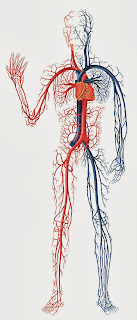
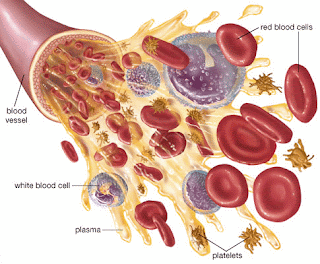
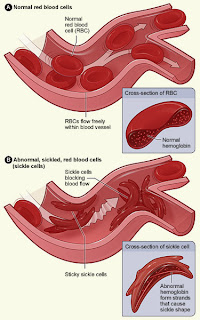
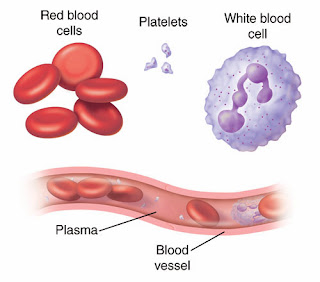
The road system is a lot like our circulatory system. It has red blood cells, and white; platelets and plasma; each with their individual characteristics and modes of behaviour.
For our body to be healthy, things must flow smoothly, free of disputes and blockages. Each part works together, to create a harmonious whole.
................................................................................................................................................................................
 We all like surprises, or so the saying goes. But on the roads, surprises lose their appeal.
Broadly speaking, motorists know what other motorists are going to do, thanks to universal rules that govern their behaviour. Inasmuch as everyone sticks to these rules then a critical amount of order is maintained. We all make mistakes - and occasionally someone will be wantonly reckless - but by and large we strive to follow the rules and be transparent to one another.
Can the same be said for cyclists?
There are many instances in which cyclists' behaviour becomes largely unpredictable. Certain situations provoke this more than others, chief among them being whenever a cyclist sees slow moving or static traffic.
As cyclists, we have the option to 'filter' whenever we see traffic ahead. This is in essence a pass to the front of the queue, presumably awarded as either a congratulatory or condolatory pat on the back, depending on your point of view: either 'good on you for choosing to cycle instead of drive' or 'we know you keep getting overtaken by everyone else, but you can get your own back now.'
Filtering creates confusion and anxiety because it is risky and unpredictable. Motorists cannot anticipate when we are going to move up their left side, or their right; or cut in front of them. They do not know what we are going to do when the traffic starts moving and we are stranded on either side of them; whether we will attempt to speed up or slow down. They are surprised as we spring from one blind-spot to the next. They do not know whether we will even choose to filter at all.
Not only do they not know how we will behave, they also do not know what we expect from them.
 There are a great many unknowns when it comes to cyclists. And this is because we currently have a great deal of freedom. There are no laws that say we must or must not filter; or that dictate how we must filter if we choose to do so.
Filtering - or queue-dodging as it is known to other road-users - is tacitly encouraged by the presence of advance stop lines, which entice the cyclist to assume pole position. Whilst these measures have been put in place to help cyclists, it is my view that, in encouraging unpredictable and risky behaviour - that zig-zag squeeze to the front - they are a detriment to all road users.
Cyclists frequently cite the ability to queue-dodge as one of the benefits of cycling; yet if we are honest with ourselves, we know that cycling has much else to advertise it besides the opportunity to act like prima-donna VIPs whenever we see a line of traffic.
We have great freedom, and yet we, as a community, continually abuse it. We run red lights; we hop from pavement to road to cycle lane as and when it suits us; we ride two - or more - abreast, holding a conversation on the road; we flagrantly queue dodge. We ask to be treated like a car, and in the next moment take advantage of the fact that we are not.
We are a schizophrenic presence. We make people nervous.
As cyclists we generally do not see the turmoil we cause; partly because we are concerned with our own plight; and partly because such turmoil may often play itself out in undetectable and subtle ways. We do not know how disgruntled we have made someone; or whether we have added another black mark in someone's mental logbook, another straw that may one day break some cyclist's back.
We may think that filtering is 'fine', that no damage is done; but even a cursory survey of a handful of motorists would lead us to see otherwise.
Motorists want from us what all road users want from each other: predictability.
 Filtering is an inherently unpredictable activity - now I'm here, now I'm there; now you see me, now you don't - and is fraught with uncertainties. It is that point at which the friction between cyclists and other road users becomes especially intense.
We may protest that cycling takes longer and that car drivers are able to get to where they are going quicker, therefore why shouldn't we be allowed the odd advantage? But this is an argument that uses sleight of hand to convince. It would have us believe that by filtering through slow-moving traffic we are, to some extent, readressing the balance between cyclists and motorists. It is a position that has at its heart a division - cyclists on one side, and motorists on the other.
If we want an equal place on the road, then we must accept this equality in all of its implications, good or bad. If motorists are to treat us as equals then we must behave as equals. This means queueing in traffic, and waiting our turn like everyone else.
A cyclist with a short-view argues that the traffic is caused by motor-vehicles, and so is the motorist's concern, not his; the long-sighted view shows that traffic is caused by road-users, of which he is one. Like it or not there are a lot of cars right now: all the more reason to endear ourselves as cyclists and to act against the unhelpful antagonisms that cause schisms on the road.
With the benefit of the long-view we do not act opportunistically, using our size to our advantage. We do not say "treat me like a car" at one moment, the next moment adding the caveat "only not right now."
We must act honorably. We must resist the urge to queue dodge. We must not filter. We must never undertake.
When we see traffic ahead, we must move into primary position and wait in the traffic. Through moving into primary we will be seen and will make clear our intention to move with the traffic. There is a beautiful simplicity in this stance: it is clear and it is safe. And more than that, it is honourable. The more we do this, the more it will become clear to cars what they can expect from us; and the more they will respect us for it.
If we, as a community, do not discipline ourselves - act responsibly, and honorably; with the well-being of all road users in mind - then we will be disciplined. A tipping point will be reached. Laws will tighten and our freedoms - those priviledges we currently have a tendency to flaunt - will be stripped from us.
It is my belief that all motorists should be educated about cyclists, so that they know what to expect from us and how to treat us. This could be introduced as part of the driving test, but I believe it would be much more effective to introduce it as a mandatory cycle-training programme for all teenagers, run via high-schools.
This way, we all start with the bicycle. It becomes our launching pad to the road. From this we graduate - if we wish - to the car. From having been introduced to the road as cyclists, we will subsequently be able to anticipate cyclists behaviour and act accordingly, and will be more inclined to treat them with respect. It will not be a cure-all solution to the kind of antagonisms we see on the roads at the minute, but it is a fine place to start.
 To conclude:
Motorists must know more about cyclists; must understand what we do, and what they are expected to do around us.
Cyclists must act more honorably and with the good of all road users in mind; not just themselves or other cyclists. They must curb some of their more schizophrenic tendencies, including the urge to filter.
In essence, what we are suggesting is a coming together; a crossing of the divide between us and them. We must remember that beneath our labels of 'cyclists' or 'motorists', we are all road-users.
We must keep that image of the circulatory system in mind; and remember that for a healthy body, traffic must flow smoothly, with as few disputes or blockages as possible. But importantly, white cell or red, we are all part of the same body.
................................................................................................................................................................................
Related posts:-
Everything is Connected
A Healthy Body
A Higher Power
The road system is a lot like our circulatory system. It has red blood cells, and white; platelets and plasma; each with their individual characteristics and modes of behaviour.
For our body to be healthy, things must flow smoothly, free of disputes and blockages. Each part works together, to create a harmonious whole.
................................................................................................................................................................................
 We all like surprises, or so the saying goes. But on the roads, surprises lose their appeal.
 Broadly speaking, motorists know what other motorists are going to do, thanks to universal rules that govern their behaviour. Inasmuch as everyone sticks to these rules then a critical amount of order is maintained. We all make mistakes - and occasionally someone will be wantonly reckless - but by and large we strive to follow the rules and be transparent to one another.
Can the same be said for cyclists?
There are many instances in which cyclists' behaviour becomes largely unpredictable. Certain situations provoke this more than others, chief among them being whenever a cyclist sees slow moving or static traffic.
As cyclists, we have the option to 'filter' whenever we see traffic ahead. This is in essence a pass to the front of the queue, presumably awarded as either a congratulatory or condolatory pat on the back, depending on your point of view: either 'good on you for choosing to cycle instead of drive' or 'we know you keep getting overtaken by everyone else, but you can get your own back now.'
Filtering creates confusion and anxiety because it is risky and unpredictable. Motorists cannot anticipate when we are going to move up their left side, or their right; or cut in front of them. They do not know what we are going to do when the traffic starts moving and we are stranded on either side of them; whether we will attempt to speed up or slow down. They are surprised as we spring from one blind-spot to the next. They do not know whether we will even choose to filter at all.
Not only do they not know how we will behave, they also do not know what we expect from them.
 There are a great many unknowns when it comes to cyclists. And this is because we currently have a great deal of freedom. There are no laws that say we must or must not filter; or that dictate how we must filter if we choose to do so.
Filtering - or queue-dodging as it is known to other road-users - is tacitly encouraged by the presence of advance stop lines, which entice the cyclist to assume pole position. Whilst these measures have been put in place to help cyclists, it is my view that, in encouraging unpredictable and risky behaviour - that zig-zag squeeze to the front - they are a detriment to all road users.
Cyclists frequently cite the ability to queue-dodge as one of the benefits of cycling; yet if we are honest with ourselves, we know that cycling has much else to advertise it besides the opportunity to act like prima-donna VIPs whenever we see a line of traffic.
We have great freedom, and yet we, as a community, continually abuse it. We run red lights; we hop from pavement to road to cycle lane as and when it suits us; we ride two - or more - abreast, holding a conversation on the road; we flagrantly queue dodge. We ask to be treated like a car, and in the next moment take advantage of the fact that we are not.
We are a schizophrenic presence. We make people nervous.
As cyclists we generally do not see the turmoil we cause; partly because we are concerned with our own plight; and partly because such turmoil may often play itself out in undetectable and subtle ways. We do not know how disgruntled we have made someone; or whether we have added another black mark in someone's mental logbook, another straw that may one day break some cyclist's back.
We may think that filtering is 'fine', that no damage is done; but even a cursory survey of a handful of motorists would lead us to see otherwise.
Motorists want from us what all road users want from each other: predictability.
 Filtering is an inherently unpredictable activity - now I'm here, now I'm there; now you see me, now you don't - and is fraught with uncertainties. It is that point at which the friction between cyclists and other road users becomes especially intense.
 We may protest that cycling takes longer and that car drivers are able to get to where they are going quicker, therefore why shouldn't we be allowed the odd advantage? But this is an argument that uses sleight of hand to convince. It would have us believe that by filtering through slow-moving traffic we are, to some extent, readressing the balance between cyclists and motorists. It is a position that has at its heart a division - cyclists on one side, and motorists on the other.
If we want an equal place on the road, then we must accept this equality in all of its implications, good or bad. If motorists are to treat us as equals then we must behave as equals. This means queueing in traffic, and waiting our turn like everyone else.
A cyclist with a short-view argues that the traffic is caused by motor-vehicles, and so is the motorist's concern, not his; the long-sighted view shows that traffic is caused by road-users, of which he is one. Like it or not there are a lot of cars right now: all the more reason to endear ourselves as cyclists and to act against the unhelpful antagonisms that cause schisms on the road.
With the benefit of the long-view we do not act opportunistically, using our size to our advantage. We do not say "treat me like a car" at one moment, the next moment adding the caveat "only not right now."
We must act honorably. We must resist the urge to queue dodge. We must not filter. We must never undertake.
When we see traffic ahead, we must move into primary position and wait in the traffic. Through moving into primary we will be seen and will make clear our intention to move with the traffic. There is a beautiful simplicity in this stance: it is clear and it is safe. And more than that, it is honourable. The more we do this, the more it will become clear to cars what they can expect from us; and the more they will respect us for it.
If we, as a community, do not discipline ourselves - act responsibly, and honorably; with the well-being of all road users in mind - then we will be disciplined. A tipping point will be reached. Laws will tighten and our freedoms - those priviledges we currently have a tendency to flaunt - will be stripped from us.
It is my belief that all motorists should be educated about cyclists, so that they know what to expect from us and how to treat us. This could be introduced as part of the driving test, but I believe it would be much more effective to introduce it as a mandatory cycle-training programme for all teenagers, run via high-schools.
This way, we all start with the bicycle. It becomes our launching pad to the road. From this we graduate - if we wish - to the car. From having been introduced to the road as cyclists, we will subsequently be able to anticipate cyclists behaviour and act accordingly, and will be more inclined to treat them with respect. It will not be a cure-all solution to the kind of antagonisms we see on the roads at the minute, but it is a fine place to start.
 To conclude:
Motorists must know more about cyclists; must understand what we do, and what they are expected to do around us.
Cyclists must act more honorably and with the good of all road users in mind; not just themselves or other cyclists. They must curb some of their more schizophrenic tendencies, including the urge to filter.
In essence, what we are suggesting is a coming together; a crossing of the divide between us and them. We must remember that beneath our labels of 'cyclists' or 'motorists', we are all road-users.
We must keep that image of the circulatory system in mind; and remember that for a healthy body, traffic must flow smoothly, with as few disputes or blockages as possible. But importantly, white cell or red, we are all part of the same body.
................................................................................................................................................................................
Related posts:-
Everything is Connected
A Healthy Body
A Higher Power
Masters of the Universe
 Technology takes us away from our true nature. The further we get from our true nature, the more lost we become.
The will - the universe, the life-force, the all, God - expresses all of its possibilities in its many manifestations. Things clash, bite, swoop, soar, glide, drop, run, trickle. Things are rooted, immovable; flowing and unplaceable.
Each manifestation is blessed with certain potentialities; certain things that it is "adapted" for, or meant to do. The Swallow is expert at gliding over the water but not at swimming on it. The Duck is not so agile in the air, but is good on the water.
The form of a 'thing' shows us what it is meant to do: its nature is displayed in its appearance.
Humans, as with all other creatures, have a certain range of potentialities; a nature. Our hands allow us to grab and manipulate, our legs to run; and so on. As with other things, there are limits to our potential; borders to our nature.
Our technology has allowed us to transcend our limits.
Lacking wings, we cannot fly. It is not in our nature. And so we come up with devices that allow us to get round this limitation.
Through technology we mimic the potentialities of all other things. We go beyond the borders of our own nature - as defined by our bodies - and become something else. One way of seeing this is that we are like a child who has been given a gift. We are pleased with our gift, but notice that other children have also been given gifts, and that they are different to our own. We wonder about them and, slowly but surely, begin to covet them.
 Through technology we aspire to become everything.
We are now king of the jungle. We have secured the top spot at the table. We are less at the mercy of our environment, more able to defend ourselves from danger. This appears to be a good thing for the individual; if we define "good" as being that which allows the individual - in the here and now - to live longer and more comfortably. It appears to be good for the species because it allows us to dominate the scene.
But this definition of "good" is fundamentally short-sighted. It is "good" in the way that junk food is "good"; in other words, good in the now. It gets lost in the taste of things, but does not see the long-term harm that these things will do.
The further we stray from our true nature, the bigger mess we find ourselves in. We do not understand the larger balance, and cannot hope to replicate it through technology. As we get further and further away from our nature, we are faced with more and more problems; and our answer is to medicate these problems with technology; high-tech short-term solutions that - being more technology - only serve to take us ever further away.
And so more problems spring up. Our answer: more technology!
In this way we find ourselves on an endless downwards spiral; no sooner have we patched up one hole then another two appear. Our battle is endless, and will always be endless. This is because of a simple truth that we refuse to collectively accept: that no amount of technology - regardless of how advanced it is - will allow us to reach the peak of the mountain from where we can see it all and understand it all.
No amount of technology will allow us to become God.
So whilst technology continues to be good for us - as individuals in the here and now - we are on a time limit. Just as a person can get away with eating junk food for a time without any serious consequences, eventually their bad habits will catch up with them. In acting in the interests of the individual in the here and now - in acting with a short-term mindset - we are neglecting the long-term picture. In practical terms, our short-sighted self-interest has negative consequences for our environment. We are fine - for now - but everything around us suffers.
The mind fools itself into thinking that it is fine, whilst the body slowly deteriorates.
Just as the person consuming junk food is "fine" - in other words - can go on consuming junk food - we, collectively, appear to be fine. This is because - like the junk food addict - we are choosing to ignore the signs that something is wrong. There are signs everywhere, but we cannot face them because they may force us to change our habits. Above all, we want to continue as we are: to go on eating, tasting, enjoying.
But there is only so much junk that a body can take. It will, eventually, give in.
 We can define an organism as a system of 'things' that depend upon each other for their individual survival. The cells and organs of a body need each other; and we, as the body, need them. Inasmuch as we are reliant upon our environment for our survival - the creatures and life that surrounds us - then our organism expands to include all of this.
 We are part of a larger 'body' - and we are taxing it to its limits.
It will give in.
And where will that leave the individual in the here and now?
Our answer to this threat is technology. We eat bad food and when problems arise we medicate them. And then we eat more bad food. More problems? More medication. We endlessly patch up a faulty machine. But there is only so much patching up we can do before the machine becomes irreparable.
We attempt to sever our reliance upon our environment - through technology - but lack the wisdom and insight to build a sustainable alternative. In jettisoning our current environment we assume the role of gods; but we do not see that compared to the wisdom of nature - the wisdom that permeates all things in the universe - we are merely hopeless children with expensive toys and inflated notions.
The answer to our problems is always staring us in the face; and it is simple. But it is the answer that none of us want to hear: stop eating junk food!
How we view this is probably dependent upon how far out we draw our borders. If our concern stretches no further than ourselves or our immediate family then we will not see the problem with any of this. Because, as we have seen, technology is good for the individual in the here and now.
We might be able to get away with our bad habits. But in doing so we pass a terrible legacy on to our children. We show them that we were too weak to defeat our addiction, and we pass the responsibility on to them. This is our gift to them.
The point will come when our body will give in: when we will have taxed our environment to the point where it can no longer support us.
Technology leads us down a never-ending spiral and at all times the answer is beneath our noses: stop doing the things that are bad for us.
We must remember our true nature.
We must stop running away from it - with all of its vulnerabilities - and come to terms with it.

Amongst other things, this means coming to terms with limitations, and ultimately, death. We must stop trying to defeat it, stop trying to lengthen our lives. Stop taking for granted that a longer life is always a good thing. It is only a good thing to a people that are growing ever more scared of dying.
To do this we must weave a culture that tells different stories. That accepts death and paints it in a positive light. We must create a culture that tells stories which encourage us to lead sustainable lives.
If the mainstream culture will not do this, then it is up to us to create our own sub-cultures - sanctuaries where new stories can be told, and new people created.
It is these people - with our help - that will bring us back to balance.
................................................................................................................................................................................
A trip abroad = a large juicy hamburger
An immersive computer game = a chocolate bar
The internet = a tub of ice cream
A film = a large popcorn
All these things taste good. But what are the long term consequences of our indulgence?
................................................................................................................................................................................
Related posts:-
Lines and Circles
The Real Thing
Taking the Rough with the Smooth
Small Scale/Large Scale
Small Mind/Large Mind
Everything is Connected
The Earth's the Limit
Part of a System
Guiding Fiction
Re-write It
Rights and Responsibilities
Live Forever?
Fuck It
Eruption!
 When you build up tension in your body it is important to release it in a conscious way. If it isn't released then it will find its way out regardless, and generally when you aren't looking.
It is like a pressurised boiler.
The tension builds and builds, the sides start to bulge and eventually nuts and bolts start flying off and jets of steam start hissing out!
Instead of letting steam off in a controlled way, you've ignored it until its found its own way out.
This principle applies as much to human beings as it does to boilers.
We can see it in action on the roads. When a car driver gets stuck behind a cyclist and has to slow down to a crawl, he may begin to build up tension. The more he has to trail behind the cyclist - who is going a snails pace compared to what he is used to - the more his boiler begins to fill up. And when he finally gets past he may be just about ready to blow.
He may let this pressure off by cursing the driver or putting his foot to the floor and speeding away, leaving the cyclist in his dust. But there is a chance that some of this tension could stay with him.
And then it begins to find its way out in all sorts of unfortunate ways.
Maybe the next cyclist he comes to he isn't so courteous with. Maybe his pent up anger and frustration makes him a bit reckless. Perhaps he gets a bit too close to this next cyclist. Maybe he even clips him accidently with his wing mirror.
Or he may not come across another cyclist. Phew! He speeds up and makes it home in record time! But he finds the kids even more irritable than normal tonight. He is short with his wife.
HISS!
Tension always finds its way out.
The question is whether you are going to be in control of its release, or whether you're going to let it do its own thing.
And if you're a cyclist then its worth bearing this principle in mind too.
 You may have stuck to your guns and exercised your right to be on the road, annoying who knows how many motorists in the meantime. And you may have even got away with it unscathed.
But the next cyclist may just well be paying the price for your actions.
Be considerate. If there is someone behind you and they are aching to get past - and you can tell when they are - then don't be afraid to pull over and let them be on their way.
The communal gains from this considerate act are far greater than any personal losses.
(And this comes from a cyclist by the way!)
Related posts:-
Pressure Valve
Sentencing Circles
 In traditional court procedures, the accused is brought before a judge, possibly a jury, and legal counsel seeks to establish guilt or innocence and the appropriate remedy.
More recently, the victim or the victim's family has been allowed to offer "victim impact statements", describing the ways in which the crime has affected the individual and his or her relatives.
Traditional courts maintain distance and hierarchy.
In a sentencing circle, the offender, his or her victims, the victim's family, peers, elders and other community members sit down together in a circle and work together to understand what has led to the crime and to negotiate appropriate redress.
Rather than being purely punitive, the circle promotes healing.
Instead of removing the offender from the community and isolating him or her, the circle affirms the essential goodness of the offender, attempting to restore and re-build the offender, the victim, and the community to which they all belong.
Circles: It's about Justice. It's about Healing.
................................................................................................................................................................................
 The sentencing circle is about “community building,” he says; it is about “healing” those affected by crime, and those who committed it. It is repairing relations; making victims and perpetrators “feel better” with the outcome of a criminal incident.
[...] “What social scientist in the last 100 years has said, ‘Gee, punishment changes behaviour’?” Mr. Stuart asks.
Much better, he says, is for criminals to feel their community’s “love.”
[...] “If the judge were to effectively ignore the circle that would be sending a message that we don’t want your opinion on justice matters or that somehow punishment is more important than building community,”
[...] “There’s a basic philosophical question that has to be engaged before you even get involved in sentencing circles and that is what are your primary goals or objectives in sentencing,” says David Paciocco, a law professor at the university of Ottawa.
“It all depends on your perspective on what we’re trying to accomplish when we sentence.”
Sentencing circles appeal to those wanting primarily to reintegrate criminals into their offended community, he says. “If on the other hand you believe that sentencing is a principled exercise designed to express societal revulsion at criminal conduct, or if you believe that proportionality is the underlying consideration in sentencing, then you’re probably going to feel uncomfortable with a regime that’s designed to see how we can move forward rather than respond to what’s happened in the past.”
[...] Supporters of the circles say their strength is that the process reflects a more time-honoured form of justice; it is, Mr. Stuart points out, a community choosing to “roll up its sleeves” in the grandest traditions of civil society, to solve its own problems.
“We’re living now in this la-la land where nobody really participates,” he says. “It’s all done by professionals . . . we’ve outsourced everything.”
'Sentencing circles for aboriginals: Good justice?'
................................................................................................................................................................................
We believe that the penal code of the old covenant - an eye for an eye, and a tooth for a tooth - has been abrogated by Jesus Christ, and that that under the new convenant the forgiveness instead of the punishment of enemies has been enjoined on all his disciples in all cases whatsoever.
To extort money from enemies, cast them into prison, exile or execute them, is obviously not to forgive but to take retribution.
[Leo Tolstoy]
The Kingdom of God is Within You, p. 4-5
................................................................................................................................................................................
Related posts:-
Everything is Connected
Carry Each Other
Evil and Us
Projecting a Shadow
Negative Space
Full Spectrum
A Circle of Gifts

Anyone can consume. Intimacy comes from co-creation, not co-consumption, as anyone in a band can tell you, and it is different from liking or disliking someone.
But in a monetized society, our creativity happens in specialized domains, for money.
To forge community then, we must do more than simply get people together. While that is a start, soon we get tired of just talking, and we want to do something, to create something.
It is a very tepid community indeed, when the only need being met is the need to air opinions and feel that we are right, that we get it, and isn't it too bad that other people don't ... hey, I know! Let's collect each others' email addresses and start a listserv!
Community is woven from gifts. Unlike today's market system, whose built-in scarcity compels competition in which more for me is less for you, in a gift economy the opposite holds. Because people in gift culture pass on their surplus rather than accumulating it, your good fortune is my good fortune: more for you is more for me. Wealth circulates, gravitating toward the greatest need. In a gift community, people know that their gifts will eventually come back to them, albeit often in a new form.
Such a community might be called a "circle of the gift."
Fortunately, the monetization of life has reached its peak in our time, and is beginning a long and permanent receding (of which economic "recession" is an aspect). Both out of desire and necessity, we are poised at a critical moment of opportunity to reclaim gift culture, and therefore to build true community.
The reclamation is part of a larger shift of human consciousness, a larger reunion with nature, earth, each other, and lost parts of ourselves. Our alienation from gift culture is an aberration and our independence an illusion. We are not actually independent or "financially secure" – we are just as dependent as before, only on strangers and impersonal institutions, and, as we are likely to soon discover, these institutions are quite fragile.
[Charles Eisenstein]
'A Circle of Gifts'
................................................................................................................................................................................
Related posts:-
Creative Living
Go Your Own Way
Lost Tribe
Communal Benefits
Community Service
Carry Each Other
Know your place
Life Support
Un-professional
Firm Foundations
Those with an insecure sense of self inhabit houses with poor foundations. They live in constant fear that their home could at any moment crack and crumble. Because the self is in constant danger of falling apart, they will not risk anything that may pose a challenge to its integrity. Harsh weather and heavy blows are avoided.
These people will often be turned inwards, constantly checking for cracks and frantically applying cement, gaffa tape, or elastoplasts to whatever wounds appear. Every blow becomes magnified.
They look for constant reassurance - yes, your house is good (so, no, it won't fall down) - but all reassurance amounts to little more than a superficial and temporary remedy. They've seen the cracks in the basement, and they know how serious things really are.
A secure sense of self rests upon firm foundations, which are, according to some thinkers, put in place during the early years of a person's life. If a healthy relationship is not established with primary care-givers (most especially the mother) then whatever is built subsequently will rest upon an infirm sense of self. A bad start can, according to some, affect everything that follows.
Inflation of the self (self aggrandisement, narcissism, etc) can be a distraction from the worrying reality that remains to be confronted, down in the basement. Make enough noise about your wallpaper and maybe nobody will notice that your house is subsiding (not even you).
If we feel insecure about our foundations, then we may be adverse to leaving our house, lest it should fall over whilst we're gone. We don't believe that it will stay standing without us there to hold it all together. A firm sense of self, on the other hand, allows us to leave home and travel to new, and perhaps unfamiliar, surroundings. We're able to sample foreign customs, and try new ways of being; safe in the knowledge that our home will still be there when we return.
When we have a firm sense of self we're more able to look outwards, and what we see becomes less coloured by our own viewpoint: we project less of ourselves onto things. We stop taking things so personally, and realise that everything isn't about us. Maybe that person spoke to you sharply because you're inherently bad - or maybe they were just having a bad day. We're more inclined to grant the benefit of the doubt. As more colours are allowed into the picture, a more balanced view emerges.

I now believe that large extended families and small intimate communities form a better foundation for the creation of mature, balanced individuals.
A healthy society is one that encourages close social ties and mutual interdepedence, granting each individual a net of unconditional emotional support. Within this nurturing framework, individuals feel secure enough to become quite free and independent.
Paradoxically, I have found the Ladakhis less emotionally dependent than we are in industrial society. There is love and friendship, but it is not intense or grasping - not a possession of one person by another.
I once saw a mother greeting her eighteen-year-old son when he returned home after being away for a year. She seemed surprisingly calm, as though she had not missed him. It took me a long time to understand this behaviour.
I thought my Ladakhi friends reacted strangely when I arrived back after being away for the winter. I had brought presents I knew they would like. I expected them to be pleased to see me and happy at the gifts. But to them it was as if I had not been gone. They thanked me for the presents, but not in the way that I was hoping. I was wanting them to look excited and confirm our special friendship. I was disappointed. Whether I had been away for six months or a day, they treated me in the same way.

I came to appreciate the easy, relaxed attitude of my Ladakhi friends and to like being treated as though I had never been away.
Ladakhis do not seem to be as attached to anything as we are.
Most of them are, of course, not completely without the attachments that so affect our lives. But again, there is a difference - an all pervasive difference - in degree. One may be unhappy to see a friend leave or to lose something, but not that unhappy.
[Helena Norberg-Hodge]
Ancient Futures: Learning From Ladakh, p.86-7

The infant moves slowly out from the mother, but it "can do this fully and sucessfully only to the extent that the mother is his absolutely unquestioned safe place to which he can always instantly return and be nurtured.
Only when the infant knows that the mother matrix will not abandon him can that infant move into childhood with confidence and power [...]
[...] The physical mother remains the primary matrix even though we separate from her and move into larger matrices [...]"
[Marion Woodman, quoting Joseph Chilton Pearce]
Addiction to Perfection, p. 18

They aren't able to maintain self-esteem with good performances, so they engage in self-inflating verbalizations: talking about skills in domains other than the one pertaining to this task, or boasting of wealth and possessions.
Such behaviours seem to reflect a desire to regain threatened self-esteem in domains other than the one that's responsible for the threat.
[Charles S. Carver & Michael Scheier]
On the Self-Regulation of Behavior, p. 79-80
Once adequate support is developed within the individual and/or in the environment, greater awareness and new ways of being in the world are possible.
[Herb Stevenson]
'Paradox: A Gestalt Theory of Change'
[When something anamalous occurs] how do we construe the occurence? Is it a major event, or a minor event?
And my advice would be, unless there’s strong reason, presume its a minor event and start operating at that level, because otherwise every argument becomes a catastrophe. And if that’s the case you actually can’t solve any problems - you won’t be able to discuss anything - because as soon as you bring up an anomaly - something unpleasant - the other person will assume that everything’s over and get so shorted out that you won’t be able to talk with them.
Those are the sort of people who will cry if you bring up anything negative - their value structure is so fragilely constructed that anything you toss at them - that’s a question - is enough to shake the entire structure to its foundations.
[Jordan Peterson]
‘2017 Maps of Meaning 7: Images of Story & MetaStory’
Related posts:-
Knowing Your Place
Growing Down
Maturity
Life Support
Lost Tribe
A Safe Space
Love Your Self
Forget Your Self
Communal Benefits
Community Service
Alone Together
Rooted in blood and soil
Carry Each Other
What are the people saying?
One Love?
Set It Free
 A three year old child has just finished a drawing that she has spent the last few hours meticulously composing. In her opinion, it is the best drawing she has ever done, and she can't wait to show her mother, who she knows will be overjoyed to see it. She runs to her, shouting "Mummy, Mummy, I've done a drawing for you!"
"Wow!" exclaims her mother, "let me see!"
"Here!" she shouts, and thrusts the drawing into her mother's hands. "That'll be three pounds please!"
This situation may seem a little absurd, but each of us encounter a similar scenario on a near daily basis, whenever we pay for a song, a film, a theatre performance, or any other cultural creation; or whenever we, as creators ourselves, charge money for our creations. We are the excited child, enthused about our creations and eager to share them with others; it seems perverse for the child to demand money for her creation, and yet much of the time we may not give a second thought in issuing the same demand.
In charging for her art, our three-year-old is placing limitations upon it. Her mother can have it, but at a price. A hurdle has been erected, and it must be jumped before the goal is reached. For a child to place these limitations is absurd, precisely because the child could not conceive of any reason to do so. Unaffected by the necessities of commerce, her logic is of a different variety to ours. She sees only how proud she is of her creation, and imagines only the joy that it will bring someone else. Her logic exists between these points, and works to connect them. Like her, it is uncomplicated, naïve, and pure.
Our creations are our children, and we have a responsibility to them; if we truly believe in them - that they are ready to go out into the world and do good - then we must think carefully about every barrier we place in their path. Money can be one such barrier. In placing a price upon something we proclaim, "I will free you so that you can enter the world, but I must get something in return." This is the logic of exchange: if we spent so long raising this child, then surely our efforts must be compensated.
Copyright is another barrier. We tell our creation, "I think you are ready to leave my house and go out there, but you must remain under my watchful eye." We allow it a facsimile of freedom; it can roam, but only if we know its whereabouts - who it is with, what it is doing. We retain our parental presence, but in doing so may stunt its growth. It shows us that it is ready to go out there, to mingle and explore, but we are unable to relinquish our control. After all, we spent so much time and effort bringing it to this point, surely we are entitled to a few ownership rights?
 The logic is as before. We have fooled ourselves into thinking that, because we created this thing, we must own it. It seems logical, but perhaps only because this is the brand of logic that our society surrounds us with on a daily basis: the logic of commerce. "Ownership" oils its gears; is vital to the smooth running of the system. But there are other ways of thinking, other brands of logic that may not place so much emphasis upon this idea. We must consider what happens when we apply the logic of commerce - with its rules; its favouring of certain values over others - to the world of creativity. Is it a good fit? Or is it a constraint, inhibiting possibilities of movement?
When we jettison the idea of ownership, the creative product can be seen in a new light. We may be proud of it - it may be handsome, or intelligent - but we understand that its greatness is its own, and not a reflection or a comment upon us. We may have raised it well - said the right things at the right time; doted and nurtured - but we did so for its benefit, not in order to reap rewards for exceptional parentage. Our joy is in seeing it take flight, wherever its wings may take it, and whomever it shall meet. Our joy is in knowing that it is out there, flourishing and, hopefully, doing good. Whilst it may be our child, we understand that it has a life within the community, and a duty herein.
It is all too easy to slip into becoming the controlling parent, especially when common logic urges us to think in terms of ownership and parental rights. But we mustn't forget our parental responsibilities; our duty to our creation, and to the community that is ready to accept and celebrate it. As the good parent we must give it all the freedom that it asks for, and allow it its encounters and escapades.
Commerce may wish to elbow its way into our lives at every opportunity, but we needn't let its rules and limitations colour all aspects of our existence. We have to make a living; this much is unavoidable. But the choice is ours as to whether we involve what is most precious to us in this struggle; whether we exploit its beauty, its greatness, in order to keep ourselves afloat. With the greater good in mind, it may be that we must do our best to protect the things that we truly care about from the corruptive imperatives of commerce, so that they can flourish uninhibited.
................................................................................................................................................................................
 Charging money for something suppresses the material or service by restricting or deterring people from using it.
A very small percentage will buy something as opposed to using it for free, because it is unaffordable for most of the world's population, requires carrying money or having credit cards and wastes time for bookwork and transactions. Also it discriminates against the needy.
Instead people who can afford it should offer to donate, even if they are not asked for money. Would you be reading this information if you initially had to pay for it?
Here: http://www.trueconspiracies.com/
................................................................................................................................................................................
[On Balinese village life]
It is common to find that activity [...] rather than being purposive, i.e., aimed at some deferred goal, is valued for itself. The artist, the dancer, the musician, and the priest may receive a pecuniary reward for their professional activity, but only in rare cases is this reward adequate to recompense the artist for even his time and materials.
The reward is a token of appreciation, it is a definition of the context in which the theatrical company performs, but it is not the economic mainstay of the troupe. The earnings of the troupe may be saved up to enable them to buy new costumes, but when finally the costumes are bought it is usually necessary for every member to make a considerable contribution to the common fund in order to pay for them.
Similarly, in regard to the offerings which are taken to every temple feast, there is no purpose in this enormous expenditure of artistic work and real wealth. The god will not bring any benefit because you made a beautiful structure of flowers and fruit for the calendric feast in his temple, not will he avenge your abstention.
Instead of deferred purpose there is an immediate and immanent satisfaction in performing beautifully, with everybody else, that which it is correct to perform in each particular context.
[Gregory Bateson]
Steps to an Ecology of Mind ('Bali: The Value System of a Steady State'), p.117-8
................................................................................................................................................................................
You don't need to ask me permission to quote something I have written or said. We are both doing the work of the Creator. Our responsibility is to get the information out there. Use whatever you like.
This answer was given to me by Don Coyhis, president of the White Bison Society, when I asked him if I might use some words from his wonderful new meditation book based on the Medicine Wheel and Native American spirituality.
[...] Most Native people I know are like Don. They realize that possession - of anything, and especially of words - is an illusion. Once we put them out there, they belong to the universe. If we are all, to the best of our ability, doing the work of the Creator, there is no possession.
I assured Don that I felt the same way about his using my material. Our interaction felt so sane, so truly human.
When I am doing the work of the Creator, possession is an illusion.
[Anne Wilson Schaef]
"January 3rd", Native Wisdom for White Minds
................................................................................................................................................................................
Related posts:-
Open Source Approaches
Walter
[Anonymous]
Sell Out
Karma Yoga
Un-professional
Separations and Bridges

We need not be put off by the fact that the reasonings of the heart (or of the hypothalamus) are accompanied by sensations of joy or grief.
These computations are concerned with matters which are vital to mammals, namely, matters of relationship, by which I mean love, hate, respect, dependency, spectatorship, performance, dominance, and so on.
These are central to the life of any mammal and I see no objection to calling these computations "thought," though certainly the units of relational computation are different from the units which we use to compute about isolable things.
But there are bridges between the one sort of thought and the other, and it seems to me that the artists and poets are specifically concerned with these bridges.
It is not that art is the expression of the unconscious, but rather that it is concerned with the relation between the levels of mental process.
From a work of art it may be possible to analyze out some unconscious thoughts of the artist, but I believe that, for example, Freud's analysis of Leonardo's Virgin on the Knees of St. Anne precisely misses the point of the whole exercise. Artistic skill is the combining of many levels of mind - unconscious, conscious, and external - to make a statement of their combination. It is not a matter of expressing a single level.
Similarly, Isadora Duncan, when she said, "If I could say it, I would not have to dance it," was talking nonsense, because her dance was about combinations of saying and moving.
[Gregory Bateson]
Steps to an Ecology of Mind, p.470
................................................................................................................................................................................
Related posts:-
Small Mind/Large Mind
A Different Difference
A Difference that makes a Difference
Digging Deeper
Dreams from Dreams
Up with intuition!
In-between
Making Connections
Where language ends and art begins
Levels of Meaning
Everything is Connected
One Love?

Hatred is a passionate wish for destruction; love is a passionate affirmation of an "object"; it is not an "affect" but an active striving and inner relatedness, the aim of which is the happiness, growth, and freedom of its object. It is a readiness which, in principle, can turn to any person and object including ourselves.
Exclusive love is a contradiction in itself.
To be sure, it is not accidental that a certain person becomes the "object" of manifest love [...] The important point, however, is that love for a particular "object" is only the actualization and concentration of lingering love with regard to one person; it is not, as the idea of romantic love would have it, that there is only the one person in the world whom one can love, that it is the great chance of one's life to find that person, and that love for him results in a withdrawal from all others.
The kind of love which can only be experienced with regard to one person demonstrates by this very fact that it is not love but a sado-masochistic attachment.
The basic affirmation contained in love is directed towards the beloved person as an incarnation of essentially human qualities.
Love for one person implies love for man as such.

From this it follows that my own self, in principle, is as much an object of my love as another person. The affirmation of my own life, happiness, growth, freedom, is rooted in the presence of the basic readiness of and ability for such an affirmation.
If an individual has this readiness, he has it also towards himself; if he can only "love" others, he cannot love at all.
[Erich Fromm]
The Fear of Freedom, p.98-100
................................................................................................................................................................................

Such love might seem quite deep, but it easily vanishes if it doesn't live up to expectations. What's more, the sort of love we feel for those close to us is often accompanied by a feeling of distance, or even hostility toward 'strangers', those who could pose a threat to ourselves and to those we love.
True love and true compassion can be extended to our adversaries, while love and compassion mixed with attachment can't include anyone we see as an enemy.
[...] true love can't be polarized, restricted to one or two specific beings, or contaminated with partiality. What's more, it should be completely disinterested and not expect anything in return.
Love, here, means total, unconditional love for all beings without any distinction or partiality.
One of the principal topics for meditation is to begin by thinking of someone you love deeply, and letting that feeling of love and generosity fill your heart and mind. Then you break out of the cage that restricts that love to a particular person and extend it to all those for whom your feelings are neutral or indifferent. Finally, you include in your love all those you consider as enemies. That's true love.
[Matthieu Ricard]
The Monk and the Philosopher, p.193-4
................................................................................................................................................................................
Related posts:-
Everything is Connected
True Love
Positive Space
Giving and Receiving
Alone Together
What are the people saying?
Communal Benefits
Firm Foundations
Everything is alive
Selfishness and Self-love
Rights and Responsibilities
Love Your Self
Playing the Art Game | Erich Fromm: Spontaneity
Subscribe to:
Posts (Atom)