
Blanket advertising - the idea that a hundred million people receive the same piece of direct mail, the same television advert, the same digital advert - is dead. My children will certainly never understand this concept of mass communication.
Today communication is becoming ever increasingly targeted; its being individualised for every single person […]
So you will no longer be receiving adverts on products and services that you don’t care about, rather you’ll only receive adverts that not only are on the products and services - or in the case of elections, issues - that you care about most, but that have been nuanced in order to reflect the way that you see the world.
[Alexander Nix]
‘The Power of Big Data and Psychographics’
Showing posts with label Individual/Whole. Show all posts
Showing posts with label Individual/Whole. Show all posts
Double Vision

It is correct [...] to begin to think of the two parties to the interaction as two eyes, each giving a monocular view of what goes on and, together, giving a binocular view in depth.
This double view is the relationship.
Relationship is not internal to the single person. It is nonsense to talk about 'dependency' or 'aggresiveness' or 'pride', and so on. All such words have their roots in what happens between persons, not in some something-or-other inside a person.
Only if you hold on tight to the primacy and priority of relationship can you avoid dormitive explanations. The opium does not contain a dormitive principle, and the man does not contain an aggressive instinct.
[I came to understand] that I will get nowhere by explaining prideful behaviour, for example, by referring to an individual's 'pride'. Nor can you explain aggression by referring to instinctive (or even learned) 'aggressiveness'.
Such an explanation, which shifts attention from the interpersonal field to a factitious inner tendency, principle, instinct, or whatnot, is, I suggest, very great nonsense which only hides the real questions.

The same is true of 'dependency', 'courage', 'passive-aggressive behaviour', 'fatalism', and the like. All characterlogical adjectives are to be reduced or expanded to derive their definitions from patterns of interchange, i.e., from combinations of double description.
[Gregory Bateson]
Mind and Nature, p. 146-7
................................................................................................................................................................................
Related posts:-
Everything is Connected
Small Mind/Large Mind
Small Part/Large System
Addiction: the Long and Short of it
"Laziness" (and other fictions)

Individual v Environment
................................................................................................................................................................................
Conservative - Liberal
Individual - Environment
Internal - External
................................................................................................................................................................................
[...] when it comes to the cause of human suffering, liberals tend to believe in exterior causes, whereas conservatives tend to believe in interior causes.
That is, if an individual is suffering, the typical liberal tends to blame external social institutions (if you are poor it is because you are oppressed by society), whereas the typical conservative tends to blame internal factors (you are poor because you are lazy).
Thus, the liberal recommends exterior social interventions: redistribute the wealth, change social institutions so that they produce fairer outcomes, evenly slice the economic pie, aim for equality for all.
The typical conservative recommends that we instil family values, demand that individuals assume more responsibility for themselves, tighten up slack moral standards (often by embracing traditional religious values), encourage a work ethic, reward achievement, and so on.
The important point is that the first step toward an integral politics that unites the best of liberal and conservative is to recognize that both the interior quadrants and exterior quadrants are equally real and important.
We consequently must address both interior factors (values, meaning, morals, the development of consciousness) and exterior factors (economic conditions, material well-being, technological advance, social safety net, environment) - in short, a truly integral politics would emphasize both interior development and exterior development.
[Ken Wilber]
A Theory of Everything, p.84
................................................................................................................................................................................
I would say that the second rule of moral psychology is that morality is not just about how we treat each other (as most liberals think); it is also about binding groups together, supporting essential institutions, and living in a sanctified and noble way.
When Republicans say that Democrats "just don't get it", this is the ‘it’ to which they refer. Conservative positions on gays, guns, god, and immigration must be understood as means to achieve one kind of morally ordered society. When Democrats try to explain away these positions using pop psychology they err, they alienate, and they earn the label ‘elitist’. But how can Democrats learn to see - let alone respect - a moral order they regard as narrow-minded, racist, and dumb?
I [...] began to think about liberal and conservative policies as manifestations of deeply conflicting but equally heartfelt visions of the good society.
In several large internet surveys, my collaborators Jesse Graham, Brian Nosek and I have found that people who call themselves strongly liberal endorse statements related to the harm/care and fairness/reciprocity foundations, and they largely reject statements related to ingroup/loyalty, authority/respect, and purity/sanctity.
People who call themselves strongly conservative, in contrast, endorse statements related to all 5 foundations more or less equally.
We think of the moral mind as being like an audio equaliser, with 5 slider switches for different parts of the moral spectrum. Democrats generally use a much smaller part of the spectrum than do Republicans.
The resulting music may sound beautiful to other Democrats, but it sounds thin and incomplete to many of the swing voters that left the party in the 1980s, and whom the Democrats must recapture if they want to produce a lasting political realignment.
The Democrats must find a way to close the sacredness gap that goes beyond occasional and strategic uses of the words ‘God’ and ‘faith’. But if Durkheim is right, then sacredness is really about society and its collective concerns. God is useful but not necessary.
The Democrats could close much of the gap if they simply learned to see society not just as a collection of individuals - each with a panoply of rights - but as an entity in itself, an entity that needs some tending and caring. Our national motto is e pluribus unum ("from many, one").
Whenever Democrats support policies that weaken the integrity and identity of the collective (such as multiculturalism, bilingualism, and immigration), they show that they care more about pluribus than unum. They widen the sacredness gap.
[Jonathan Haidt]
What Makes People Vote Repulican?
................................................................................................................................................................................
What I think happens however, in most political debates that polarise around these issues, is that people differ on which aspect of causation needs emphasising in any given situation. It is the legitimacy of the emphasis on interior/exterior factors that is often questioned.
We can see that a more integral approach would be to recognize that in most real life policy debates there are both interior and exterior factors at play.
Which factors are the most pressing and need to be focussed on and solved is what any mature debate should be about. (Of course we need to trust one another that we are all trying to make society less miserable and not scheming to further the interests of a special group).
When people get very attached to an identity of being either a liberal or a conservative they become unable to objectively assess these factors. They habitually emphasise their preferred side of the argument and thus render true dialogue extremely difficult.
[Marc Pontin]
'Beyond Left and Right 1'
................................................................................................................................................................................
[...] whereas only a maniac from the right would pretend that the behaviour of certain banks did not contribute to the present global downturn, a diminishing number of figures on the left seem willing to concede that excessive personal or national debt (with very little to show for its accumulation) were another cause of the same. Bad banks driven by bad capitalism are the only causes of our calamity.
Oddly enough, the recent batch of left-wing doom and conspiracy books, from those of Russell Brand and Owen Jones to the more serious and informed Mason, point to a unified worldview. This sees human beings in democracies not as people with free will and unimaginable potential, but as inanimate beings to whom things are done.
If you have over-borrowed, then some mean lender made you borrow. If you are an individual, a loan company will have been to blame; if you are a nation, then the fault is Germany’s.
[Douglas Murray]
'Paul Mason's Postcapitalism is proof that the left is out of ideas'
................................................................................................................................................................................
[...] conservatives are more fearful by their nature.
A DNA analysis of 13,000 Australians found that liberals and conservatives had marked difference in genes that related to neurotransmitter functioning, particularly glutamate and serotonin, both of which are involved in the brain's response to threat and fear.
[Ed West]
The Diversity Illusion, p. 251 (Notes, #132)
................................................................................................................................................................................
Why has evil been such a hard concept for many on the left to accept? The basic agenda of the left is to change external conditions. But what if the problem is internal? What if the real problem is the cussedness of human beings?
[Thomas Sowell]
................................................................................................................................................................................
Related posts:-
Lines and Circles
The Colour Wheel
The Colour Spiral
Everything is Connected
Scale
A Higher Power
A Healthy Body
A Healthy Environment
Go Your Own Way
You ought to be more like me
Individual + Villager = Balance
Rights and Responsibilities
Addiction: the Long and Short of it
Conservative - Liberal
Individual - Environment
Internal - External
................................................................................................................................................................................
[...] when it comes to the cause of human suffering, liberals tend to believe in exterior causes, whereas conservatives tend to believe in interior causes.
That is, if an individual is suffering, the typical liberal tends to blame external social institutions (if you are poor it is because you are oppressed by society), whereas the typical conservative tends to blame internal factors (you are poor because you are lazy).
Thus, the liberal recommends exterior social interventions: redistribute the wealth, change social institutions so that they produce fairer outcomes, evenly slice the economic pie, aim for equality for all.
The typical conservative recommends that we instil family values, demand that individuals assume more responsibility for themselves, tighten up slack moral standards (often by embracing traditional religious values), encourage a work ethic, reward achievement, and so on.
The important point is that the first step toward an integral politics that unites the best of liberal and conservative is to recognize that both the interior quadrants and exterior quadrants are equally real and important.
We consequently must address both interior factors (values, meaning, morals, the development of consciousness) and exterior factors (economic conditions, material well-being, technological advance, social safety net, environment) - in short, a truly integral politics would emphasize both interior development and exterior development.
[Ken Wilber]
A Theory of Everything, p.84
................................................................................................................................................................................
I would say that the second rule of moral psychology is that morality is not just about how we treat each other (as most liberals think); it is also about binding groups together, supporting essential institutions, and living in a sanctified and noble way.
When Republicans say that Democrats "just don't get it", this is the ‘it’ to which they refer. Conservative positions on gays, guns, god, and immigration must be understood as means to achieve one kind of morally ordered society. When Democrats try to explain away these positions using pop psychology they err, they alienate, and they earn the label ‘elitist’. But how can Democrats learn to see - let alone respect - a moral order they regard as narrow-minded, racist, and dumb?
I [...] began to think about liberal and conservative policies as manifestations of deeply conflicting but equally heartfelt visions of the good society.
In several large internet surveys, my collaborators Jesse Graham, Brian Nosek and I have found that people who call themselves strongly liberal endorse statements related to the harm/care and fairness/reciprocity foundations, and they largely reject statements related to ingroup/loyalty, authority/respect, and purity/sanctity.
People who call themselves strongly conservative, in contrast, endorse statements related to all 5 foundations more or less equally.
We think of the moral mind as being like an audio equaliser, with 5 slider switches for different parts of the moral spectrum. Democrats generally use a much smaller part of the spectrum than do Republicans.
The resulting music may sound beautiful to other Democrats, but it sounds thin and incomplete to many of the swing voters that left the party in the 1980s, and whom the Democrats must recapture if they want to produce a lasting political realignment.
The Democrats must find a way to close the sacredness gap that goes beyond occasional and strategic uses of the words ‘God’ and ‘faith’. But if Durkheim is right, then sacredness is really about society and its collective concerns. God is useful but not necessary.
The Democrats could close much of the gap if they simply learned to see society not just as a collection of individuals - each with a panoply of rights - but as an entity in itself, an entity that needs some tending and caring. Our national motto is e pluribus unum ("from many, one").
Whenever Democrats support policies that weaken the integrity and identity of the collective (such as multiculturalism, bilingualism, and immigration), they show that they care more about pluribus than unum. They widen the sacredness gap.
[Jonathan Haidt]
What Makes People Vote Repulican?
................................................................................................................................................................................
What I think happens however, in most political debates that polarise around these issues, is that people differ on which aspect of causation needs emphasising in any given situation. It is the legitimacy of the emphasis on interior/exterior factors that is often questioned.
We can see that a more integral approach would be to recognize that in most real life policy debates there are both interior and exterior factors at play.
Which factors are the most pressing and need to be focussed on and solved is what any mature debate should be about. (Of course we need to trust one another that we are all trying to make society less miserable and not scheming to further the interests of a special group).
When people get very attached to an identity of being either a liberal or a conservative they become unable to objectively assess these factors. They habitually emphasise their preferred side of the argument and thus render true dialogue extremely difficult.
[Marc Pontin]
'Beyond Left and Right 1'
................................................................................................................................................................................
[...] whereas only a maniac from the right would pretend that the behaviour of certain banks did not contribute to the present global downturn, a diminishing number of figures on the left seem willing to concede that excessive personal or national debt (with very little to show for its accumulation) were another cause of the same. Bad banks driven by bad capitalism are the only causes of our calamity.
Oddly enough, the recent batch of left-wing doom and conspiracy books, from those of Russell Brand and Owen Jones to the more serious and informed Mason, point to a unified worldview. This sees human beings in democracies not as people with free will and unimaginable potential, but as inanimate beings to whom things are done.
If you have over-borrowed, then some mean lender made you borrow. If you are an individual, a loan company will have been to blame; if you are a nation, then the fault is Germany’s.
[Douglas Murray]
'Paul Mason's Postcapitalism is proof that the left is out of ideas'
................................................................................................................................................................................
[...] conservatives are more fearful by their nature.
A DNA analysis of 13,000 Australians found that liberals and conservatives had marked difference in genes that related to neurotransmitter functioning, particularly glutamate and serotonin, both of which are involved in the brain's response to threat and fear.
[Ed West]
The Diversity Illusion, p. 251 (Notes, #132)
................................................................................................................................................................................
Why has evil been such a hard concept for many on the left to accept? The basic agenda of the left is to change external conditions. But what if the problem is internal? What if the real problem is the cussedness of human beings?
[Thomas Sowell]
................................................................................................................................................................................
Related posts:-
Lines and Circles
The Colour Wheel
The Colour Spiral
Everything is Connected
Scale
A Higher Power
A Healthy Body
A Healthy Environment
Go Your Own Way
You ought to be more like me
Individual + Villager = Balance
Rights and Responsibilities
Addiction: the Long and Short of it
Addiction: the Short and the Long of It

1. As an individual problem
2. As an environmental problem
We must ask ourselves: what is the wisest way to view it?
To answer this question, we must first know our goals. What kind of society do we want? For example, someone who desires an unbalanced society in which the few exploit the many will suggest different solutions to someone who desires a more level playing field. As a collective, our goals must be based on consensus. Our wisdom, and our solutions, then spring from these goals.
This isn't to suggest that the goals we settle on, and the wisdom we let guide us, are always going to be healthy for us; at an individual or collective level. Many of us chase goals that are decidedly unhealthy. Collectively we are currently driven by the wisdom of commerce, which is healthy for corporations, but unhealthy for human beings. Each of us must look in our hearts to decide how it is we want the world to be. It is here that true wisdom resides.
Perhaps how we view addiction depends on our understanding of what it is. One way of looking at it is to place emphasis on the object of the addiction. This approach focuses on 'addicts' and 'addictive substances.' It is what we could call the narrow, or short-sighted, approach. We focus on the immediate problem, the stimulus. Yet if our focus remains here then we risk overlooking the cause of that stimulus. To use a cycling analogy, it is akin to fixing a puncture in your bicycle inner-tube, yet overlooking the thorn that is stuck in your tyre. You have solved the immediate problem (the hole that let out the air has been patched), but have failed to address the cause (the thorn that caused the hole remains in your tyre). Thus, in time, the problem will reoccur.
 All things can be approached with either a short or a long view. Which view we tend to take depends on the type of person we are, and whatever biases we may have picked up over the years. Thus, one view is, in itself, no better or worse than the other, in much the same way that a square is no better than a circle. However, in a certain context one view may serve us better than the other; just as a circle makes a better wheel, and a square makes a better brick.
 Of course, we can take either view in any given situation. But what type of person we are will determine which mindset we tend towards. Some are naturally biased towards the long view, some towards the short. Clues to this can be found in labels like 'men of action' and 'men of words,' amongst other terms. Taking the long-view is like standing atop a mountain; from such a height we are able to see how all things fit together - how the river winds around the forest; how the city streets form a geometric pattern. But what we cannot see are the details. The cracks in the pavement; the stones on the riverbed; the insects in the grass. The short-view is to be found at the bottom of the mountain. From here we can see all of those details. But we don't see how anything fits together. These views complement each other, and together they provide a full picture.
 In taking the short-view we are able to devise short-term solutions. One of the good things about such answers is that they are quick. The short-view is decisive; if your boat is on fire then you jump into the water. It may strike you later that there could be predators around, or that you may freeze. The moment required a decisive decision - weighing up your options could have cost you your life. Thus, in this context, a short view was favourable.
 When looking at the issue of addiction, the short-view takes the first things that it gets to along the line of causality - the substance and the addict - and it looks for solutions at this level. It comes up with ideas like the following; prohibiting certain substances; urging restraint and self-control; criminalising addicts; support-groups; and so on. All are short-term solutions, and may have varying degrees of success in the short-term. They are the patch on the inner-tube. Patch the hole and no more air can escape: take the substance away and no-one can get addicted to it. Logical and effective. For a while.
The long-view travels further along the chain of causality. If it works its way back far enough it may begin to realise that an addict is not an isolated individual; and if it goes further it may see that addiction is not an isolated problem. It may see that it shares a root with a lot of other seemingly unrelated problems. And that most of these problems stem from a dysfunctional environment. The problem for the long-view is always where to draw the line; where to stop chasing that endless chain of causes. Wisdom may well dictate this line.
 To state it one more time: there are two ways in which we can view addiction:
1. As an individual problem (short-view)
2. As an environmental problem (long-view)
It is natural for a long-view to see the environment and the short-view to see the object within the environment. One sees forest, the other trees. Both are important. But which will offer you the best solution to achieve your goal? And what is your goal?
................................................................................................................................................................................
A common form of empty explanation is the appeal to what I have called 'dormative principles' [...]
There is a coda [...] to Moliere's Le Malade Imaginaire, and in this coda, we see on the stage a medieval oral doctoral examination. The examiners ask the candidate why opium puts people to sleep. The candidate triumphantly answers, 'Because, learned doctors, it contains a dormitive principle.'
We can imagine the candidate spending the rest of his life fractioning opium in a biochemistry lab and succesively identifying in which fraction the so-called dormitive principle remained.
A better answer to the doctor's question would involve, not the opium alone, but a relationship between the opium and the people.
[Gregory Bateson]
Mind and Nature, P. 97-8
................................................................................................................................................................................
One reason people are suffering today to an almost intolerable degree is that their umediated suffering has no conscious connection with its archetypal ground.
Cut off from that ground they feel they are alone, and their suffering become meaningless.
They do not realize that what they are suffering exists within creation itself, and that the gods and goddesses of religion and mythology have been there before.
The agony of their suffering is caused by hubris, which Jung describes as "the overweening pride --- of individual consciousness, which must necessarily collide with [the eternal truths] and lead to the catastrophic destruction of the individual."
[Marion Woodman]
Addiction to Perfection, p. 134
................................................................................................................................................................................
Related posts:-
The Pyramid
It's in my DNA
A Healthy Environment
Beggars and Choosers
Digging Deeper
Individual v Environment
Everyday Idealism
................................................................................................................................................................................
[...] health is produced by establishing a natural relation of control and subordination among the constituents of the body, disease by establishing an unnatural relation.
[Plato]
The Republic (Penguin Classics Edition), p.154
................................................................................................................................................................................
Idealism <------------> Pragmatism
Long-sighted <------------> Short-sighted
Imaginative <------------> Realistic
What can be <------------> What is
Generalities <------------> Details
Thought <------------> Action
Radiation <------------> Gravity
Inflation <------------> Deflation
Breathe In <------------> Breathe Out
Diffuse <------------> Pointed
................................................................................................................................................................................
The pendulum swings equally both ways
Day follows night
Each complements the other, as dark complements light.
As a whole, we need an equal amount of each, for balance, for health.
But which side do we collectively place emphasis upon? And which do we turn our backs upon?
................................................................................................................................................................................
Diagnosis
We are ill.
What are the symptoms? What are the causes? What are the remedies?
We identify the problems because the solutions lie in their opposites. Symptoms are simply imbalances. To address symptoms is to even up the scales. When we identify problems clearly, we also identify their solutions.
--
 Q. Who are we?
We are all born somewhere between the two poles of pragmatism and idealism. None of us is entirely one or the other. We each contain a unique mix of both. Some will be more idealist than pragmatist, some more pragmatist than idealist. Those nearer to the middle of the scale will not readily identify themselves as either, and to them such labeling may seem unhelpful or untrue. They may say they are both, and it depends on the situation. This is because, being nearer to the middle, they cannot readily identify themselves as being nearer to either pole. They are lukewarm. Sometimes they think they're hot, sometimes cold. It depends. This is natural and normal.
It is those nearer to the extremes - pragmatism on one side, and idealism on the other - that will find truth in these labels. They feel the difference more readily.
We must understand our nature - and, importantly, understand that it is not only valid, but vital to the wider scene.
From there, we work to understand everyone's nature; and see how all fit into and complete a jigsaw.
--
Q. Why are we ill?
A. Our climate is toxic. In other words, it is critically imbalanced.
First we must understand that we are in a climate that is biased towards pragmatism. Commerce is a system predicated upon pragmatism. Not only that, but idealism is actually a threat towards its existence. People can think idealistically - they may even be able to act idealistically within certain carefully defined parameters - but Idealism cannot be given an equal placing at the table. It is a threatening substance and must be carefully controlled. When people think too idealistically they are unable to act as pragmatically - one negates the other. In the eyes of commerce, idealists think too much. Doing is better than thinking.
When the system that surrounds us - which dictates how we should act and think - is geared towards the pragmatic mentality, those of us that err more towards idealism will suffer many a blow at its hands. We will be continuously persecuted: misunderstood, overlooked, belittled, humiliated, bullied. Various words will be chucked our way in a general effort to get us to fit the status quo: naive, dreamer, unrealistic, vague, etc.
Unfortunately, many of us will not have the perspective or the tools to defend ourselves from this onslaught, and we may give in to the pressure to conform, learning to quiet a fundamental part of ourselves in the process. This is a travesty because in surpressing our idealism we are going against our nature.
In an environment of stifling pragmatism we - as idealists - are not only entitled, but obligated to demand more idealism from life. This is our message for the world, the one we were born to carry, and it is especially vital as remedy to the toxic imbalance of commerce. Commerce at its height is nothing more than rampant pragmatism: the short view carried to its lethal extreme. We are, as a whole, gagging for the long view. That is where idealism comes in.
The pendulum has swung too far the other way. Things are too flat, too crushing, too dead. We need more magic, more intensity, more peaks, more spirit, more romance. And not in the lives of characters in films or books; or celebrities - not second hand. In our lives. We are entitled to these things; more than that, we are ill through lack of them.
--
 Q. How do we get better?
A. Look after - defend - yourself. Once you are healthy, help bring balance to the wider scene. In other words, allow your idealism to flourish and to reinvigorate your environment.
The pragmatic environment is one that works to ground things, to deflate and anchor them. In such a climate, the idealist - whose nature is inflation - must be very careful to conserve and to restore his energy, otherwise he risks becoming as deflated as the world that surrounds him. A measure of pragmatism is healthy for us - it stops us from drifting too far, from becoming lost in the clouds - but too much is toxic.
We need restorative baths of idealism. Currently we may get these through watching certain films or reading certain books. In surrounding ourselves with characters that reflect this aspect of ourselves, and situations that allow it to flourish, we recharge our batteries. The danger here is that idealism becomes confined to fiction; a nice dream. We must restore ourselves in other ways, in ways that allow idealism to flow within our own - real - lives. This may mean orchestrating situations that kindle the flame. These can, and have, taken many forms: a Sun Dance, a Vision Quest, a sit around the campfire, a sweat-lodge, sharing a pipe, star-gazing, meditation, silent contemplation, silent non-contemplation, dancing, fighting, making love, being creative, storytelling, dreaming, creating, communing, questing, adventuring. Call them 'rituals', or 'ceremonies'. These are just words, for important things.
 The first step is in understanding that idealism is not something to be ashamed of; or to grow out of. It is not something that only exists in films or books. Idealism has always flourished in fiction - but our age has made the mistake of severing the link between fiction and reality. Whereas in bygone times fiction would have flowed into reality - informing thought and action - now it serves as little more than a novelty: as way to pass time until we die. Messages no longer pass through the cell wall of culture and into the body of the collective. The walls have closed up: cultural forms have become prisons. But the natural home of idealism is where it has always been: within our day to day lives. We must make room for it.
Do not be afraid to be laughed at, or vilified. To offer an analogy: in an environment of hatred, those who express Love will be seen and treated as oddities; this does not make Love something to be ashamed of; and it certainly should not discourage us from expressing something that we know in our hearts to be good. It says more about the toxic nature of the environment than it does about the validity of Love. The same applies to Idealism. It is a necessary and important aspect of being human. Let it flow.
If you are an idealist and any of this resonates with you, then you with have an inkling yourself of how to give life to that important aspect of yourself. It starts in self-defence; in sticking up for your idealism and not allowing it to be crushed. Let them sneer. Become a laughing stock. But know that there are many others like you. And that your candle, as insignificant as it may seem when surrounded by such overwhelming darkness, is part of a dawning light. It will grow. Trust yourself, and believe in yourself.
................................................................................................................................................................................
Related posts:-
The Colour Wheel
A Healthy Body
Get Real
You ought to be more like me
The Right Match
The Devil is in the Details (and God is in the Generalities)
Life Support
Small Mind/Large Mind
Part of a System
Know Your Place
[...] health is produced by establishing a natural relation of control and subordination among the constituents of the body, disease by establishing an unnatural relation.
[Plato]
The Republic (Penguin Classics Edition), p.154
................................................................................................................................................................................
Idealism <------------> Pragmatism
Long-sighted <------------> Short-sighted
Imaginative <------------> Realistic
What can be <------------> What is
Generalities <------------> Details
Thought <------------> Action
Radiation <------------> Gravity
Inflation <------------> Deflation
Breathe In <------------> Breathe Out
Diffuse <------------> Pointed
................................................................................................................................................................................
The pendulum swings equally both ways
Day follows night
Each complements the other, as dark complements light.
As a whole, we need an equal amount of each, for balance, for health.
But which side do we collectively place emphasis upon? And which do we turn our backs upon?
................................................................................................................................................................................
Diagnosis
We are ill.
What are the symptoms? What are the causes? What are the remedies?
We identify the problems because the solutions lie in their opposites. Symptoms are simply imbalances. To address symptoms is to even up the scales. When we identify problems clearly, we also identify their solutions.
--
 Q. Who are we?
We are all born somewhere between the two poles of pragmatism and idealism. None of us is entirely one or the other. We each contain a unique mix of both. Some will be more idealist than pragmatist, some more pragmatist than idealist. Those nearer to the middle of the scale will not readily identify themselves as either, and to them such labeling may seem unhelpful or untrue. They may say they are both, and it depends on the situation. This is because, being nearer to the middle, they cannot readily identify themselves as being nearer to either pole. They are lukewarm. Sometimes they think they're hot, sometimes cold. It depends. This is natural and normal.
It is those nearer to the extremes - pragmatism on one side, and idealism on the other - that will find truth in these labels. They feel the difference more readily.
We must understand our nature - and, importantly, understand that it is not only valid, but vital to the wider scene.
From there, we work to understand everyone's nature; and see how all fit into and complete a jigsaw.
--
Q. Why are we ill?
A. Our climate is toxic. In other words, it is critically imbalanced.
First we must understand that we are in a climate that is biased towards pragmatism. Commerce is a system predicated upon pragmatism. Not only that, but idealism is actually a threat towards its existence. People can think idealistically - they may even be able to act idealistically within certain carefully defined parameters - but Idealism cannot be given an equal placing at the table. It is a threatening substance and must be carefully controlled. When people think too idealistically they are unable to act as pragmatically - one negates the other. In the eyes of commerce, idealists think too much. Doing is better than thinking.
When the system that surrounds us - which dictates how we should act and think - is geared towards the pragmatic mentality, those of us that err more towards idealism will suffer many a blow at its hands. We will be continuously persecuted: misunderstood, overlooked, belittled, humiliated, bullied. Various words will be chucked our way in a general effort to get us to fit the status quo: naive, dreamer, unrealistic, vague, etc.
Unfortunately, many of us will not have the perspective or the tools to defend ourselves from this onslaught, and we may give in to the pressure to conform, learning to quiet a fundamental part of ourselves in the process. This is a travesty because in surpressing our idealism we are going against our nature.
In an environment of stifling pragmatism we - as idealists - are not only entitled, but obligated to demand more idealism from life. This is our message for the world, the one we were born to carry, and it is especially vital as remedy to the toxic imbalance of commerce. Commerce at its height is nothing more than rampant pragmatism: the short view carried to its lethal extreme. We are, as a whole, gagging for the long view. That is where idealism comes in.
The pendulum has swung too far the other way. Things are too flat, too crushing, too dead. We need more magic, more intensity, more peaks, more spirit, more romance. And not in the lives of characters in films or books; or celebrities - not second hand. In our lives. We are entitled to these things; more than that, we are ill through lack of them.
--
Q. How do we get better? A. Look after - defend - yourself. Once you are healthy, help bring balance to the wider scene. In other words, allow your idealism to flourish and to reinvigorate your environment.
The pragmatic environment is one that works to ground things, to deflate and anchor them. In such a climate, the idealist - whose nature is inflation - must be very careful to conserve and to restore his energy, otherwise he risks becoming as deflated as the world that surrounds him. A measure of pragmatism is healthy for us - it stops us from drifting too far, from becoming lost in the clouds - but too much is toxic.
We need restorative baths of idealism. Currently we may get these through watching certain films or reading certain books. In surrounding ourselves with characters that reflect this aspect of ourselves, and situations that allow it to flourish, we recharge our batteries. The danger here is that idealism becomes confined to fiction; a nice dream. We must restore ourselves in other ways, in ways that allow idealism to flow within our own - real - lives. This may mean orchestrating situations that kindle the flame. These can, and have, taken many forms: a Sun Dance, a Vision Quest, a sit around the campfire, a sweat-lodge, sharing a pipe, star-gazing, meditation, silent contemplation, silent non-contemplation, dancing, fighting, making love, being creative, storytelling, dreaming, creating, communing, questing, adventuring. Call them 'rituals', or 'ceremonies'. These are just words, for important things.
 The first step is in understanding that idealism is not something to be ashamed of; or to grow out of. It is not something that only exists in films or books. Idealism has always flourished in fiction - but our age has made the mistake of severing the link between fiction and reality. Whereas in bygone times fiction would have flowed into reality - informing thought and action - now it serves as little more than a novelty: as way to pass time until we die. Messages no longer pass through the cell wall of culture and into the body of the collective. The walls have closed up: cultural forms have become prisons. But the natural home of idealism is where it has always been: within our day to day lives. We must make room for it.
 Do not be afraid to be laughed at, or vilified. To offer an analogy: in an environment of hatred, those who express Love will be seen and treated as oddities; this does not make Love something to be ashamed of; and it certainly should not discourage us from expressing something that we know in our hearts to be good. It says more about the toxic nature of the environment than it does about the validity of Love. The same applies to Idealism. It is a necessary and important aspect of being human. Let it flow.
If you are an idealist and any of this resonates with you, then you with have an inkling yourself of how to give life to that important aspect of yourself. It starts in self-defence; in sticking up for your idealism and not allowing it to be crushed. Let them sneer. Become a laughing stock. But know that there are many others like you. And that your candle, as insignificant as it may seem when surrounded by such overwhelming darkness, is part of a dawning light. It will grow. Trust yourself, and believe in yourself.
................................................................................................................................................................................
Related posts:-
The Colour Wheel
A Healthy Body
Get Real
You ought to be more like me
The Right Match
The Devil is in the Details (and God is in the Generalities)
Life Support
Small Mind/Large Mind
Part of a System
Know Your Place
Let It Flow
................................................................................................................................................................................
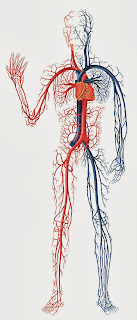
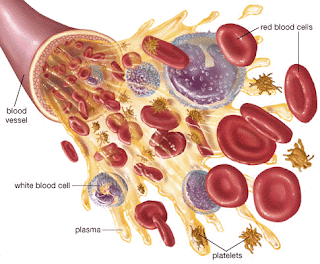
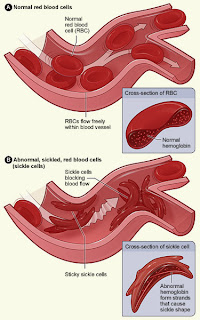
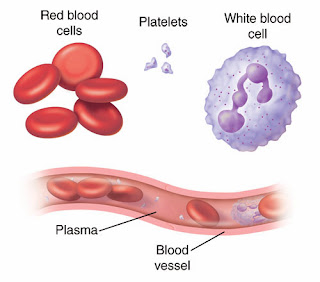
The road system is a lot like our circulatory system. It has red blood cells, and white; platelets and plasma; each with their individual characteristics and modes of behaviour.
For our body to be healthy, things must flow smoothly, free of disputes and blockages. Each part works together, to create a harmonious whole.
................................................................................................................................................................................
 We all like surprises, or so the saying goes. But on the roads, surprises lose their appeal.
Broadly speaking, motorists know what other motorists are going to do, thanks to universal rules that govern their behaviour. Inasmuch as everyone sticks to these rules then a critical amount of order is maintained. We all make mistakes - and occasionally someone will be wantonly reckless - but by and large we strive to follow the rules and be transparent to one another.
Can the same be said for cyclists?
There are many instances in which cyclists' behaviour becomes largely unpredictable. Certain situations provoke this more than others, chief among them being whenever a cyclist sees slow moving or static traffic.
As cyclists, we have the option to 'filter' whenever we see traffic ahead. This is in essence a pass to the front of the queue, presumably awarded as either a congratulatory or condolatory pat on the back, depending on your point of view: either 'good on you for choosing to cycle instead of drive' or 'we know you keep getting overtaken by everyone else, but you can get your own back now.'
Filtering creates confusion and anxiety because it is risky and unpredictable. Motorists cannot anticipate when we are going to move up their left side, or their right; or cut in front of them. They do not know what we are going to do when the traffic starts moving and we are stranded on either side of them; whether we will attempt to speed up or slow down. They are surprised as we spring from one blind-spot to the next. They do not know whether we will even choose to filter at all.
Not only do they not know how we will behave, they also do not know what we expect from them.
 There are a great many unknowns when it comes to cyclists. And this is because we currently have a great deal of freedom. There are no laws that say we must or must not filter; or that dictate how we must filter if we choose to do so.
Filtering - or queue-dodging as it is known to other road-users - is tacitly encouraged by the presence of advance stop lines, which entice the cyclist to assume pole position. Whilst these measures have been put in place to help cyclists, it is my view that, in encouraging unpredictable and risky behaviour - that zig-zag squeeze to the front - they are a detriment to all road users.
Cyclists frequently cite the ability to queue-dodge as one of the benefits of cycling; yet if we are honest with ourselves, we know that cycling has much else to advertise it besides the opportunity to act like prima-donna VIPs whenever we see a line of traffic.
We have great freedom, and yet we, as a community, continually abuse it. We run red lights; we hop from pavement to road to cycle lane as and when it suits us; we ride two - or more - abreast, holding a conversation on the road; we flagrantly queue dodge. We ask to be treated like a car, and in the next moment take advantage of the fact that we are not.
We are a schizophrenic presence. We make people nervous.
As cyclists we generally do not see the turmoil we cause; partly because we are concerned with our own plight; and partly because such turmoil may often play itself out in undetectable and subtle ways. We do not know how disgruntled we have made someone; or whether we have added another black mark in someone's mental logbook, another straw that may one day break some cyclist's back.
We may think that filtering is 'fine', that no damage is done; but even a cursory survey of a handful of motorists would lead us to see otherwise.
Motorists want from us what all road users want from each other: predictability.
 Filtering is an inherently unpredictable activity - now I'm here, now I'm there; now you see me, now you don't - and is fraught with uncertainties. It is that point at which the friction between cyclists and other road users becomes especially intense.
We may protest that cycling takes longer and that car drivers are able to get to where they are going quicker, therefore why shouldn't we be allowed the odd advantage? But this is an argument that uses sleight of hand to convince. It would have us believe that by filtering through slow-moving traffic we are, to some extent, readressing the balance between cyclists and motorists. It is a position that has at its heart a division - cyclists on one side, and motorists on the other.
If we want an equal place on the road, then we must accept this equality in all of its implications, good or bad. If motorists are to treat us as equals then we must behave as equals. This means queueing in traffic, and waiting our turn like everyone else.
A cyclist with a short-view argues that the traffic is caused by motor-vehicles, and so is the motorist's concern, not his; the long-sighted view shows that traffic is caused by road-users, of which he is one. Like it or not there are a lot of cars right now: all the more reason to endear ourselves as cyclists and to act against the unhelpful antagonisms that cause schisms on the road.
With the benefit of the long-view we do not act opportunistically, using our size to our advantage. We do not say "treat me like a car" at one moment, the next moment adding the caveat "only not right now."
We must act honorably. We must resist the urge to queue dodge. We must not filter. We must never undertake.
When we see traffic ahead, we must move into primary position and wait in the traffic. Through moving into primary we will be seen and will make clear our intention to move with the traffic. There is a beautiful simplicity in this stance: it is clear and it is safe. And more than that, it is honourable. The more we do this, the more it will become clear to cars what they can expect from us; and the more they will respect us for it.
If we, as a community, do not discipline ourselves - act responsibly, and honorably; with the well-being of all road users in mind - then we will be disciplined. A tipping point will be reached. Laws will tighten and our freedoms - those priviledges we currently have a tendency to flaunt - will be stripped from us.
It is my belief that all motorists should be educated about cyclists, so that they know what to expect from us and how to treat us. This could be introduced as part of the driving test, but I believe it would be much more effective to introduce it as a mandatory cycle-training programme for all teenagers, run via high-schools.
This way, we all start with the bicycle. It becomes our launching pad to the road. From this we graduate - if we wish - to the car. From having been introduced to the road as cyclists, we will subsequently be able to anticipate cyclists behaviour and act accordingly, and will be more inclined to treat them with respect. It will not be a cure-all solution to the kind of antagonisms we see on the roads at the minute, but it is a fine place to start.
 To conclude:
Motorists must know more about cyclists; must understand what we do, and what they are expected to do around us.
Cyclists must act more honorably and with the good of all road users in mind; not just themselves or other cyclists. They must curb some of their more schizophrenic tendencies, including the urge to filter.
In essence, what we are suggesting is a coming together; a crossing of the divide between us and them. We must remember that beneath our labels of 'cyclists' or 'motorists', we are all road-users.
We must keep that image of the circulatory system in mind; and remember that for a healthy body, traffic must flow smoothly, with as few disputes or blockages as possible. But importantly, white cell or red, we are all part of the same body.
................................................................................................................................................................................
Related posts:-
Everything is Connected
A Healthy Body
A Higher Power
The road system is a lot like our circulatory system. It has red blood cells, and white; platelets and plasma; each with their individual characteristics and modes of behaviour.
For our body to be healthy, things must flow smoothly, free of disputes and blockages. Each part works together, to create a harmonious whole.
................................................................................................................................................................................
 We all like surprises, or so the saying goes. But on the roads, surprises lose their appeal.
 Broadly speaking, motorists know what other motorists are going to do, thanks to universal rules that govern their behaviour. Inasmuch as everyone sticks to these rules then a critical amount of order is maintained. We all make mistakes - and occasionally someone will be wantonly reckless - but by and large we strive to follow the rules and be transparent to one another.
Can the same be said for cyclists?
There are many instances in which cyclists' behaviour becomes largely unpredictable. Certain situations provoke this more than others, chief among them being whenever a cyclist sees slow moving or static traffic.
As cyclists, we have the option to 'filter' whenever we see traffic ahead. This is in essence a pass to the front of the queue, presumably awarded as either a congratulatory or condolatory pat on the back, depending on your point of view: either 'good on you for choosing to cycle instead of drive' or 'we know you keep getting overtaken by everyone else, but you can get your own back now.'
Filtering creates confusion and anxiety because it is risky and unpredictable. Motorists cannot anticipate when we are going to move up their left side, or their right; or cut in front of them. They do not know what we are going to do when the traffic starts moving and we are stranded on either side of them; whether we will attempt to speed up or slow down. They are surprised as we spring from one blind-spot to the next. They do not know whether we will even choose to filter at all.
Not only do they not know how we will behave, they also do not know what we expect from them.
 There are a great many unknowns when it comes to cyclists. And this is because we currently have a great deal of freedom. There are no laws that say we must or must not filter; or that dictate how we must filter if we choose to do so.
Filtering - or queue-dodging as it is known to other road-users - is tacitly encouraged by the presence of advance stop lines, which entice the cyclist to assume pole position. Whilst these measures have been put in place to help cyclists, it is my view that, in encouraging unpredictable and risky behaviour - that zig-zag squeeze to the front - they are a detriment to all road users.
Cyclists frequently cite the ability to queue-dodge as one of the benefits of cycling; yet if we are honest with ourselves, we know that cycling has much else to advertise it besides the opportunity to act like prima-donna VIPs whenever we see a line of traffic.
We have great freedom, and yet we, as a community, continually abuse it. We run red lights; we hop from pavement to road to cycle lane as and when it suits us; we ride two - or more - abreast, holding a conversation on the road; we flagrantly queue dodge. We ask to be treated like a car, and in the next moment take advantage of the fact that we are not.
We are a schizophrenic presence. We make people nervous.
As cyclists we generally do not see the turmoil we cause; partly because we are concerned with our own plight; and partly because such turmoil may often play itself out in undetectable and subtle ways. We do not know how disgruntled we have made someone; or whether we have added another black mark in someone's mental logbook, another straw that may one day break some cyclist's back.
We may think that filtering is 'fine', that no damage is done; but even a cursory survey of a handful of motorists would lead us to see otherwise.
Motorists want from us what all road users want from each other: predictability.
 Filtering is an inherently unpredictable activity - now I'm here, now I'm there; now you see me, now you don't - and is fraught with uncertainties. It is that point at which the friction between cyclists and other road users becomes especially intense.
 We may protest that cycling takes longer and that car drivers are able to get to where they are going quicker, therefore why shouldn't we be allowed the odd advantage? But this is an argument that uses sleight of hand to convince. It would have us believe that by filtering through slow-moving traffic we are, to some extent, readressing the balance between cyclists and motorists. It is a position that has at its heart a division - cyclists on one side, and motorists on the other.
If we want an equal place on the road, then we must accept this equality in all of its implications, good or bad. If motorists are to treat us as equals then we must behave as equals. This means queueing in traffic, and waiting our turn like everyone else.
A cyclist with a short-view argues that the traffic is caused by motor-vehicles, and so is the motorist's concern, not his; the long-sighted view shows that traffic is caused by road-users, of which he is one. Like it or not there are a lot of cars right now: all the more reason to endear ourselves as cyclists and to act against the unhelpful antagonisms that cause schisms on the road.
With the benefit of the long-view we do not act opportunistically, using our size to our advantage. We do not say "treat me like a car" at one moment, the next moment adding the caveat "only not right now."
We must act honorably. We must resist the urge to queue dodge. We must not filter. We must never undertake.
When we see traffic ahead, we must move into primary position and wait in the traffic. Through moving into primary we will be seen and will make clear our intention to move with the traffic. There is a beautiful simplicity in this stance: it is clear and it is safe. And more than that, it is honourable. The more we do this, the more it will become clear to cars what they can expect from us; and the more they will respect us for it.
If we, as a community, do not discipline ourselves - act responsibly, and honorably; with the well-being of all road users in mind - then we will be disciplined. A tipping point will be reached. Laws will tighten and our freedoms - those priviledges we currently have a tendency to flaunt - will be stripped from us.
It is my belief that all motorists should be educated about cyclists, so that they know what to expect from us and how to treat us. This could be introduced as part of the driving test, but I believe it would be much more effective to introduce it as a mandatory cycle-training programme for all teenagers, run via high-schools.
This way, we all start with the bicycle. It becomes our launching pad to the road. From this we graduate - if we wish - to the car. From having been introduced to the road as cyclists, we will subsequently be able to anticipate cyclists behaviour and act accordingly, and will be more inclined to treat them with respect. It will not be a cure-all solution to the kind of antagonisms we see on the roads at the minute, but it is a fine place to start.
 To conclude:
Motorists must know more about cyclists; must understand what we do, and what they are expected to do around us.
Cyclists must act more honorably and with the good of all road users in mind; not just themselves or other cyclists. They must curb some of their more schizophrenic tendencies, including the urge to filter.
In essence, what we are suggesting is a coming together; a crossing of the divide between us and them. We must remember that beneath our labels of 'cyclists' or 'motorists', we are all road-users.
We must keep that image of the circulatory system in mind; and remember that for a healthy body, traffic must flow smoothly, with as few disputes or blockages as possible. But importantly, white cell or red, we are all part of the same body.
................................................................................................................................................................................
Related posts:-
Everything is Connected
A Healthy Body
A Higher Power
Get Real

1. Realists/pragmatists
2. Idealists
Between these two extremes everyone falls. Some of us tend toward one side more than the other.
Our society is one that suits pragmatists. It is imbalanced in favour of this mode of thinking.
It is like a lens placed atop a colour-wheel, that shows some colours as they are whilst distorting or obscuring others.
It mainly consists of lots of short journeys from A to B. Take this to there. And don't ask too many questions. It has a strong current and it likes to flow. It is extremely hostile to things that threaten to disrupt this flow.

It prefers idealism to be kept to the realms of fiction, where it can do no real harm.
There is no place for idealists within day-to-day life. They are made to feel useless, their value ignored or ridiculed. They are called 'dreamers', a label that in a bygone era may have been taken as high-praise. They are a spare part; awkward, troublesome.
Yet pragmatists and idealist alike are a vital part of the whole organism, each with their role to play in the larger balance.
Inasmuch as they are opposites the two must always battle each other, and through this conflict a balance is struck. This is how it has been throughout the ages. But these days the battle is rigged, and the contest vastly one-sided.
Idealists are ridiculed for their lack of 'realism', a bizarre criticism akin to criticizing white for its lack of black, light for its lack of dark. Light may be annoying when we are trying to sleep - but it is vital when we trying to grow crops. Both have their place: it is context that defines their value.

We shoehorn everyone into a small space - one unwisely biased toward pragmatists - and vilify those that struggle to fit.
The ongoing refrain of our society is "get real": in other words, abandon your idealism and run the other way.
For the sake of our collective health - health, of course, being a matter of balance - this voice must be matched with another: one that soars high and dares to dream.
................................................................................................................................................................................
The elders do not see the details, they see the overall picture. If the overall pattern is good, the hardship of the details does not matter.
[Maildoma Patrice Somé]
Of Water and the Spirit, p. 311
................................................................................................................................................................................
We are all deprived; we are all disappointed; and therefore we are all, in some sense, idealists.
The need to link the real and ideal is a perpetual tension, never resolved so long as life persists, but always productive of new, attempted solutions.
[Anthony Storr]
The Dynamics of Creation, p.237
................................................................................................................................................................................
'Orange MEME' (Spiral Dynamics)
ORANGE embraces values and beliefs that stress materialism over spiritualism, pragmatism over principle, and short-range victories over longer term guarantees. There is a desire to get on with life and not bog down in quandaries of absolutism or picky, picky, picky theology.
[Don Edward Beck & Christopher C. Cowan]
Spiral Dynamics, p.251
................................................................................................................................................................................
Related posts:-
The Colour Wheel
You ought to be more like me
The Right Match
The Devil is in the Details (and God is in the Generalities)
Life Support
Small Mind/Large Mind
Part of a System
Know Your Place
Beggars and Choosers
A Healthy Body
................................................................................................................................................................................
'There are no hard distinctions between what is real and what is unreal, nor between what is true and what is false. A thing is not necessarily either true or false; it can be both true and false.'
I believe that these assertions still make sense and do still apply to the exploration of reality through art. So as a writer I stand by them but as a citizen I cannot. As a citizen I must ask: What is true? What is false?
[Harold Pinter]
Nobel Lecture, 'Art, Truth & Politics'
................................................................................................................................................................................
Part 1
Cell and Body
PART & WHOLE
First of all we must understand that we are a collective. We must remember that together we make up a body. A body has an order to it; ways in which its parts must interact. If its parts do not interact properly then it goes wrong.
We live in an age of individualism. Each cell of the body has been, and is being, reprogrammed. Each cell is being given a new script. It says "the important thing is not that you are part of a body - that you, along with all these other cells make up a bigger part. The important thing is that you are an individual cell. You are unique! You are unlike all other cells."
The cells that best express their individuality are promoted, and thought of as better. Over time each cell begins to lose sight of the fact that it is within a body. All it can see is its own borders.
Some cells become rampant. Obsessed with their own image they multiply rapidly, producing copy after copy of themselves. They do not see the affect that this is having on the body. So in love are they with their own image that they forget they are part of a body at all. Occasionally another cell will remember, and will try to make others remember; but they are dismissed as 'old fashioned' and told to 'move with the times.'
It isn't long before the body becomes ill, and dies. In its last moments each cell remembers what it had long ago forgotten: that no matter how hard they try and think of themselves as individuals separate from all others, they are, in the last, a part of something bigger. And that in order to preserve themselves, they must always keep one eye on that bigger thing.
We see this interdependence in the fragile balance of eco-systems. How the extinction of one species will have a knock-on effect on everything around it. We catch a potent whiff upon hearing that "if the bees become extinct then we will too.'
So this is where we start. This is what every cell must remember. Like it or not, it is part of something greater.
Each of us, then, is a citizen as well as an individual. The citizen is the side of us that remembers the body, and always keeps it in mind. We walk a line between the two.
................................................................................................................................................................................
Part 2
Rules of the body
ORDER OF PARTS
So what are the rules of our body? What does it need in order to stay balanced and healthy?
The rules of our collective body are much the same as the rules of our physical body. Both systems work in roughly the same way.
A physical body is made up of lots of parts that are all different. Each has its role to play in the working of the body. When every part fulfills its function effectively then the body is balanced and healthy.
The body becomes unhealthy when it becomes imbalanced. This can happen in a number of ways. Two examples:
1. Outside influences lead to bad habits. A badly designed chair encourages a poor posture. Certain muscles become weak and other muscles are required to take over their job. One muscle is underused whilst another is overused; and importantly, used in ways in which it wasn't designed for. This leads to stresses and strains and further imbalances.
2. Outside influences cause a cell to forget its original programming. Like a derailed train, it slips free of its natural borders and runs riot, causing havoc. It multiplies excessively. It does not know when to stop. The body becomes critically imbalanced; it 'gets cancer.'
Each of these imbalances has its counterpart in our collective body:
1. We underuse and devalue people with certain skills, whilst placing undue emphasis on those with other skills.
2. In a general sense we can see cancer as unchecked expansiveness; growth without limits. Sound familiar?
The most important thing for us to recognise is that a healthy body needs a set of rules and meanings that is shared by all of its parts. Each must, in the last, always work for the good of the whole.
................................................................................................................................................................................
Part 3
The Role of Culture
MAINTAINING ORDER
We can call these rules and meanings 'culture.' Culture is the invisible mesh that keeps the whole thing in place. It tells each what to do, and why. It places importance on some things over others. It says 'go this way, not that way.' It is the sense that guides each and every part of the body.
Every part is programmed with its own set of rules and meanings - its own instinctive culture. However, these can sometimes be overruled by those imposed by the brain. We can describe instinctive programming as intuitive - a knowing without learning - with the impositions of the brain being rational; based, in other words, on external experience.
When a body forgets its instinctive culture it is at risk of becoming unbalanced.
We can reprogramme our physical bodies in many ways. For example, if someone with two fully functioning legs were to decide to sit in a wheelchair and avoid standing he would begin reprogramming, by sending the following message to his legs: "you two aren't needed anymore." His legs would begin to feel left out, unwanted, useless. They would lose all respect for themselves. Their muscles would weaken, their vitality drain away. If he stayed in the chair long enough he may lose the use of his legs completely.
Culture is, then, of great importance to the functioning of the body. It is the way in which we programme ourselves.
How, then, do we currently use culture? Which ways does it tell us to go? What does it tell us to do? What does it place importance on? And is what it tells us good for our collective body?
................................................................................................................................................................................
Part 4
Body in Chaos
DISORDER
In recent times we have placed such emphasis on the individual - on cell over body, part over whole - that we have lost sight of the connection between culture and the body. Instead of serving to preserve a harmony of parts, it mostly focusses on the needs and desires of the individual cell.
We know from both objective and subjective experience (from experimental research along with our own day-to-day observations) that the images that surround us (both moving and still) can affect us deeply. We take in influences consciously and unconsciously. When we see a film we may be so taken with a certain character that we seek to model ourselves upon them. But our thoughts and actions may also be influenced in ways that we are unaware of. This is why advertisers pay so much for relatively miniscule timeslots; they know all-too-well the power of subconscious influence. And if a 5 second advert can alter our thought patterns, imagine what a 2 hour film can do.
Yet we exist in a society that largely refuses to acknowledge the connection between culture and programming. Such is the breakdown between cell and body - part and whole - that we can view the merit of our cultural objects independently of the affect they may have upon us as a whole. This is akin to body urging its cells into anarchy - "reproduce like mad! Kill each other! Its all great entertainment!" - whilst believing that it will remain healthy and balanced.
So whilst a film may glorify dysfunctional ways of thinking and behaving, we focus on its merits as a film. Yes, its characters may be horrific; and the way of life it promotes unhealthy - but it is a good film. We talk about how good its actors were; how convincing its effects; how well written it is; how well shot; and so on. Taste takes precedence over nutrition. In seeing films this way, we see them through the eyes of the individual and we forget our duty as citizens; we forget the body.
We must never lose sight of the vital role that culture plays in the well-being of the body. We must always look to see what messages it is sending out; which directions it is telling us to go; what it is telling us to do; who it lifts up; who it runs down. And we must always ask: is this good for us?
In enjoying the selfish pursuits of the individual, we have fooled ourselves into thinking that our actions have no consequences. We have untethered culture from its traditional restraints and have let it drift off; its ascendency a tribute to individuality.
................................................................................................................................................................................
Three things we must remember:
1. We are part of a something larger, a collective body.
2. A body must have order.
3. Order is maintained through shared meaning i.e. culture.
And so the first and last thing we must ask of any cultural object is:
Is this good for my community, my society - my body?
................................................................................................................................................................................
Related posts:-
Everything is Connected
A Higher Power
You or The Work
The Real Thing
The Tyranny of Novelty
Life Amongst the Rubble
Post-modernist Soup
The Perils of Radical Subjectivity
Guiding Fiction
Twisted out of Shape
Let It Flow
'There are no hard distinctions between what is real and what is unreal, nor between what is true and what is false. A thing is not necessarily either true or false; it can be both true and false.'
I believe that these assertions still make sense and do still apply to the exploration of reality through art. So as a writer I stand by them but as a citizen I cannot. As a citizen I must ask: What is true? What is false?
[Harold Pinter]
Nobel Lecture, 'Art, Truth & Politics'
................................................................................................................................................................................
Part 1
Cell and Body
PART & WHOLE
First of all we must understand that we are a collective. We must remember that together we make up a body. A body has an order to it; ways in which its parts must interact. If its parts do not interact properly then it goes wrong.
We live in an age of individualism. Each cell of the body has been, and is being, reprogrammed. Each cell is being given a new script. It says "the important thing is not that you are part of a body - that you, along with all these other cells make up a bigger part. The important thing is that you are an individual cell. You are unique! You are unlike all other cells."
The cells that best express their individuality are promoted, and thought of as better. Over time each cell begins to lose sight of the fact that it is within a body. All it can see is its own borders.
Some cells become rampant. Obsessed with their own image they multiply rapidly, producing copy after copy of themselves. They do not see the affect that this is having on the body. So in love are they with their own image that they forget they are part of a body at all. Occasionally another cell will remember, and will try to make others remember; but they are dismissed as 'old fashioned' and told to 'move with the times.'
It isn't long before the body becomes ill, and dies. In its last moments each cell remembers what it had long ago forgotten: that no matter how hard they try and think of themselves as individuals separate from all others, they are, in the last, a part of something bigger. And that in order to preserve themselves, they must always keep one eye on that bigger thing.
We see this interdependence in the fragile balance of eco-systems. How the extinction of one species will have a knock-on effect on everything around it. We catch a potent whiff upon hearing that "if the bees become extinct then we will too.'
So this is where we start. This is what every cell must remember. Like it or not, it is part of something greater.
Each of us, then, is a citizen as well as an individual. The citizen is the side of us that remembers the body, and always keeps it in mind. We walk a line between the two.
................................................................................................................................................................................
Part 2
Rules of the body
ORDER OF PARTS
So what are the rules of our body? What does it need in order to stay balanced and healthy?
The rules of our collective body are much the same as the rules of our physical body. Both systems work in roughly the same way.
A physical body is made up of lots of parts that are all different. Each has its role to play in the working of the body. When every part fulfills its function effectively then the body is balanced and healthy.
The body becomes unhealthy when it becomes imbalanced. This can happen in a number of ways. Two examples:
1. Outside influences lead to bad habits. A badly designed chair encourages a poor posture. Certain muscles become weak and other muscles are required to take over their job. One muscle is underused whilst another is overused; and importantly, used in ways in which it wasn't designed for. This leads to stresses and strains and further imbalances.
2. Outside influences cause a cell to forget its original programming. Like a derailed train, it slips free of its natural borders and runs riot, causing havoc. It multiplies excessively. It does not know when to stop. The body becomes critically imbalanced; it 'gets cancer.'
Each of these imbalances has its counterpart in our collective body:
1. We underuse and devalue people with certain skills, whilst placing undue emphasis on those with other skills.
2. In a general sense we can see cancer as unchecked expansiveness; growth without limits. Sound familiar?
The most important thing for us to recognise is that a healthy body needs a set of rules and meanings that is shared by all of its parts. Each must, in the last, always work for the good of the whole.
................................................................................................................................................................................
Part 3
The Role of Culture
MAINTAINING ORDER
We can call these rules and meanings 'culture.' Culture is the invisible mesh that keeps the whole thing in place. It tells each what to do, and why. It places importance on some things over others. It says 'go this way, not that way.' It is the sense that guides each and every part of the body.
Every part is programmed with its own set of rules and meanings - its own instinctive culture. However, these can sometimes be overruled by those imposed by the brain. We can describe instinctive programming as intuitive - a knowing without learning - with the impositions of the brain being rational; based, in other words, on external experience.
When a body forgets its instinctive culture it is at risk of becoming unbalanced.
We can reprogramme our physical bodies in many ways. For example, if someone with two fully functioning legs were to decide to sit in a wheelchair and avoid standing he would begin reprogramming, by sending the following message to his legs: "you two aren't needed anymore." His legs would begin to feel left out, unwanted, useless. They would lose all respect for themselves. Their muscles would weaken, their vitality drain away. If he stayed in the chair long enough he may lose the use of his legs completely.
Culture is, then, of great importance to the functioning of the body. It is the way in which we programme ourselves.
How, then, do we currently use culture? Which ways does it tell us to go? What does it tell us to do? What does it place importance on? And is what it tells us good for our collective body?
................................................................................................................................................................................
Part 4
Body in Chaos
DISORDER
In recent times we have placed such emphasis on the individual - on cell over body, part over whole - that we have lost sight of the connection between culture and the body. Instead of serving to preserve a harmony of parts, it mostly focusses on the needs and desires of the individual cell.
We know from both objective and subjective experience (from experimental research along with our own day-to-day observations) that the images that surround us (both moving and still) can affect us deeply. We take in influences consciously and unconsciously. When we see a film we may be so taken with a certain character that we seek to model ourselves upon them. But our thoughts and actions may also be influenced in ways that we are unaware of. This is why advertisers pay so much for relatively miniscule timeslots; they know all-too-well the power of subconscious influence. And if a 5 second advert can alter our thought patterns, imagine what a 2 hour film can do.
Yet we exist in a society that largely refuses to acknowledge the connection between culture and programming. Such is the breakdown between cell and body - part and whole - that we can view the merit of our cultural objects independently of the affect they may have upon us as a whole. This is akin to body urging its cells into anarchy - "reproduce like mad! Kill each other! Its all great entertainment!" - whilst believing that it will remain healthy and balanced.
So whilst a film may glorify dysfunctional ways of thinking and behaving, we focus on its merits as a film. Yes, its characters may be horrific; and the way of life it promotes unhealthy - but it is a good film. We talk about how good its actors were; how convincing its effects; how well written it is; how well shot; and so on. Taste takes precedence over nutrition. In seeing films this way, we see them through the eyes of the individual and we forget our duty as citizens; we forget the body.
We must never lose sight of the vital role that culture plays in the well-being of the body. We must always look to see what messages it is sending out; which directions it is telling us to go; what it is telling us to do; who it lifts up; who it runs down. And we must always ask: is this good for us?
In enjoying the selfish pursuits of the individual, we have fooled ourselves into thinking that our actions have no consequences. We have untethered culture from its traditional restraints and have let it drift off; its ascendency a tribute to individuality.
................................................................................................................................................................................
Three things we must remember:
1. We are part of a something larger, a collective body.
2. A body must have order.
3. Order is maintained through shared meaning i.e. culture.
And so the first and last thing we must ask of any cultural object is:
Is this good for my community, my society - my body?
................................................................................................................................................................................
Related posts:-
Everything is Connected
A Higher Power
You or The Work
The Real Thing
The Tyranny of Novelty
Life Amongst the Rubble
Post-modernist Soup
The Perils of Radical Subjectivity
Guiding Fiction
Twisted out of Shape
Let It Flow
Eruption!
 When you build up tension in your body it is important to release it in a conscious way. If it isn't released then it will find its way out regardless, and generally when you aren't looking.
It is like a pressurised boiler.
The tension builds and builds, the sides start to bulge and eventually nuts and bolts start flying off and jets of steam start hissing out!
Instead of letting steam off in a controlled way, you've ignored it until its found its own way out.
This principle applies as much to human beings as it does to boilers.
We can see it in action on the roads. When a car driver gets stuck behind a cyclist and has to slow down to a crawl, he may begin to build up tension. The more he has to trail behind the cyclist - who is going a snails pace compared to what he is used to - the more his boiler begins to fill up. And when he finally gets past he may be just about ready to blow.
He may let this pressure off by cursing the driver or putting his foot to the floor and speeding away, leaving the cyclist in his dust. But there is a chance that some of this tension could stay with him.
And then it begins to find its way out in all sorts of unfortunate ways.
Maybe the next cyclist he comes to he isn't so courteous with. Maybe his pent up anger and frustration makes him a bit reckless. Perhaps he gets a bit too close to this next cyclist. Maybe he even clips him accidently with his wing mirror.
Or he may not come across another cyclist. Phew! He speeds up and makes it home in record time! But he finds the kids even more irritable than normal tonight. He is short with his wife.
HISS!
Tension always finds its way out.
The question is whether you are going to be in control of its release, or whether you're going to let it do its own thing.
And if you're a cyclist then its worth bearing this principle in mind too.
 You may have stuck to your guns and exercised your right to be on the road, annoying who knows how many motorists in the meantime. And you may have even got away with it unscathed.
But the next cyclist may just well be paying the price for your actions.
Be considerate. If there is someone behind you and they are aching to get past - and you can tell when they are - then don't be afraid to pull over and let them be on their way.
The communal gains from this considerate act are far greater than any personal losses.
(And this comes from a cyclist by the way!)
Related posts:-
Pressure Valve
A Circle of Gifts

Anyone can consume. Intimacy comes from co-creation, not co-consumption, as anyone in a band can tell you, and it is different from liking or disliking someone.
But in a monetized society, our creativity happens in specialized domains, for money.
To forge community then, we must do more than simply get people together. While that is a start, soon we get tired of just talking, and we want to do something, to create something.
It is a very tepid community indeed, when the only need being met is the need to air opinions and feel that we are right, that we get it, and isn't it too bad that other people don't ... hey, I know! Let's collect each others' email addresses and start a listserv!
Community is woven from gifts. Unlike today's market system, whose built-in scarcity compels competition in which more for me is less for you, in a gift economy the opposite holds. Because people in gift culture pass on their surplus rather than accumulating it, your good fortune is my good fortune: more for you is more for me. Wealth circulates, gravitating toward the greatest need. In a gift community, people know that their gifts will eventually come back to them, albeit often in a new form.
Such a community might be called a "circle of the gift."
Fortunately, the monetization of life has reached its peak in our time, and is beginning a long and permanent receding (of which economic "recession" is an aspect). Both out of desire and necessity, we are poised at a critical moment of opportunity to reclaim gift culture, and therefore to build true community.
The reclamation is part of a larger shift of human consciousness, a larger reunion with nature, earth, each other, and lost parts of ourselves. Our alienation from gift culture is an aberration and our independence an illusion. We are not actually independent or "financially secure" – we are just as dependent as before, only on strangers and impersonal institutions, and, as we are likely to soon discover, these institutions are quite fragile.
[Charles Eisenstein]
'A Circle of Gifts'
................................................................................................................................................................................
Related posts:-
Creative Living
Go Your Own Way
Lost Tribe
Communal Benefits
Community Service
Carry Each Other
Know your place
Life Support
Un-professional
Beggars and Choosers
 In a climate of mass unemployment, the "job" takes on inflated proportions. Its scarcity turns it into a precious metal, its possession promising salvation from the miseries of being out of work. Those in employment may feel lucky to have a job, and those who don't have one want one (or are at least told that they should want one). But is to have a job always a "good" thing?
If we are unemployed - and particularly if we are receiving state sponsored benefits - then it can seem as if we have no discretion when it comes to the type of job we do. We must take anything that comes our way, provided we are "capable" of doing it (presumably meaning that we are physically and mentally up to the task, not whether we are morally/ethically capable, or capable in any other sense).
If we follow this line of logic further then we arrive at the conclusion that every job is a worthy job; that every job deserves to exist if for no other reason than that it provides employment for the individual, and means that they no longer have to rely on state benefits. The job allows the individual to become an "functioning" member of the community - to contribute, in a way in which, presumably, the individual on benefits does not contribute.
If we adhere to this view then we must accept its implications. When every job is a worthy one, we accept the incursions that certain roles make into our lives. We are no longer, for example, allowed to become angry when we are bothered by telesales operatives ringing our house. We see that they are only doing their job, and that their job allows them to become an honorable and functioning member of the community. In a sense, we have demanded that they ring our house; just as we have demanded all other possibilities for employment, regardless of how they may impact on our quality of life.
 In accepting this viewpoint we have thrown discretion out of the window, both for those who seek employment and for those who may be affected by it. In an environment in which "a job's a job" there is no room for discretion; it becomes a luxury that we cannot afford. Yet, to lose sight of discretion is to lose sight of the larger picture. If we care about our community, our society, and the direction in which it is headed, then discretion must always have a place, and not simply as a luxury of those who can "afford" it. It is illogical to, on the one hand complain about the dysfunction that is caused by certain roles within a society, whilst on the other insisting that "a job's a job" and "beggar's can't be choosers". Perhaps a mark of the responsible society is that everyone can - and should - be a chooser.
If we consider a role to be contributing towards a dysfunction that we see within our local or wider community, then we must not feel compelled to assume this role in order to regain our footing within the community. Whilst, on the surface, our employment may appear to be doing the community a service, it may actually, in the long run, be doing it damage. If it is our duty to the collectivity to keep its interests, as well as our own, in mind, then perhaps we should bear in mind that beggars - as with all others - must always be choosers.
Originally published 25/3/10
................................................................................................................................................................................

It had been in poor health for some time, but has finally been put out of its misery by the Work and Pensions Secretary, Iain Duncan Smith, during a TV interview on Sunday.
A graduate was better employed stacking shelves, unpaid, in a supermarket, Duncan Smith argued, than doing voluntary work for a local museum.
Duncan Smith was infuriated that an Appeal Court had upheld the case of Cait Reilly, a geology graduate who, in order to get her back-to-work payments, was forced to give up her voluntary work at a museum and stack shelves instead.
The truth is, Reilly had been behaving in precisely the way which Cameron used to recommend. The idea behind the Big Society was that it would wean people off dependency on the State, encourage neighbourliness and bring communities together. Volunteering for things – running a local museum, for example – would show that, beyond the nanny state and the harsh jobs market, there was another world of work where satisfaction mattered more than pay.
For many conservatives, these must have been dangerously liberal thoughts. If people like Cait Reilly began to discover that there was more to life than being an economic unit, then the whole market-based system of values would start to crumble.
Conservatives do love a shelf-stacker. It is a job which represents enterprise in a strangely pure and beautiful way. Successful industrialists like to recall that they started their brilliant careers stacking shelves; perhaps, during his gap year, Duncan Smith did some stacking himself.
“Smart people”, he said this weekend, should ask themselves when they were next unable to find something in a supermarket, whose job is more important – a geologist or a shelf-stacker.
An out-of-work person is better employed doing unpaid grunt-work so that a multinational business makes bigger profits, the thinking goes, than working in her community.
If the Big Society had meant anything, then the back-to-work scheme would have put real emphasis on the voluntary sector. It is there that job-seekers are most likely to learn useful values – a sense of engagement and responsibility.
As “smart people”, they might also conclude that being told to stack shelves for the benefit of Poundland in return for a government benefit is little more than an exercise in cynicism and exploitation.
[Terence Blacker]
From Independent 'i' newspaper, see here
................................................................................................................................................................................
Related posts:-
Short-term savings, long-term costs
Ownership
Rights and Responsibilities
Negative Space
A Mature Society?
Individual v Environment
Short term v Long term
Addiction: the short and long of it
Get Real
You or The Work
................................................................................................................................................................................
Individual - Collective
Part - Whole
................................................................................................................................................................................
The cells work together to form a tissue.
The tissues work together to form an organ.
The organs work together to form an organ system.
Each individual works in service to a higher truth, and contributes towards the ongoing existence of the plant (the whole).
................................................................................................................................................................................
 I say to you, this morning, that if you have never found something so dear and precious to you that you will die for it, then you aren’t fit to live.
You may be 38 years old, as I happen to be, and one day, some great opportunity stands before you and calls upon you to stand up for some great principle, some great issue, some great cause. And you refuse to do it because you are afraid.
You refuse to do it because you want to live longer. You’re afraid that you will lose your job, or you are afraid that you will be criticized or that you will lose your popularity, or you’re afraid that somebody will stab or shoot or bomb your house. So you refuse to take a stand.
Well, you may go on and live until you are ninety, but you are just as dead at 38 as you would be at ninety. And the cessation of breathing in your life is but the belated announcement of an earlier death of the spirit.
You died when you refused to stand up for right. You died when you refused to stand up for truth. You died when you refused to stand up for justice.
[Martin Luther King, Jr.]
From the sermon “But, If Not” delivered at Ebenezer Baptist Church on November 5, 1967. Found in The Autobiography of Martin Luther King, Jr., p.344
................................................................................................................................................................................
 When I first took my position against the war in Vietnam, almost every newspaper in the country criticized me. It was a low period in my life. I could hardly open a newspaper.
[...] But then I remember a newsman coming to me one day and saying, "Dr. King, don't you think you're going to have to change your position now because so many people are criticizing you? And people who once had respect for you are going to lose respect for you. And you're going to hurt the budget, I understand, of the Southern Christian Leadership Conference; people have cut off support. And don't you think that you have to move now more in line with the administration's policy?"
That was a good question, because he was asking me the question of whether I was going to think about what happens to me or what happens to truth and justice in this situation.
On some positions, Cowardice asks the question, "Is it safe?" Expediency asks the question, "Is it politic?" And Vanity comes along and asks the question, "Is it popular?" But Conscience asks the question, "Is it right?" And there comes a time when one must take a position that is neither safe, nor politic, nor popular, but he must do it because Conscience tells him it is right.
[Martin Luther King, Jr.]
The Autobiography of Martin Luther King, Jr., p.342
................................................................................................................................................................................
 [...] when I took up the cross I recognized its meaning. It is not something that you merely put your hands on. It is not something that you wear. The cross is something that you bear and ultimately that you die on.
The cross may mean the death of your popularity [...] It may mean the death of a foundation grant. It may cut your budget down a little, but take up your cross and just bear it.
[Martin Luther King, Jr.]
The Autobiography of Martin Luther King, Jr., p.343
................................................................................................................................................................................
 DANIELS: Anything you want to tell me? Been weeks, now. The deputy ops knows what's going on in this unit almost before I do. Except last week, we run the bug up into Barksdale's club office and Burrell... For once, he's a step behind. You see it?
CARVER: Maybe, he...
DANIELS: I see it. I look around the office and I see that one of my people is at the academy for in-service.
CARVER: Lieutenant, I swear, it wasn't my idea. I mean, I'm minding my business, doin' my fuckin' job, when the man calls me upstairs for coffee and a danish, right? I mean, I never even been on the eighth floor of that fucking building. And there's the deputy fucking ops telling me how concerned he is about the case, how he needs to be informed. I mean, he's the deputy fucking ops, man.
DANIELS: Couple weeks from now, you're gonna be in some district somewhere with 11 or 12 uniforms looking to you for everything. And some of them are gonna be good police. Some of them are gonna be young and stupid. A few are gonna be pieces of shit. But all of them will take their cue from you. You show loyalty, they learn loyalty. You show them it's about the work, it'll be about the work. You show them some other kinda game, then that's the game they'll play. I came on in the Eastern, and there was a piece-of-shit lieutenant hoping to be a captain, piece-of-shit sergeants hoping to be lieutenants. Pretty soon we had piece-of-shit patrolmen trying to figure the job for themselves. And some of what happens then is hard as hell to live down.
Comes a day you're gonna have to decide whether it's about you or about the work.
Dialogue from The Wire, Episode 13, Season 1
................................................................................................................................................................................
 Pearlman: The point is that Maury Levy is a past officer of the Monumental Bar Association, and unless I want to spend my whole life as a fucking A.S.A. I can't spend my afternoons pissing on people who matter.
McNulty: Another career in the balance.
Pearlman: Fuck You
McNulty: No, fuck you. If only half you motherfuckers in the State's Attorneys Office didn't want to be Judges, didn't want to be partners in some down-town law firm; if half of you had the fucking balls to follow through - you know what would happen? A guy like that would be indicted, tried, and convicted. And the rest of them would back up enough so that we could push a clean case or two through your courthouse. But no - everybody stays friends, everybody gets paid, and everybody's got a fucking future.
Dialogue from The Wire, Episode 11, Season 1
................................................................................................................................................................................
 And, inside the organisation, you challenge that collective view at your peril. In today’s BBC only those whose antennae are fully attuned to the corporation’s cultural mindset — or keep quiet about their true feelings — are going to make progress.
Moreover, making progress these days doesn’t mean just achieving the influence and prestige of a senior job with the world’s greatest broadcaster, once considered reward enough. For those breaking through into the senior ranks, there’s now big, big money and a gold-plated pension to be had.
Which is why, although there has been plenty of grumbling on the shop floor about the escalation of pay for top BBC managers in recent years, it’s muted. No one wants to wreck his or her chances of a well-paid place in the promised land. The newsroom has many talented journalists of middle rank, who know what’s wrong with the organisation, but who don’t rock the boat for fear of blowing their futures.
[...] What the BBC wants you, the public, to believe is that it has ‘independence’ woven into its fabric, running through its veins and concreted into its foundations. The reality, I discovered, was that for the BBC, independence is not a banner it carries principally on behalf of the listener or viewer.
Rather, it is the name it gives to its ability to act at all times in its own best interests.
[Peter Sissons]
"Left-wing bias? It's written through the BBC's very DNA, says Peter Sissons", from Daily Mail Online.
................................................................................................................................................................................
 Tell me the truth, Frank.
Remember that? We used to live by it. And you know what's so good about the truth? Everyone knows what it is, however long they've lived without it.
No one forgets the truth, Frank. They just get better at lying.
['April']
Dialogue from Revolutionary Road (film)
................................................................................................................................................................................
 [...] I might say that no time can be more unfavourable to philosophy
than that in which it is shamefully misused as a political means on the
one hand, and as a means of livelihood on the other.
[...] I might say that no time can be more unfavourable to philosophy
than that in which it is shamefully misused as a political means on the
one hand, and as a means of livelihood on the other.
Now, if governments make philosophy the means to their political ends, then scholars see in professorships of philosophy a trade that nourishes the outer man just as does any other. They therefore crowd after them in the assurance of their good way of thinking, in other words, of the purpose or intention to serve those ends.
And they keep their word; not truth, not clarity, not Plato or Aristotle, but the aims and ends they were appointed to serve are their guiding star; and these at once become the criterion both of what is true, valuable, and worthy of consideration, and of its opposite.
Therefore whatever does not comply with these aims, be it even the most important and extraordinary thing in their department, is either condemned, or, where this seems precarious, suppressed by being unanimously ignored.
[...] How could philosophy, degraded to become a means of earning one's bread, generally fail to degenerate into sophistry? Just because this is bound to happen, and the rule "I sing the song of him whose bread I eat" has held good at all times, the making of money by philosophy was among the ancients the characteristic of the sophist.
[Arthur Schopenhauer]
The World as Will and Representation, p.xix, xx
................................................................................................................................................................................

"Mr Plichta, I have been in touch with Mr Mössbauer and told him that the two of us wanted to introduce him to something new, and that there was some need for caution in this regard. He wanted to know whether your discovery would raise doubts about quantum mechanics.
I told him that quantum mechanics would not even exist if what you discovered turned out to be true. Quantum mechanics would then simply turn out to be a figment of the imagination.
My colleague Mössbauer then got very angry and accused me of putting everything we have accomplished at risk.
Our great achievement, modern physics, was the result of tremendous efforts, and now everything would collapse should any doubts arise.
Such people as yourself should not be given support under any circumstances. He refuses to meet you. He does not even want to hear of any of the new ideas. He gave me a very serious warning indeed"
[Peter Plichta]
God's Secret Formula
................................................................................................................................................................................
I don't care if my house is built on shaky foundations.
I have invested a lot of time and money in building it, and I am very comfortable living within it. I do not even want to hear your thoughts about its foundations.
................................................................................................................................................................................
Related posts:-
Vessel and Cargo | 3. Fetishism and Commerce
Sell Out
Open Source
Structural Integrity
High Stakes
The Mature Individual
Go Your Own Way
[Anonymous]
Only Playing
A Higher Power
Individual + Villager = Balance
The Role of Charities
A Healthy Body
Individual - Collective
Part - Whole
................................................................................................................................................................................
The cells work together to form a tissue.
The tissues work together to form an organ.
The organs work together to form an organ system.
Each individual works in service to a higher truth, and contributes towards the ongoing existence of the plant (the whole).
................................................................................................................................................................................

You may be 38 years old, as I happen to be, and one day, some great opportunity stands before you and calls upon you to stand up for some great principle, some great issue, some great cause. And you refuse to do it because you are afraid.
You refuse to do it because you want to live longer. You’re afraid that you will lose your job, or you are afraid that you will be criticized or that you will lose your popularity, or you’re afraid that somebody will stab or shoot or bomb your house. So you refuse to take a stand.
Well, you may go on and live until you are ninety, but you are just as dead at 38 as you would be at ninety. And the cessation of breathing in your life is but the belated announcement of an earlier death of the spirit.
You died when you refused to stand up for right. You died when you refused to stand up for truth. You died when you refused to stand up for justice.
[Martin Luther King, Jr.]
From the sermon “But, If Not” delivered at Ebenezer Baptist Church on November 5, 1967. Found in The Autobiography of Martin Luther King, Jr., p.344
................................................................................................................................................................................

[...] But then I remember a newsman coming to me one day and saying, "Dr. King, don't you think you're going to have to change your position now because so many people are criticizing you? And people who once had respect for you are going to lose respect for you. And you're going to hurt the budget, I understand, of the Southern Christian Leadership Conference; people have cut off support. And don't you think that you have to move now more in line with the administration's policy?"
That was a good question, because he was asking me the question of whether I was going to think about what happens to me or what happens to truth and justice in this situation.
On some positions, Cowardice asks the question, "Is it safe?" Expediency asks the question, "Is it politic?" And Vanity comes along and asks the question, "Is it popular?" But Conscience asks the question, "Is it right?" And there comes a time when one must take a position that is neither safe, nor politic, nor popular, but he must do it because Conscience tells him it is right.
[Martin Luther King, Jr.]
The Autobiography of Martin Luther King, Jr., p.342
................................................................................................................................................................................

The cross may mean the death of your popularity [...] It may mean the death of a foundation grant. It may cut your budget down a little, but take up your cross and just bear it.
[Martin Luther King, Jr.]
The Autobiography of Martin Luther King, Jr., p.343
................................................................................................................................................................................

CARVER: Maybe, he...
DANIELS: I see it. I look around the office and I see that one of my people is at the academy for in-service.
CARVER: Lieutenant, I swear, it wasn't my idea. I mean, I'm minding my business, doin' my fuckin' job, when the man calls me upstairs for coffee and a danish, right? I mean, I never even been on the eighth floor of that fucking building. And there's the deputy fucking ops telling me how concerned he is about the case, how he needs to be informed. I mean, he's the deputy fucking ops, man.
DANIELS: Couple weeks from now, you're gonna be in some district somewhere with 11 or 12 uniforms looking to you for everything. And some of them are gonna be good police. Some of them are gonna be young and stupid. A few are gonna be pieces of shit. But all of them will take their cue from you. You show loyalty, they learn loyalty. You show them it's about the work, it'll be about the work. You show them some other kinda game, then that's the game they'll play. I came on in the Eastern, and there was a piece-of-shit lieutenant hoping to be a captain, piece-of-shit sergeants hoping to be lieutenants. Pretty soon we had piece-of-shit patrolmen trying to figure the job for themselves. And some of what happens then is hard as hell to live down.
Comes a day you're gonna have to decide whether it's about you or about the work.
Dialogue from The Wire, Episode 13, Season 1
................................................................................................................................................................................

McNulty: Another career in the balance.
Pearlman: Fuck You
McNulty: No, fuck you. If only half you motherfuckers in the State's Attorneys Office didn't want to be Judges, didn't want to be partners in some down-town law firm; if half of you had the fucking balls to follow through - you know what would happen? A guy like that would be indicted, tried, and convicted. And the rest of them would back up enough so that we could push a clean case or two through your courthouse. But no - everybody stays friends, everybody gets paid, and everybody's got a fucking future.
Dialogue from The Wire, Episode 11, Season 1
................................................................................................................................................................................

Moreover, making progress these days doesn’t mean just achieving the influence and prestige of a senior job with the world’s greatest broadcaster, once considered reward enough. For those breaking through into the senior ranks, there’s now big, big money and a gold-plated pension to be had.
Which is why, although there has been plenty of grumbling on the shop floor about the escalation of pay for top BBC managers in recent years, it’s muted. No one wants to wreck his or her chances of a well-paid place in the promised land. The newsroom has many talented journalists of middle rank, who know what’s wrong with the organisation, but who don’t rock the boat for fear of blowing their futures.
[...] What the BBC wants you, the public, to believe is that it has ‘independence’ woven into its fabric, running through its veins and concreted into its foundations. The reality, I discovered, was that for the BBC, independence is not a banner it carries principally on behalf of the listener or viewer.
Rather, it is the name it gives to its ability to act at all times in its own best interests.
[Peter Sissons]
"Left-wing bias? It's written through the BBC's very DNA, says Peter Sissons", from Daily Mail Online.
................................................................................................................................................................................

Remember that? We used to live by it. And you know what's so good about the truth? Everyone knows what it is, however long they've lived without it.
No one forgets the truth, Frank. They just get better at lying.
['April']
Dialogue from Revolutionary Road (film)
................................................................................................................................................................................

Now, if governments make philosophy the means to their political ends, then scholars see in professorships of philosophy a trade that nourishes the outer man just as does any other. They therefore crowd after them in the assurance of their good way of thinking, in other words, of the purpose or intention to serve those ends.
And they keep their word; not truth, not clarity, not Plato or Aristotle, but the aims and ends they were appointed to serve are their guiding star; and these at once become the criterion both of what is true, valuable, and worthy of consideration, and of its opposite.
Therefore whatever does not comply with these aims, be it even the most important and extraordinary thing in their department, is either condemned, or, where this seems precarious, suppressed by being unanimously ignored.
[...] How could philosophy, degraded to become a means of earning one's bread, generally fail to degenerate into sophistry? Just because this is bound to happen, and the rule "I sing the song of him whose bread I eat" has held good at all times, the making of money by philosophy was among the ancients the characteristic of the sophist.
[Arthur Schopenhauer]
The World as Will and Representation, p.xix, xx
................................................................................................................................................................................

"Mr Plichta, I have been in touch with Mr Mössbauer and told him that the two of us wanted to introduce him to something new, and that there was some need for caution in this regard. He wanted to know whether your discovery would raise doubts about quantum mechanics.
I told him that quantum mechanics would not even exist if what you discovered turned out to be true. Quantum mechanics would then simply turn out to be a figment of the imagination.
My colleague Mössbauer then got very angry and accused me of putting everything we have accomplished at risk.
Our great achievement, modern physics, was the result of tremendous efforts, and now everything would collapse should any doubts arise.
Such people as yourself should not be given support under any circumstances. He refuses to meet you. He does not even want to hear of any of the new ideas. He gave me a very serious warning indeed"
[Peter Plichta]
God's Secret Formula
................................................................................................................................................................................
I don't care if my house is built on shaky foundations.
I have invested a lot of time and money in building it, and I am very comfortable living within it. I do not even want to hear your thoughts about its foundations.
................................................................................................................................................................................
Related posts:-
Vessel and Cargo | 3. Fetishism and Commerce
Sell Out
Open Source
Structural Integrity
High Stakes
The Mature Individual
Go Your Own Way
[Anonymous]
Only Playing
A Higher Power
Individual + Villager = Balance
The Role of Charities
A Healthy Body
Subscribe to:
Posts (Atom)